

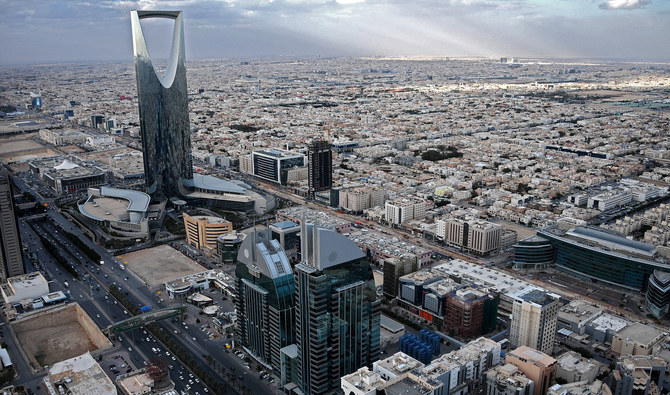

CAIRO/MOSCOW: Saudi Arabia is set to host the 42nd Gulf Cooperation Council summit on Tuesday, where leaders from the six member states will explore ways to further strengthen ties and boost cooperation at all levels.
Against the backdrop of this summit are a customs union and a common market among the GCC countries that have come a long way in terms of improved cooperation and economic performance, according to a report by the GCC.
The customs union that was established in December 2002 included unified tariffs for non-GCC countries, uniform customs regulations and free movement of goods between member states.
All GCC markets were also integrated into a single market. This enabled national factories to achieve economies of scale — cost advantages following large scale production — as all national goods could be transferred between countries duty-free and with simplified procedures.
However, there are some requirements of the union that are yet to be fulfilled. For instance, all non-customs procedures at the ports are currently being reviewed by relevant ministerial committees to eliminate or reduce them. Another issue that is being reviewed is customs protection. The Industrial Cooperation Committee is discussing agreeing on a unified list of protected goods for the GCC countries and to set a temporary list for each country to protect certain goods for a specific period.
Another initiative undertaken by the council was the formation of the GCC Common Market which was approved in 2007. The main principle of the market is that all citizens of GCC states — both natural and legal — shall be treated as national citizens in any other member countries without any differentiation or discrimination in all economic fields.
Some of the areas covered in this common market are: Movement and residence, work in the public and private sectors, social and retirement insurance, practicing free trades and professions, owning real estate, tax treatment, etc.
Consequently, the number of Gulf citizens who traveled between GCC states rose to 27 million in 2019, up from 8 million in 2000.
Other initiatives were also undertaken to facilitate the movement of non-nationals of GCC states such as foreign investors, senior managers, marketing officials and truck drivers.
Moreover, the number of Gulf nationals who worked in the governmental sector of another GCC country surged from 6,000 in 2008 to 10,000 in 2019, with an average yearly growth rate of 5.9 percent.
Social insurance and retirement benefits in the region were also improved. The number of GCC citizens included in government retirement in other member states tripled from 5,000 in 2008 to 15,000 in 2019. Additionally, the number of Gulf nationals covered by social insurance, who are working in the private sector in other member states, soared to 13,000 in 2019, compared to a lower 4,000 in 2008.
In another favorable development, the cumulative count of licenses granted to GCC citizens to practice various economic activities in one of the other five countries skyrocketed to 60,000 in 2019, up from 6,000 licenses by the end of 2001. This came as a consequence of the Supreme Council’s issued decisions to allow the exercise of free professions and economic activities.
Also, the percentage of joint-stock companies — whose shares are allowed to be traded by citizens of the GCC countries — increased from 20 percent of total number of joint-stock companies in 1985 to 96 percent in 2019.
The number of companies whose shares are allowed to be traded by citizens of the GCC countries reached 653 joint-stock companies in 2019, with a capital of about $376 billion, while the number of Gulf shareholders in these companies amounted to 431,000 shareholders.
A large number of Gulf commercial banks also benefited from the decision to allow them to open branches in other member states. The number of these branches increased from seven in 2000 to 18 in 2007 and 27 in 2019.


