

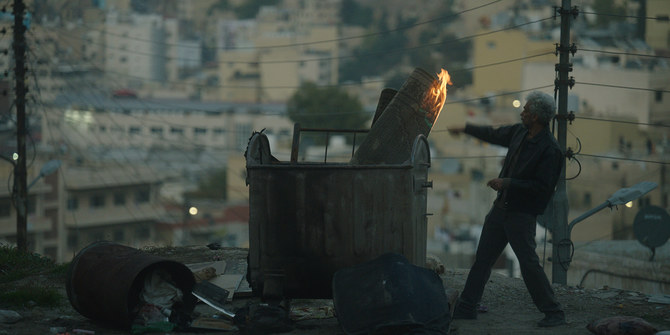

LONDON: “I’ve come to realize that I’m attracted to particular worlds,” Jordanian filmmaker Bassel Ghandour told Arab News prior to the screening of his new movie “The Alleys” at the Red Sea International Film Festival.
“To these tight-knit neighborhoods that we have in the Middle East, and east Amman in particular. Where there’s an intimacy because of the closeness, but also a claustrophobia – a world where you have a sense of family on the one hand, but at the same time, judgment, and expectations. A mix of tension, and brotherhood. A world that was tight knit in a good way, and a bad way,” he said.
“The Alleys” marked his directorial feature debut and was shown as the Arab premiere at the Jeddah festival.
But while it was the first full-length project he had helmed, Ghandour is no stranger to the filmmaking process. A graduate of the University of Southern California, he has already built up an extensive portfolio of projects, not to mention co-writing and producing the Oscar-nominated, BAFTA-winning “Theeb.”
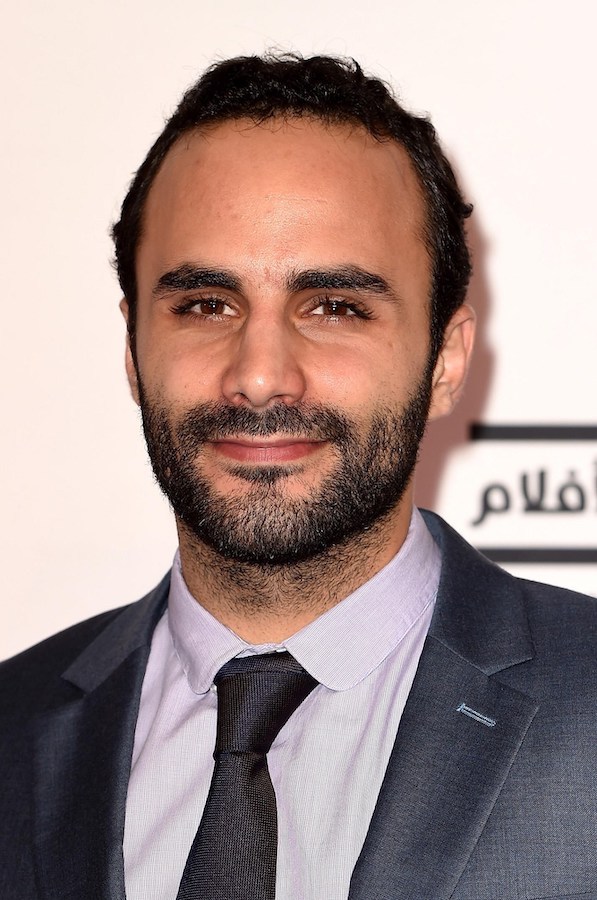
“The Alleys” marked his directorial feature debut. (Supplied)
And, while the claustrophobic world of eastern Amman’s labyrinth Jabal Al-Natheef neighborhoods might seem a daunting place to make your first film, he certainly knew how to prepare. Not only did he spend years researching and writing the flick, but the short film “Freekeh” also played an important role in the development of “The Alleys.”
“In doing research for ‘The Alleys’ I started to hear a lot of stories of violence in these tight-knit neighborhoods, and how that can come about from something that is sometimes petty and simple, but can escalate and snowball because of pride,” he added.
“Freekeh” included non-actors from the area – and introduced Ghandour to Mahmoud Abu Faha, who had a small role in the film. The two became close, and Abu Faha became an associate producer on “The Alleys,” helping his friend and colleague get to the real heart of the neighborhood and its inhabitants and fostering his belief that the production should become part of the world it was seeking to capture, rather than a mere, part-time observer that would vanish as quickly as it arrived.
Ghandour said: “I think in terms of anything in life, parachuting in and then exiting, thinking as an outsider that you know better, is just the wrong approach. I think it’s necessary to assimilate. You want the story, even though its dramatized and maybe a little exaggerated, to still be based on the truth, on something that’s authentic.”
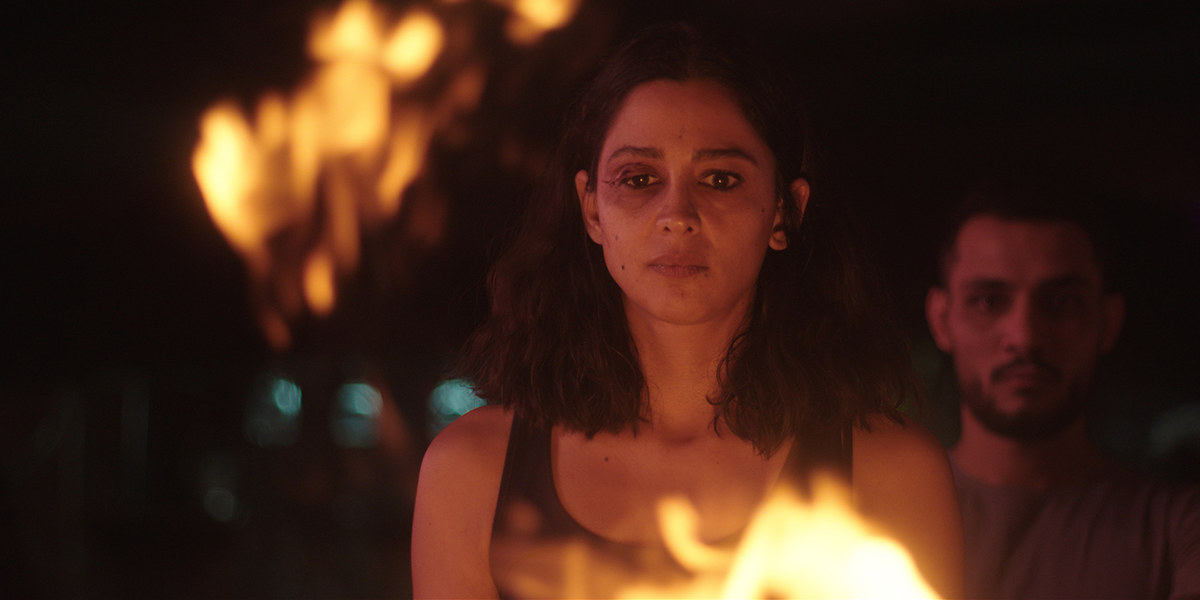
“The Alleys” was shown as the Arab premiere at the Jeddah festival. (Supplied)
He pointed out that other movies he had worked on as part of the crew were “parachuting in and disturbing a community, which isn’t the best way to go about it. It’s always going to lead to trouble if you don’t have a good relationship with the local community,” he added.
To avoid such a situation, Ghandour and Abu Faha spent a huge amount of time walking through the neighborhood, sitting in on card games, staying up late with locals, in front of stores, or in people’s homes. And being entirely upfront about what they were doing there.
“They knew I wasn’t hiding anything. I asked questions whenever I thought I needed more, or Mahmoud and I would talk later about something we’d noticed.
“Maybe when I was younger, I would have felt awkward telling people that I was coming in with a film production, but I found that, actually, the easiest way was to just call it the way it is, tell them that I was unsure exactly what I was looking for,” he said.
Most of the people living in the world upon which “The Alleys” was based reacted with honesty.
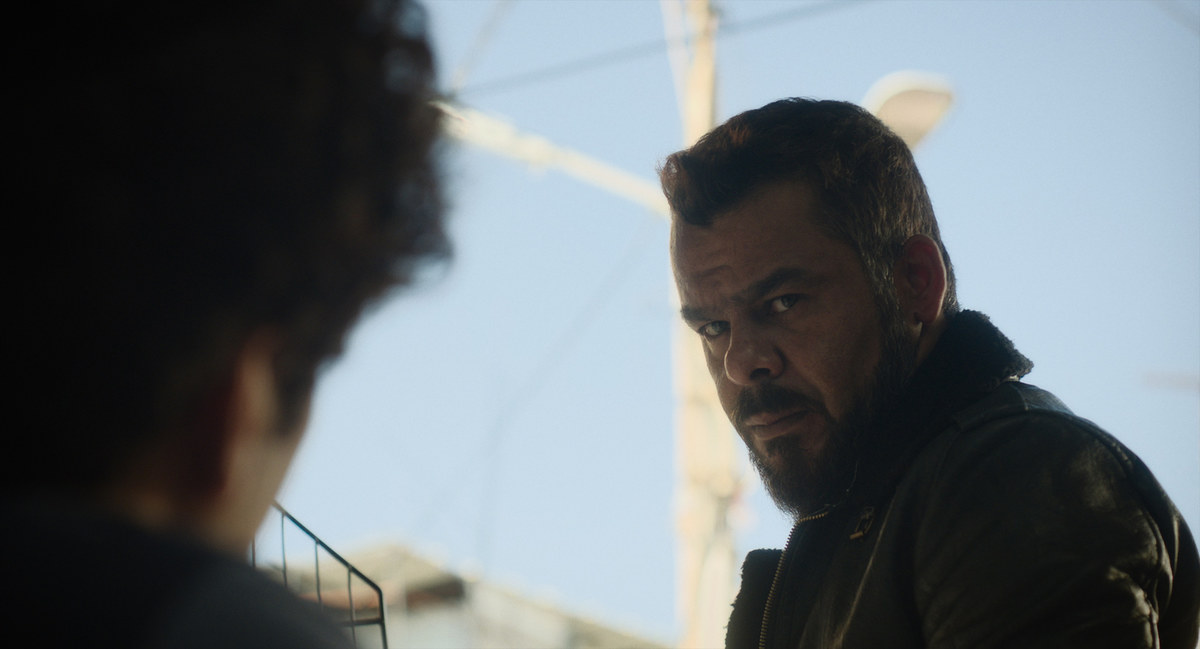
Most of the people living in the world upon which “The Alleys” was based reacted with honesty. (Supplied)
“It’s a storytelling culture, don’t forget. People were amused by the idea that someone wanted to make a film about life in the neighborhood, and they enjoyed exchanging stories. But one thing you notice is the truth isn’t always clear among the gossip,” Ghandour added.
That important lesson is alluded to in the movie when audiences are told to believe half of what they hear, and two-thirds of what they see.
He said: “That, for me, was the hardest thing to accept in the beginning. All of this research, and you don’t know what’s true and what isn’t, what is an exaggeration and what is a lie. I started to embrace that as part of the gossip, the community, and used it as part of the voice, and the tone of the film – to embrace that lack of clarity.”
“The Alleys” is in stark contrast to Ghandour’s next project, a documentary series following five Syrian footballers recruited by a Brazilian academy from the Zaatari refugee camps. He has been following the players for four years, with a few more months still to go.
“It’s a nice approach to storytelling, with a whole lot of uncertainty. As opposed to ‘The Alleys’ where everything is very precisely constructed, this is something that was completely out of our hands.
“It was frightening at first, but now it’s nice to know you can trust the process. All you can do is try to make sure you put what is happening into a comprehensible story, but other than that, it’s completely out of your hands – it’s exciting,” he added.


