



GWADAR: On a cold December night in the Pakistani port city of Gwadar, after a long day of protests by residents for basic rights, it was time for some slapstick comedy.
Enter a stage troupe led by Ahsan Danish who performed for the rollicking crowd, with sets that covered serious topics related to the protest movement but also injected some much needed levity in the tense atmosphere of a city that has been roiled by demonstrations for over a month.
Gwadar is situated in Pakistan’s impoverished southwestern province of Balochistan, a sparsely populated, mountainous, desert region bordering Afghanistan and Iran, where China is developing a deep sea port on the Arabian Sea. The project is part of the $60 billion CPEC project under Beijing’s Belt and Road infrastructure initiative.
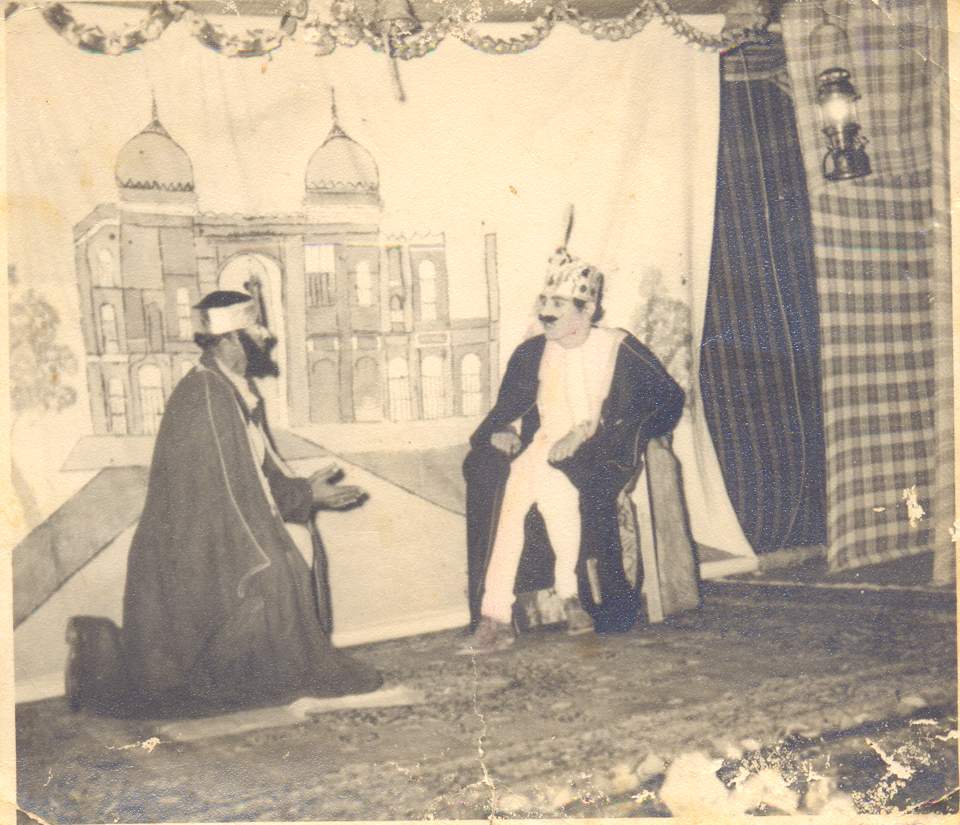
In this photo dated 1952, the then customs in-charge, Mudir Abdul Rab, and his brother Ahmed Khan, who later became a political leader and was famous for his resemblance with Zulfiqar Ali Bhutto, perform the play Akbar-e-Azam. (Photo courtesy: Nasir Rahim Sohrabi)
But locals of the city have long complained that Chinese presence and investment in the area has done little to improve their lives, particularly with regards to water scarcity and jobs. In fact, locals argue, the Chinese project has robbed them of their primary source of livelihood, fishing, as giant fishing trawlers have come in through the Arabian sea, resulting in the closure of a majority of fish processing factories. China has said it is willing to work with the Pakistan government to ensure the benefits of CPEC projects trickle down to locals.
Protests against the lack of basic facilities erupted in mid-November and have gone on since under the banner of “Give Gwadar its Rights.” The protesters’ main demands include the provision of basic health and educational facilities, action against illegal trawling, the abolishment of a token system at the Pakistan-Iran border, removal of security check posts in the city and an end to narcotics smuggling.
“To keep the participants engaged, and entertain them, Maulana Hidayat-ur-Rehman [the protest leader] asked us to perform dramas,” said actor Danish, who along with Anwar Sahib Khan, Shah Nawaz Shah and Aqib Asif, produced and acted in the first Balochi feature film, Zaraab, which highlighted Gwadar’s problems.
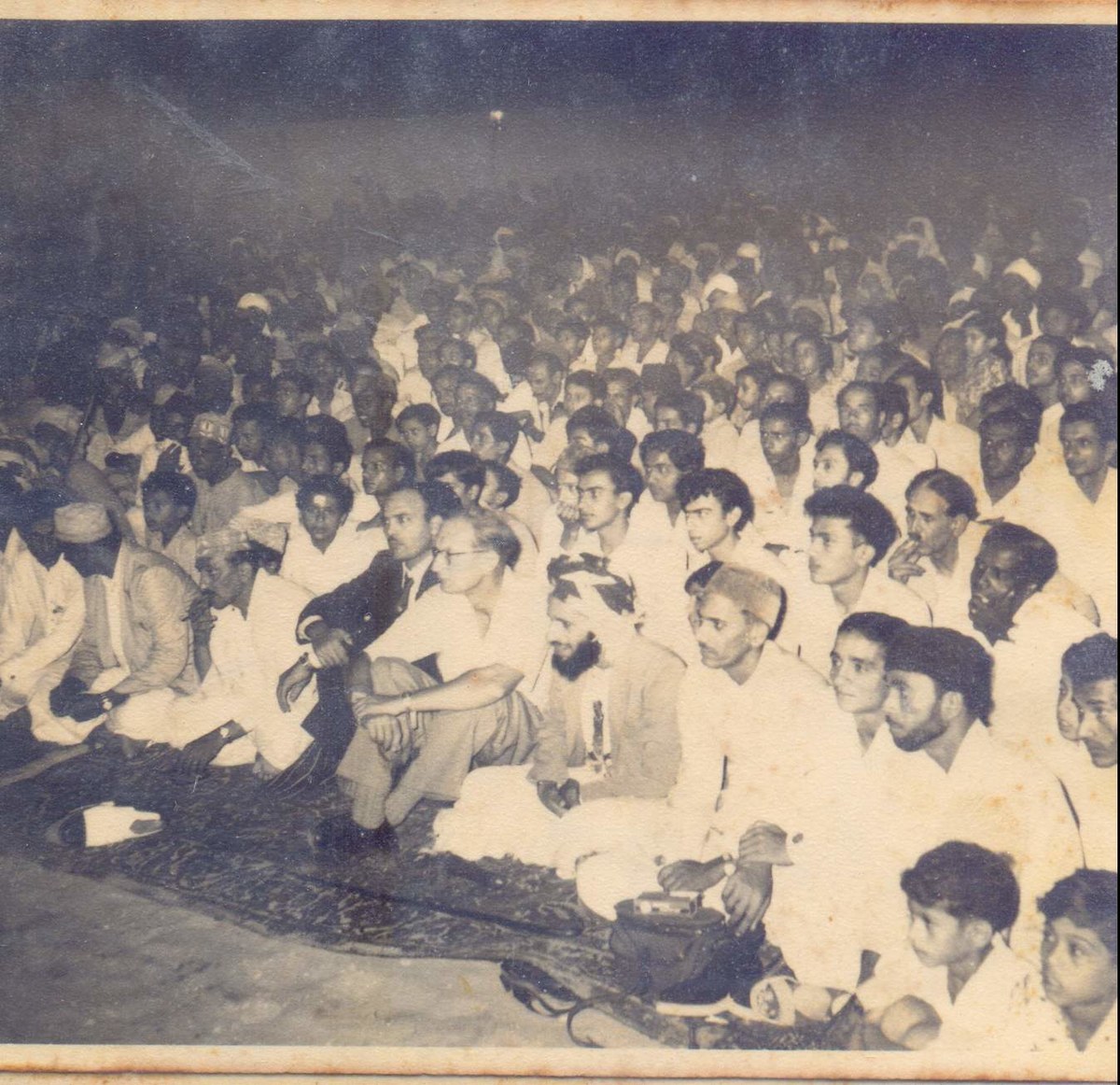
The last Omani governor of Gwadar, Hilal bin Badar, and other notables, watch a play, Akbar-e-Azam, at the wedding of Rahim Bakhsh Sohrabi in 1952. (Photo courtesy: Nasir Rahim Sohrabi)
“Our plays cover the protests, but also highlight issues and send the message in a fun way.”
Gwadar, a city of 90,762 people, is situated on a natural hammerhead-like headland that forms two seamless, but naturally curved, semi-circular bays on both sides – the east bay is called Demi Zirr and the west bay Paddi Zirr. The city is situated on a tapered and sandy 12-kilometer-long strip that links the Pakistani coast to rocky outcroppings on the Arabian Sea, known as the Gwadar Peninsula or Koh-e-Batil.
Once a small fishing town under the Omani regime, Gwadar developed into a port city after its accession to Pakistan in 1958, but came into limelight after the launch of CPEC. In mid-November, people’s grievances against decades-long government neglect and CPEC projects erupted in protests led by Maulana Hidayat-ur-Rehman, a cleric associated with the Jamaat-e-Islami (JI) religious party.
“Maulana hasn’t stopped us from playing classical music,” actor Shah Nawaz Shah said, adding that more classical music shows would be part of performances in the coming days.
Analysts and old Gwadar natives say the city’s residents have a deep-rooted connection with art, theater and music, which are widely accepted and practiced in the city.
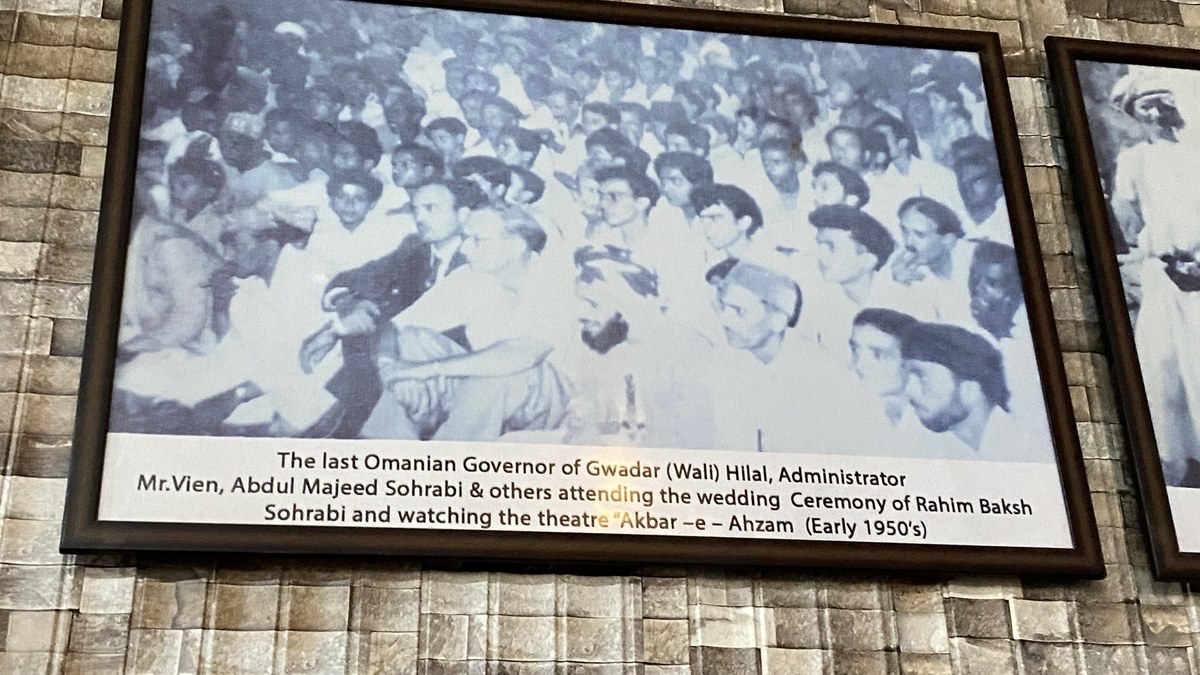
A photo of a theater hangs on the wall of the Rural Community Development Council (RCDC) in Gwadar, Pakistan, on December 10, 2021. (AN Photo)
In the hall of the Rural Community Development Council (RCDC), a photo on the wall showed an image dated 1952 in which elders including the last Wali of Gwadar, Hilal bin Badar and other officials and notables, could be seen watching the play, Akbar-e-Azam, at the wedding ceremony of a notable, Rahim Baksh Sohrabi.
Sohrabi’s son Nasir Rahim Sohrabi told Arab News theater, art and music had “been an integral part of the people of Gwadar since long.”
Gwadar’s Shahi Bazaar, or royal market, he said, was home to over a dozen hotels filled with overcrowded tea shops where people gathered in the night to listen to music.
“Later in the night, story-tellers – locally known as Mughals — tell people their stories,” Sohrabi said. ”Occasionally, there are also live performances.”
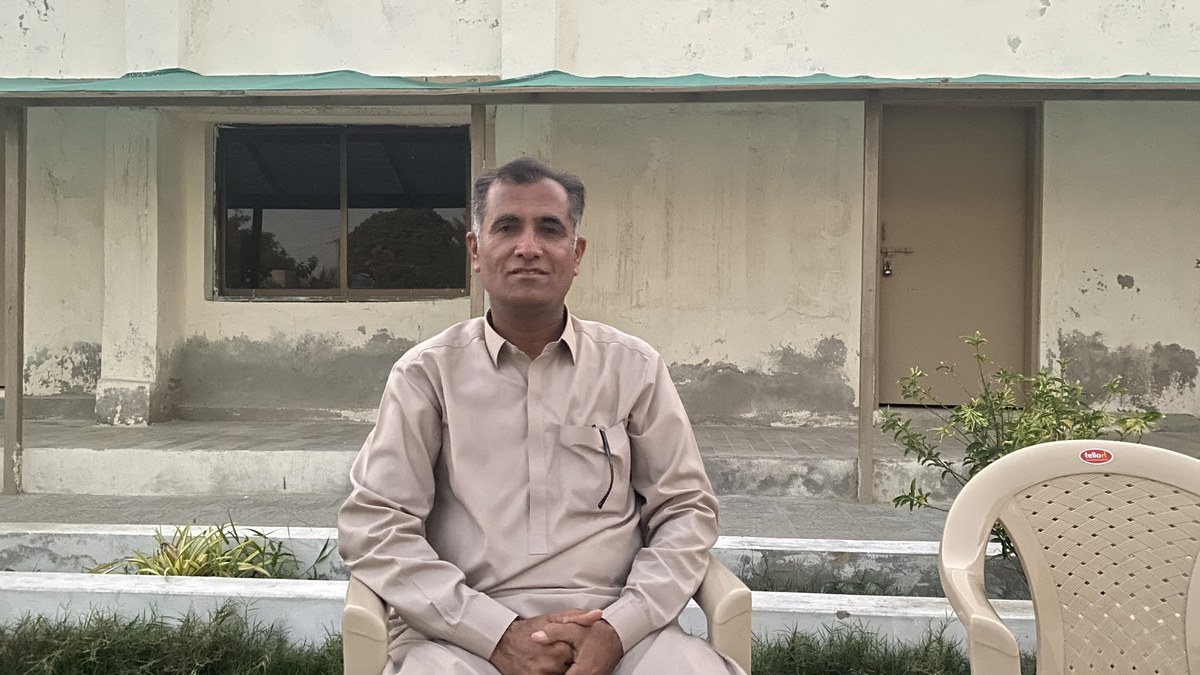
Nasir Rahim Sohrabi speaks to Arab News in Gwadar, Pakistan, on December 10, 2021. (AN Photo)
Those who come to enjoy the performances include influential families from the area and top government officials, Sohrabi said.
Khuda Bakh, a Gwadar-based teacher and intellectual who served as RCDC secretary in the 1970s, said the tradition of theater at weddings was “very old.”
“When there would be a wedding of a well-off man, he would have a drama staged and the topics would cover stories of emperors, old tales, and some dramas would also be about Baloch heroes,” Bakh said.
Sohrabi agreed: “For instance, Akbar-e-Azam, a play about one of the Mughal emperors, was staged at my parent’s wedding.”
“A couple of days ago, a fisherman from Pasni was reciting the poetry of Indian poet Rahat Indori,” Sohrabi said, saying this showed the deeply-ingrained love of the land’s people for art, music and literature.


