

Pakistan says OIC meeting can ‘galvanize’ other international actors on aid for Afghanistan

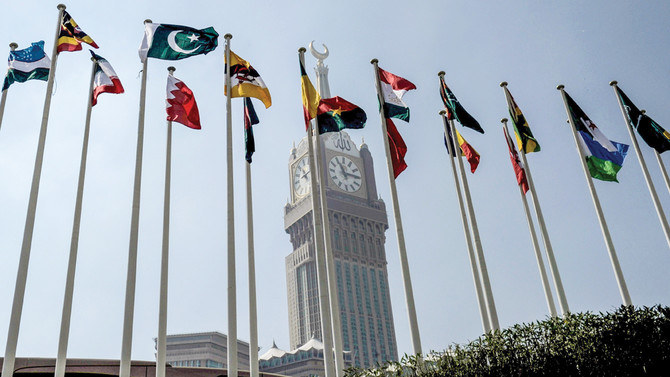
The Organization of Islamic Cooperation consists of 57 member states. (AFP/ File photo)
Short Url
Updated 17 December 2021
Follow

Pakistan says OIC meeting can ‘galvanize’ other international actors on aid for Afghanistan

  • US and other donors cut off financial aid on which Afghanistan became dependent during 20 years of war
  • UN is warning that nearly 23 million people – about 55 percent Afghan population – are facing extreme levels of hunger

ISLAMABAD: The Pakistani foreign office has said a meeting of the Organization of Islamic Corporation (OIC) later this month could help ‘galvanize’ other international powers in coming to the aid of neighboring Afghanistan, which is facing an acute humanitarian crisis.

Pakistan will host the 17th Extraordinary Session of the OIC’s Council of Foreign Ministers on December 19 in Islamabad. The meeting’s focus is on the humanitarian situation in Afghanistan.

The United States and other donors cut off financial aid on which Afghanistan became dependent during 20 years of war and more than $9 billion of the country’s hard currency assets were frozen.

The United Nations is warning that nearly 23 million people –- about 55 percent of the population –- are facing extreme levels of hunger, with nearly 9 million at risk of famine as winter takes hold in the impoverished, landlocked country.

The Pakistani foreign office spokesperson said on Friday the upcoming OIC conference was aimed at promoting “engagement of the international community to help address the challenges confronting Afghanistan.”

“We believe OIC’s leadership can help galvanize other international actors, and this Meeting will be a timely opportunity to consider practical arrangements and concrete steps to correspond to the humanitarian needs of the Afghan people,” the spokesman said at a weekly briefing.
 
On Friday, donors agreed to transfer $280 million from a frozen trust fund to the World Food Program (WFP) and UNICEF to support nutrition and health in Afghanistan, the World Bank said as it sought to help a country facing famine and economic freefall.

The World Bank-administered Afghan Reconstruction Trust Fund will this year give $180 million to WFP to scale up food security and nutrition operations and $100 million to UNICEF to provide essential health services, the bank said in a statement.

The money would aim to support food security and health programs in Afghanistan as it sinks into a severe economic and humanitarian crisis that accelerated in August when the Taliban overran the country as the Western-backed government collapsed and the last US troops withdrew.


Rating firm S&P says it won’t rush Iran war downgrades, sees risks for countries like Pakistan

Updated 12 March 2026
Follow

Rating firm S&P says it won’t rush Iran war downgrades, sees risks for countries like Pakistan

  • Agency says it is monitoring indebted energy importers as higher oil prices strain finances
  • Gulf economies seen better placed to weather shock, though Bahrain flagged as vulnerable

LONDON: S&P Global ‌said it would not make any knee-jerk sovereign rating cuts following the outbreak of war in the ​Middle East, but warned on Thursday that soaring oil and gas prices were putting a number of already cash-strapped countries at risk.

The firm’s top analysts said in a webinar that the conflict, which has involved US and Israeli strikes ‌against Iran and Iranian ‌strikes against Israel, ​US ‌bases ⁠and Gulf ​states, ⁠was now moving from a low- to moderate-risk scenario.

Most Gulf countries had enough fiscal buffers, however, to weather the crisis for a while, with more lowly rated Bahrain the only clear exception.

Qatar’s banking sector could ⁠also struggle if there were significant ‌deposit outflows in ‌reaction to the conflict, although there ​was no evidence ‌of such strains at the moment, they ‌said.

“We don’t want to jump the gun and just say things are bad,” S&P’s head global sovereign analyst, Roberto Sifon-Arevalo, said.

The longer the crisis ‌was prolonged, though, “the more difficult it is going to be,” he ⁠added.

Sifon-Arevalo ⁠said Asia was the second-most exposed region, due to many of its countries being significant Gulf oil and gas importers.

India, Thailand and Indonesia have relatively lower reserves of oil, while the region also had already heavily indebted countries such as Pakistan, Bangladesh and Sri Lanka whose finances would be further hurt by rising energy prices.

“We ​are closely monitoring ​these (countries) to see how the credit stories evolve,” Sifon-Arevalo said.