

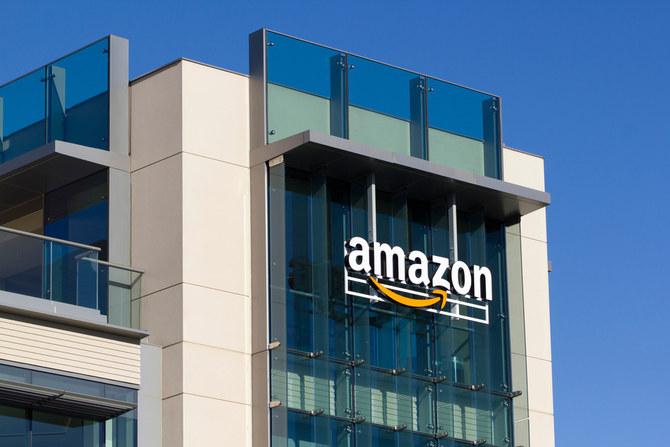
Italy hits Amazon with $1.3bn antitrust fine

Image: Shutterstock
Short Url
Updated 09 December 2021
Follow

Italy hits Amazon with $1.3bn antitrust fine

  • As Europe powers ahead with antitrust litigation, US regulators are closely watching its approach to big tech firms

Italian regulators hit Amazon with a 1.1 billion euro ($1.3 billion) antitrust fine Thursday for allegedly abusing its dominance in the market, the latest action against US Big Tech in the EU.


US technology giants have been in the firing line in the European Union over their business practices.


In the latest salvo, Italy’s competition watchdog said Amazon abused its dominant position by promoting its own logistics service on its Italian platform to the detriment of third-party sellers who did not use it.


“The abusive strategy adopted by Amazon is particularly serious, since it is likely to discourage, if not eliminate competition in the relevant markets,” read the 250-page decision.


The move comes two weeks after the same authority imposed a 68.7 million euro fine on Amazon for infringing EU laws through restrictions that penalized sellers of Apple and Beats products.


In the same action, Apple was ordered to pay 134.5 million euros.


As Europe powers ahead with antitrust litigation, US regulators are closely watching its approach to big tech firms, after Washington pledged to intensify scrutiny of the technology industry.


Amazon did not immediately respond to a request for comment.

The Italian watchdog said Thursday that third-party sellers who do not use Amazon’s logistics service are excluded from “a set of advantages essential for obtaining visibility and better sales prospects.”


Those included better access to Amazon’s “most loyal and high-end customers” who use Amazon Prime, the e-commerce giant’s loyalty program.


Moreover, a tough performance measurement system is reserved for sellers who do not use Amazon’s logistics system, which can lead, if failed, to suspension of the seller’s account.


“In doing so, Amazon has harmed competing e-commerce logistics providers by preventing them from presenting themselves to online sellers as service providers of comparable quality to Amazon’s logistics,” said the watchdog, adding that such conduct had “increased the gap between Amazon’s power and that of its competitors.”


In its decision, the authority said it had imposed measures on Amazon subject to review by a monitor.


The company must grant sales privileges and visibility to all third-party sellers who meet fair and non-discriminatory standards for fulfilment, and must decide and publish such standards, it said.


Last month, EU legislation to impose unprecedented restrictions on how US tech giants do business passed a first, significant hurdle, with a European Parliament committee approving their version of the Digital Markets Act.


That would slap far-reaching rules on companies like Amazon, Facebook, Google, Apple and Microsoft.


Such tech companies have been variously accused of stifling competition, not paying enough taxes, stealing media content and threatening democracy by spreading fake news.


US pump prices surge as Iran war upends global energy supply

Updated 07 March 2026
Follow

US pump prices surge as Iran war upends global energy supply

  • Fuel prices jump over 10 percent as oil prices surge
  • Analysts predict further price rises due to market conditions

MARIETTA/NEW YORK : US retail gasoline and diesel prices are soaring as the US-Israel war with Iran constrains oil and fuel exports, which could be a political test for President Donald Trump’s Republican Party ahead of midterm ​elections in November.
Fuel prices jumped more than 10 percent this week as oil rose above $90 a barrel, its highest in years, adding pain at the pump for consumers already strained by inflation.
Trump on Thursday shrugged off higher gasoline prices in an interview with Reuters, saying “if they rise, they rise.”
The president had vowed to lower energy prices and unleash US oil and gas drilling during his second term, but much of his tenure has been marked by volatility and uncertainty amid shifts in policies like tariffs and geopolitical turmoil.
The US is the world’s largest oil producer. It is a major exporter but also imports millions of barrels a day since it is the world’s largest oil consumer.
As of Friday, the national average prices for regular gasoline stood at $3.32 a gallon, up 11 percent from a ‌week ago and ‌the highest since September 2024, according to data from the motorists association AAA. Diesel was at $4.33, ​up ‌15 percent ⁠from a week ​ago, ⁠surging to the highest since November 2023.

Midwest, south feel the pinch
US motorists in parts of the Midwest and the South, including states that supported Trump, have seen some of the steepest increases in fuel costs since the conflict in Iran started.
In Georgia, a swing state, average retail gasoline prices rose 40.1 cents a gallon over the past week, according to fuel tracking site GasBuddy.
Andrenna McDaniel, a health care insurance worker in South Fulton, Georgia, said she was surprised to see prices skyrocket overnight.
“They jumped up so quickly,” she said on Friday, adding that she does not agree with the war at all.
McDaniel, a Democrat, said that for now she is only driving for the most important things, ⁠and feels lucky that she works from home so she does not have to drive as ‌much as other people do. Georgia voted for Donald Trump in the 2024 election.
Trump voter ‌Richard Soule, 69, a US Air Force veteran and a retired firefighter, said ​a little pain at the pump is worth Trump’s efforts to ‌protect America.
“When President Trump went in there and bombed out their nuclear, and they just thumbed their nose at it, ‌I believe he did the right thing at the right time,” Soule said on Friday as he filled up his Ford F-150 truck in Marietta, Georgia.
Other states, including Indiana and West Virginia have seen prices rise by 44.3 cents and 43.9 cents, respectively.

Prices may rise further
More pain may be on the way, analysts said, as oil prices continue to trend upward. On Friday, US oil futures settled at $90.90 a barrel, up nearly $10 and ‌the biggest single-day rise since April 2020.
“Given current market conditions, the national average price of gasoline could climb toward $3.50 to $3.70 per gallon in the coming days if oil continues rising and supply ⁠disruptions persist,” GasBuddy analyst Patrick De ⁠Haan said.
The disruptions in the Middle East and the Strait of Hormuz, a key trade conduit, have boosted demand for US oil abroad, which in turn has driven up prices for domestic refiners too.
“The US has weaned itself off of its dependence on Middle Eastern crude, but obviously Asian refineries, and to a lesser extent, European refineries have not,” Denton Cinquegrana, chief oil analyst with OPIS. “That’s what you’re seeing happen in the spot market, because the demand for US exports rise, and so the price rise.”
Seasonal factors could add further pressure. Gasoline prices typically go up in the spring and peak in the summer due to higher gasoline demand and production of summer-blend gasoline, which is more costly to produce. Diesel fuel saw an even more aggressive jump since Iran began retaliating against US and Israeli strikes, significantly disrupting shipping in the Strait of Hormuz.
Global diesel inventories have remained in tight supply due to heavy demand for heating and power generation during a prolonged winter in the US and other parts of the world and a structural tightness of refining ​capacity. Sticker prices of everything from food to furniture go up ​when the cost of diesel goes up, as the fuel is mainly used in freight transportation, manufacturing, agriculture, and global shipping, analysts said.
“In a world where buzzword seems to be ‘affordability’, that is certainly not going to help,” Cinquegrana said.