YANGON/BANGKOK/GENEVA: Myanmar’s junta chief reduced the prison sentence of ousted leader Aung San Suu Kyi to two years on Monday, after she was jailed for four years for incitement against the military and breaching COVID-19 rules.
Suu Kyi, 76, has been detained since the generals staged a coup and ousted her government on Feb. 1, ending the Southeast Asian country’s brief period of democracy.
It is only the first in a series of cases brought against, including violating the official secrets act, illegally importing walkie talkies and electoral fraud, and faces decades in prison.
On Monday Suu Kyi was sentenced to two years for incitement against the military and another two years for breaching a natural disaster law relating to COVID, junta spokesman Zaw Min Tun told AFP by phone.
Former president Win Myint was also initially jailed for four years on the same charges, which the US later blasted as an “affront” to justice.
Junta chief Min Aung Hlaing later “pardoned” the sentences of both to “two years imprisonment,” according to a statement read out on state TV.
They would serve their sentences under the house arrest they have been kept under by the military at an unknown location in the capital of Naypyidaw, the statement said, without giving further details.
Dr. Sasa, spokesperson for the National Unity Government, an opposition group that has declared itself the country’s shadow administration, called the verdict “a shameful day for the rule of law, justice and accountability in Myanmar” and said it represented an effort to “replace our dreams with military dictatorship forever.”
On Monday evening residents in parts of commercial capital Yangon banged pots and pans — a practice traditionally associated with driving out evil spirits but which has been used since February to show dissent against the military.
Suu Kyi’s incitement conviction related to statements her National League for Democracy party published shortly after the coup condemning the generals’ takeover.
The COVID charge is linked to last year’s election, which the NLD won in a landslide, but the details are not clear with the government imposing a gag order on the court proceedings.
Journalists have been barred from attending the special court hearings in Naypyidaw and Suu Kyi’s lawyers were recently banned from speaking to the media.
In recent weeks, other senior members of the NLD have received long sentences.
A former chief minister was sentenced to 75 years in jail, while a close Suu Kyi aide was jailed for 20.
Suu Kyi also faces multiple corruption charges — each of which carries a possible sentence of 15 years in prison.
If found guilty of all the charges she faces, Suu Kyi could be sentenced to more than 100 years in prison.
The UN human rights investigator on Myanmar urged countries on Monday to increase economic pressure on Myanmar’s junta.
“Today’s sentencing demonstrates why the international community must take stronger action to support the people of Myanmar by denying the junta the revenue and weapons that they need to continue their illegitimate grip on the people of Myanmar,” Thomas Andrews, a former US congressman from Maine who is serving in the independent post, said in a statement.
“I call upon Member States to significantly increase pressure on the junta as a result of this outrageous action.”
Amnesty International immediately condemned the original sentences against Suu Kyi.
“The harsh sentences handed down to Aung San Suu Kyi on these bogus charges are the latest example of the military’s determination to eliminate all opposition and suffocate freedoms in Myanmar,” said Amnesty deputy regional director for Campaigns Ming Yu Hah.
UN rights chief Michelle Bachelet said the conviction “following a sham trial in secretive proceedings before a military-controlled court is nothing but politically-motivated.”
UK foreign minister Liz Truss slammed the sentence, adding “the arbitrary detention of elected politicians only risks further unrest.”
The United States joined others in calling for her release.
“The regime’s continued disregard for the rule of law and its widespread use of violence against the Burmese people underscore the urgency of restoring Burma’s path to democracy,” Secretary of State Antony Blinken said in a statement, using a former name for Myanmar.
As is typical, China, a neighbor that has maintained friendly ties with Myanmar’s military leaders, declined to criticize the verdict.
Beijing hopes “all parties in Myanmar will bear in mind the long-term interests of the country, narrow differences and carry on the hard-won democratic transition process,” Foreign Ministry spokesperson Zhao Lijian told reporters Monday.
The military, which has dominated life in Myanmar for decades, has defended its coup, claiming fraud allegations in last year’s general election.
International pressure on the junta to restore democracy swiftly has shown no sign of knocking the generals off course, and bloody clashes with anti-coup protesters continue across the country.
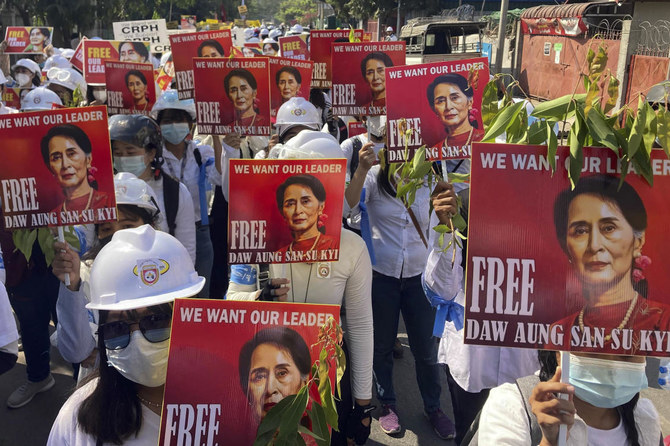
On Sunday soldiers in Yangon wounded at least three people after ramming a car into peaceful demonstrators, some of whom were carrying pro Suu Kyi banners, eyewitnesses said.
State media said one had sustained serious wounds and 11 had been arrested for protesting “without asking for permission.”
(With AFP, AP and Reuters)


![]()

Myanmar's Suu Kyi convicted in further blow to democracy
Short Url
https://arab.news/cfxc2
Myanmar's Suu Kyi convicted in further blow to democracy
- Suu Kyi was sentenced to jail on charges of incitement and breaching coronavirus restrictions
- Former president Win Myint was also initially jailed for four years on the same charges


Latest updates


Recommended


© 2026 SAUDI RESEARCH & PUBLISHING COMPANY, All Rights Reserved And subject to Terms of Use Agreement.