






JEDDAH: When you have seen Earth from space, your perspective on life, quite literally, changes.
The first Arab, and Muslim, to get that life-changing view, Prince Sultan bin Salman, has already lived a life few could imagine. Perhaps one that is a metaphor for the Kingdom’s hunger to always strive for the next achievement.
“Well, I haven’t started yet achieving anything I really wanted, so give me time, we’re still at the beginning,” Prince Sultan said with a knowing smile, “but every experience has its own dimensions, and I took it on in my life not to compare experiences.”
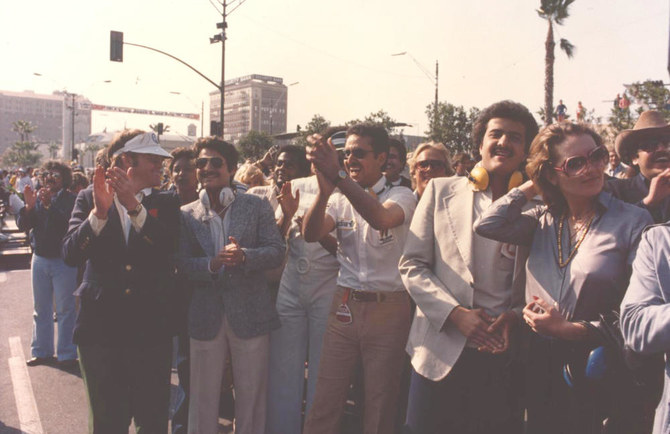
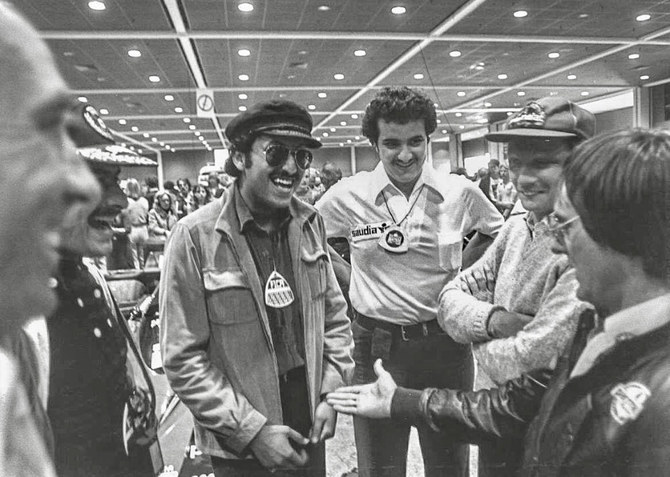
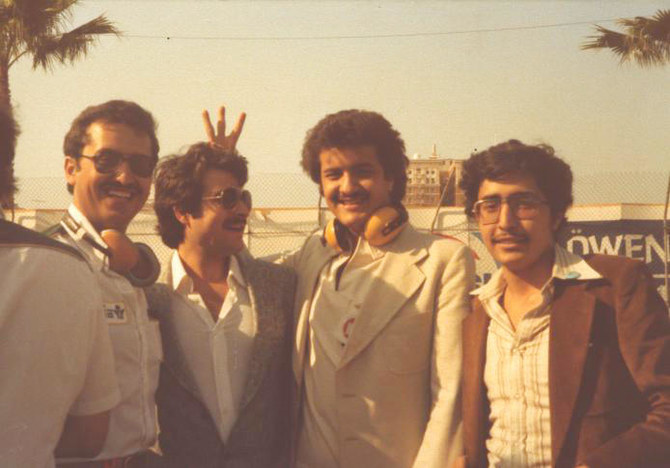
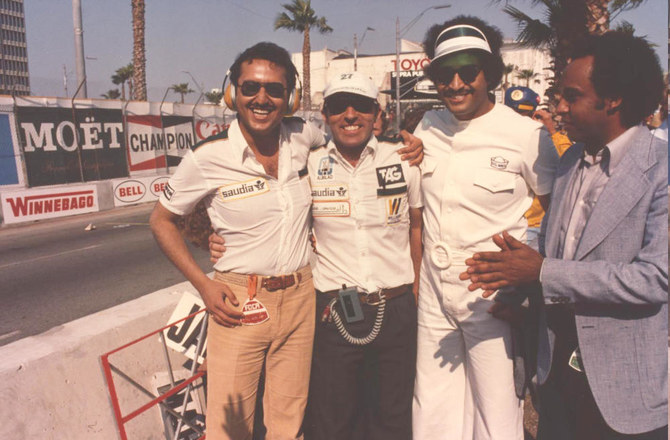
In this photo dated 1979, Prince Sultan bin Salman with the late Prince Fahd bin Salman and Prince Mohammed bin Nawaf Al-Saud at the Grand Prix of Long Beach, California in the US. (Supplied)
From the vastness of space to the desolation of the desert, it is all about appreciating the moment.
“I could be walking with my camels in the desert,” he said. “On the space shuttle experience, it was a completely separate experience. As pilots, we’re very excited. But then when you go into space, (the) shuttle is really not a pilot experience. You think it’s like ‘I’m a pilot, I’m going to enjoy seeing the Earth for a bit of further destination distance.’”
In his book "Seven Days in Space", the prince expands on becoming the first Arab astronaut at the age of only 28.
Prince Sultan’s passion these days is flying Learjets, a legacy of his days as a pilot with the Royal Saudi Air Force in the 1980s. His trip on the Space Shuttle Discovery would take place from June 17 through June 24, 1985. But it was in the 1970s that he fell in love with cars — his own and, eventually, Formula One cars.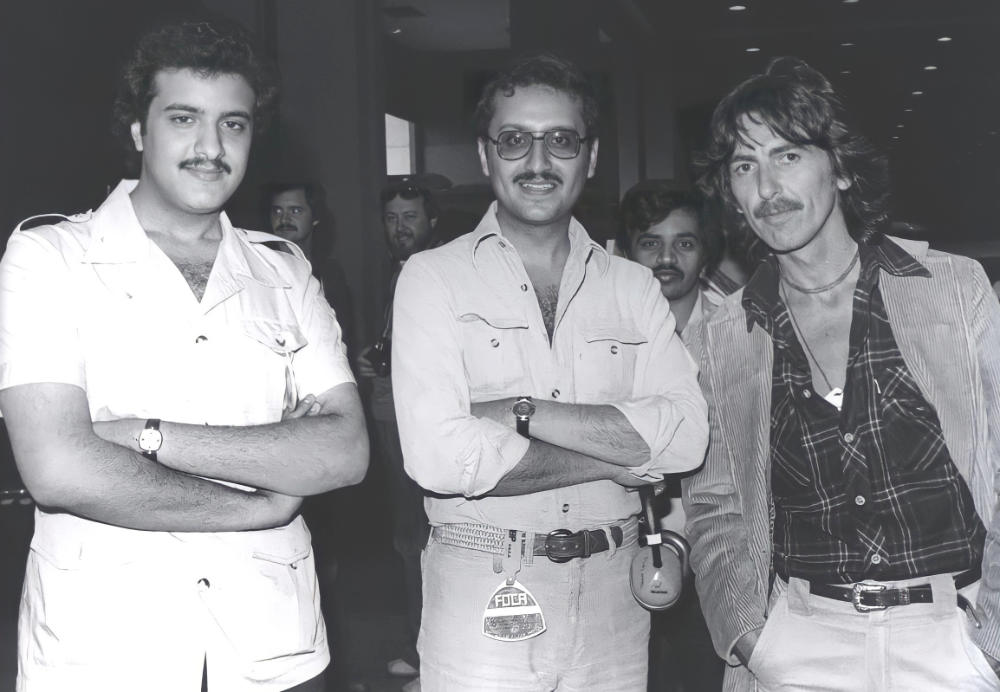
The first-ever Saudi Arabian Grand Prix may be hours away but the Kingdom’s historical connection with F1, perhaps a forgotten one, stretches back to the late 1970s and early ‘80s. And for that, Prince Sultan can take a big share of the credit.
It was a chance meeting with Frank Williams — who passed away last week at the age of 79 — in Colorado in 1978 that would lead to Saudi Arabia’s first steps into F1. Prince Sultan remembers him with genuine affection.
It’s going to become an industry in Saudi, and it’s going to become something that we make, and we’d be proud of. You’ll see Saudi Arabia surpassing in technology and development and of course, in drivers.
Prince Sultan bin Salman
“Frank Williams, God bless his soul,” he said. “He was a good man, he loved Saudi Arabia, and I really wished that he would have come to this (grand prix) because I was communicating that when he came, we’ll do a joint interview on television about how the team started.”
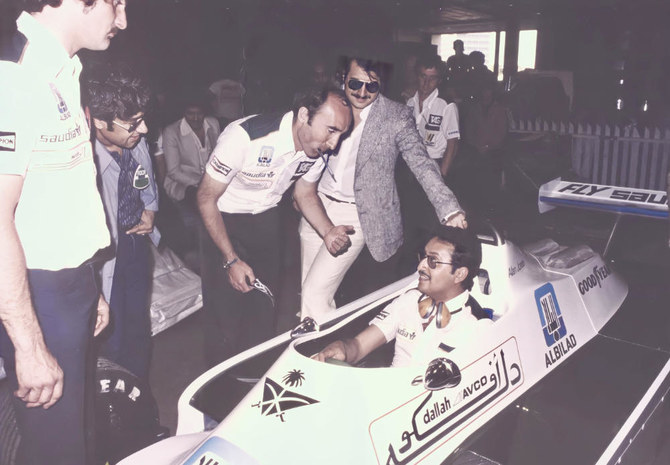
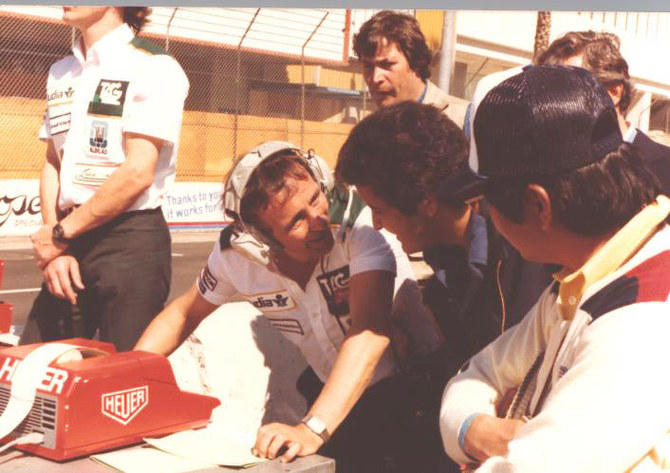
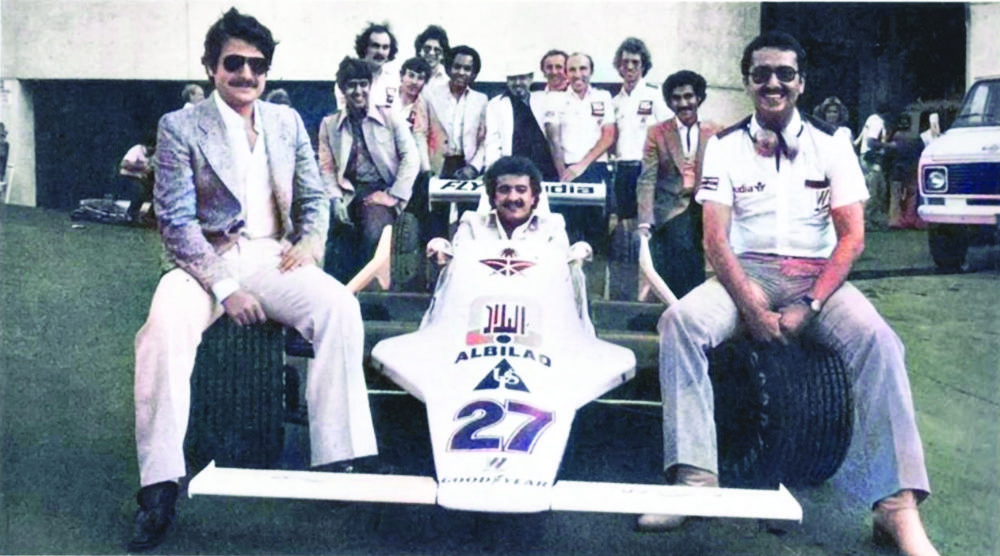
Soon the owner of Williams racing, established in 1977, and its technical director, Patrick Head, were visiting the Kingdom, where Prince Sultan introduced him to his late brother and mentor, Prince Fahd bin Salman, and Prince Mohammed bin Nawaf Al-Saud, the fomer ambassador for Saudi Arabia to Italy and the UK.
“And then the sponsorships started falling in,” said Prince Sultan.
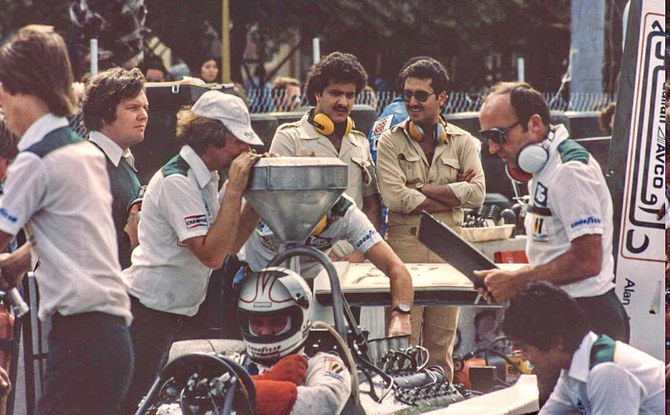
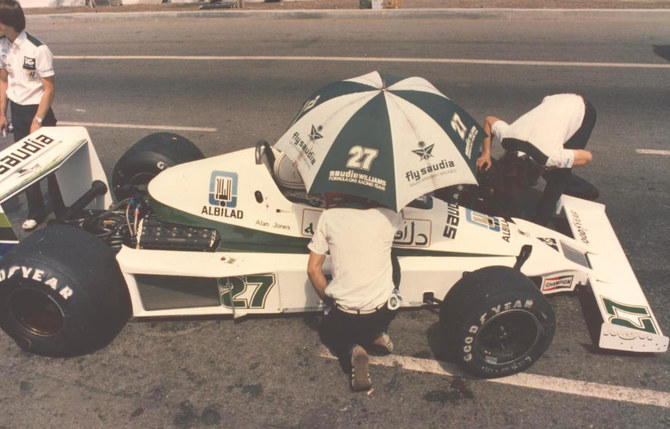
These partners were Al Bilad, which gave its name to the team, and national airline and major sponsor Saudia, which backed the team to the tune of $100,000, a fortune in those days.
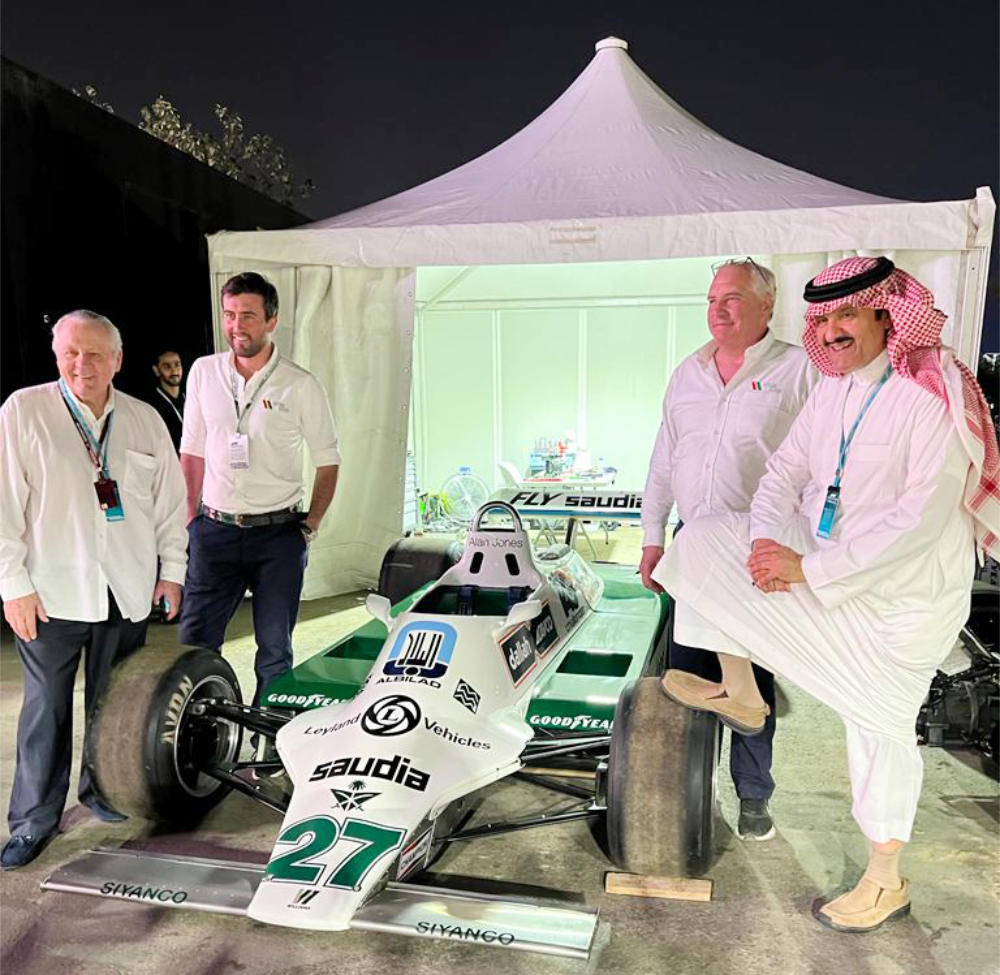
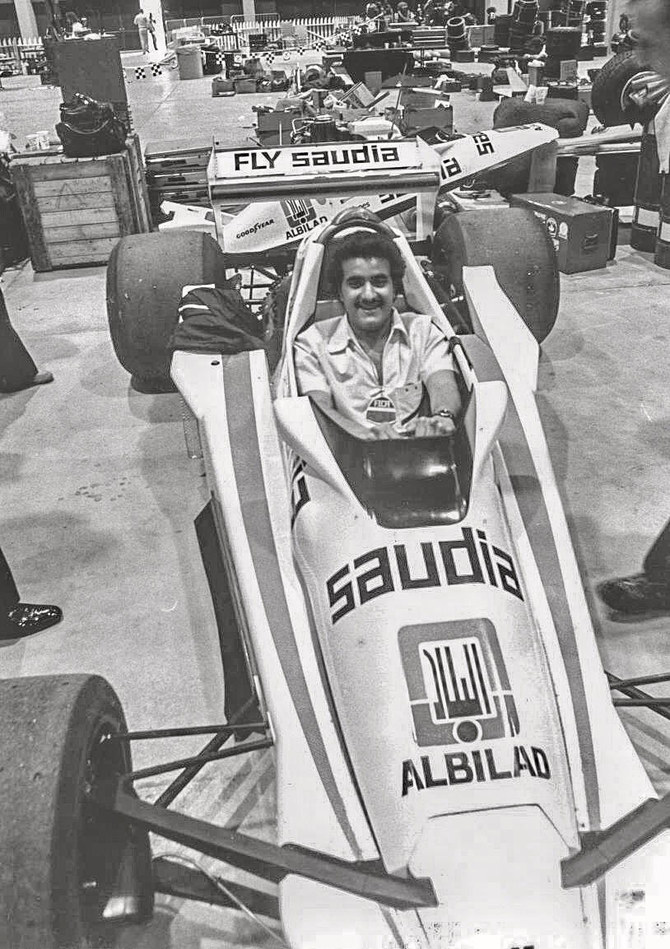
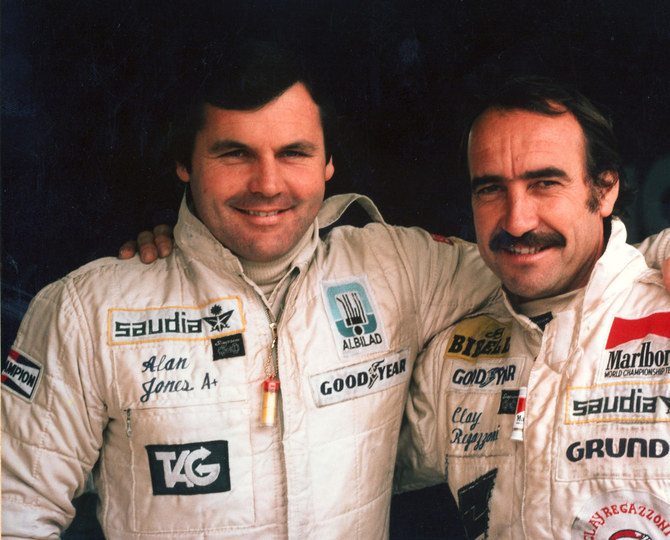
Prince Sultan bin Salman poses with a modern-day edition of the famous Saudi-sponsored Williams Formula One car of the early 1980s, with F1 champion Alan Jones to his right (Supplied)
The two Williams cars would also carry numbers associated with Prince Sultan.
“I was born on June 27,” he said, “so we have the two cars 27 and 6. And then we had 28, which is the backup car. So when Frank and I were talking, Frank said he was willing to do anything. I wish I’d said I’d like to own half of the team for bringing in a sponsor and all that. He would have done that, but I was in it for fun.”
And fun he would have. A famous trip to California for the Long Beach Grand Prix in 1979 - in which saw the trio of Saudi Princes enjoying the company of the likes of Williams, legendary drivers Niki Lauda and James Hunt, and former Beatle George Harrison.
Well, I haven’t started yet achieving anything I really wanted, so give me time, we’re still at the beginning.
Prince Sultan bin Salman
“Harrison had a very nice personality,” said Prince Sultan. “I met some of those rock and roll stars in America, and we’d go to concerts. But George Harrison was very, very polite, nice to be with. We would go to dinners and events, he would sit at the same table, and we’d talk. He offered once that if I came to London, he would introduce me to a couple of The Beatles.”
With “Fly Saudia” adorning its wings, Williams stormed to the Constructors Championship in 1980 and 1981. The Australian Alan Jones, who had posted the team's first ever win at that memorable Long Beach Grand Prix, drove Williams to the Driver’s Championship in the first of those triumphs, and in 1983, Keke Rosberg — father of 2016 F1 champion Nico — retained the individual title for the team despite winning only one race all season.
On Saturday, Dec. 4, Prince Sultan’s story with F1 came full circle as he visited Jeddah Corniche Circuit and alongside Alan Jones, Jackie Stewart, Saudi Minister of Sport Prince Abdulaziz bin Turki Al-Faisal and Aramco CEO Amin Nasser, paused for photos on a modern day reproduction of those iconic Williams cars from the early 1980s.
For Jones in particular, this was a poignant reunion four decades after his championship win with Williams.
The prince is still a fan of F1 and joked that he will not be cheering for Lewis Hamilton as “he’s won everything” and should leave something to the others.
I’m always in favor of the young drivers who have just come to this industry,” said Prince Sultan.
HIGHLIGHTS
• The first-ever Saudi Arabian Grand Prix may be hours away but the Kingdom’s historical connection with F1, perhaps a forgotten one, stretches back to the late 1970s and early ‘80s. And for that, Prince Sultan can take a big share of the credit.
• It was a chance meeting with Frank Williams — who passed away last week at the age of 79 — in Colorado in 1978 that would lead to Saudi Arabia’s first steps into F1. Prince Sultan remembers him with genuine affection.
Conditions for the first ever Saudi Arabian Grand Prix are ideal, he believes. “It comes down to, of course, Jeddah is at sea level and there’s the fantastic timing of December now,” he said. “So the cars are not going to suffer. It reminds me of Long Beach because it’s right on the ocean, it’s on the beach. We don’t have the Queen Mary parked there, but we have beautiful Jeddah and it’s really tremendous, we’re all looking forward to it.”
Prince Sultan is proud of all things Saudi and highlights the achievements of its engineers, artists, photographers and sportsmen. He sees a time when world class drivers will be added to the list.
“Eventually, we’re going to have Saudi drivers (in) F1,” he said. “It is genetic here, I’m telling you, it’s genetic here to be able to do a lot of things, and completely connect very quickly. The talent is here.”
Prince Sultan added: “If you want the definitive thing from me, I say Saudi Arabia not only has to host F1 — we have to go beyond that. We have to do what Saudi Arabia does best, not to beat this or to be better than that, but we need to do our own car and push the technology that will filter down to other things we do here in Saudi, and we need to build it and design it.”
The motorsport industry in the Kingdom has already taken major steps in recent years, with the hosting of the Dakar Rally, Formula E and Extreme E, and now, the grandest of the lot.
“Saudi Arabia’s relationship with F1 is not going to stop, I’m sure, by hosting it on the racetrack,” he said. “It’s going to become an industry in Saudi, and it’s going to become something that we make, and we’d be proud of. You’ll see Saudi Arabia surpassing in technology and development and of course, in drivers.” We’re still at the beginning.


