








DUBAI: Veteran photographer Ramesh Shukla has lived in the UAE for the best part of five decades. He arrived from his native India just as the former Trucial States were approaching independence from Britain and embarking on a remarkable journey of nation building.
Now 84 years old, he witnessed firsthand the UAE’s evolution from a collection of disparate desert sheikhdoms and fishing villages into a global business hub synonymous with entrepreneurial dynamism, cosmopolitan cities and incredible skylines.
It is a transformation whose story he has diligently documented with his camera through the decades.
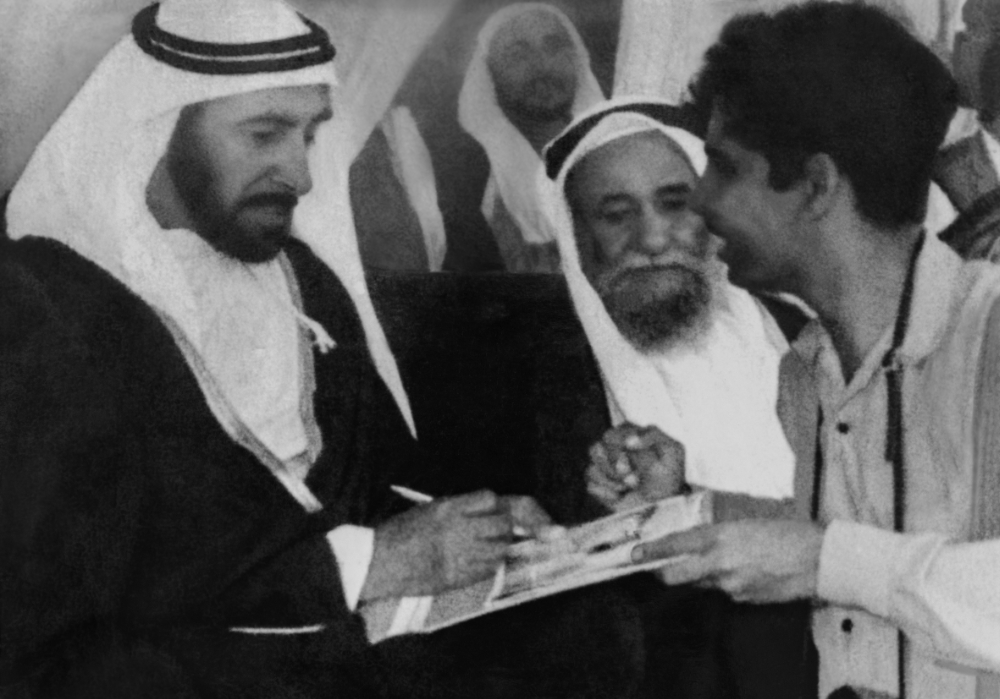
Sheikh Zayed signing his name on a photo for a young Shukla. (Photo courtesy of Ramesh Shukla)
His attachment to the country began by accident following a rather uncomfortable boat journey from Mumbai in 1965. At the time, Shukla was working for the Times of India newspaper, but the lure of exploration proved too great to resist.
Packing his most cherished possession, a Rolleicord camera, and as many rolls of film as he could carry, the young man, then in his twenties, set off on what would be a life-changing adventure.
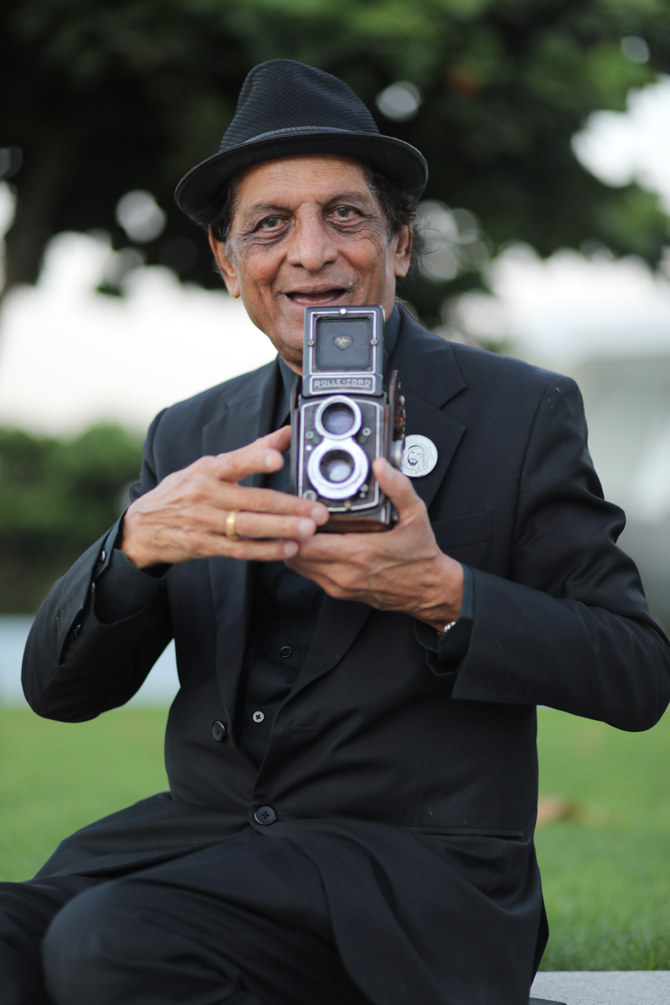
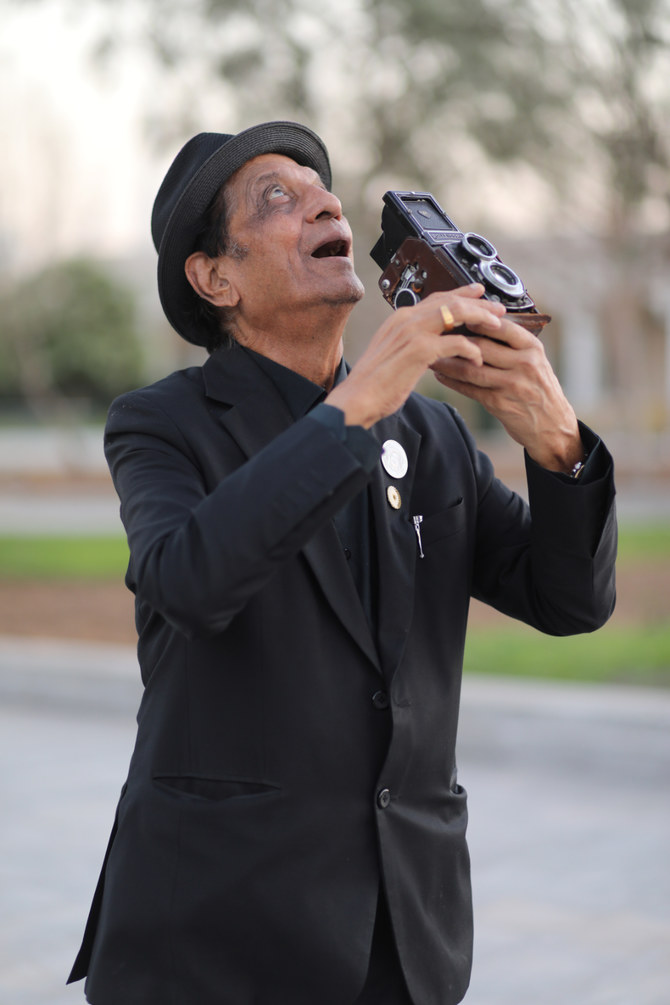
“This is my camera,” Shukla told Arab News at Dubai’s Etihad Museum more than half a century later, carefully cradling his now-vintage Rolleicord.
“When I was 15, my father asked me: ‘What birthday gift do you want?’ And I said: ‘Papa, please give me a camera.’”
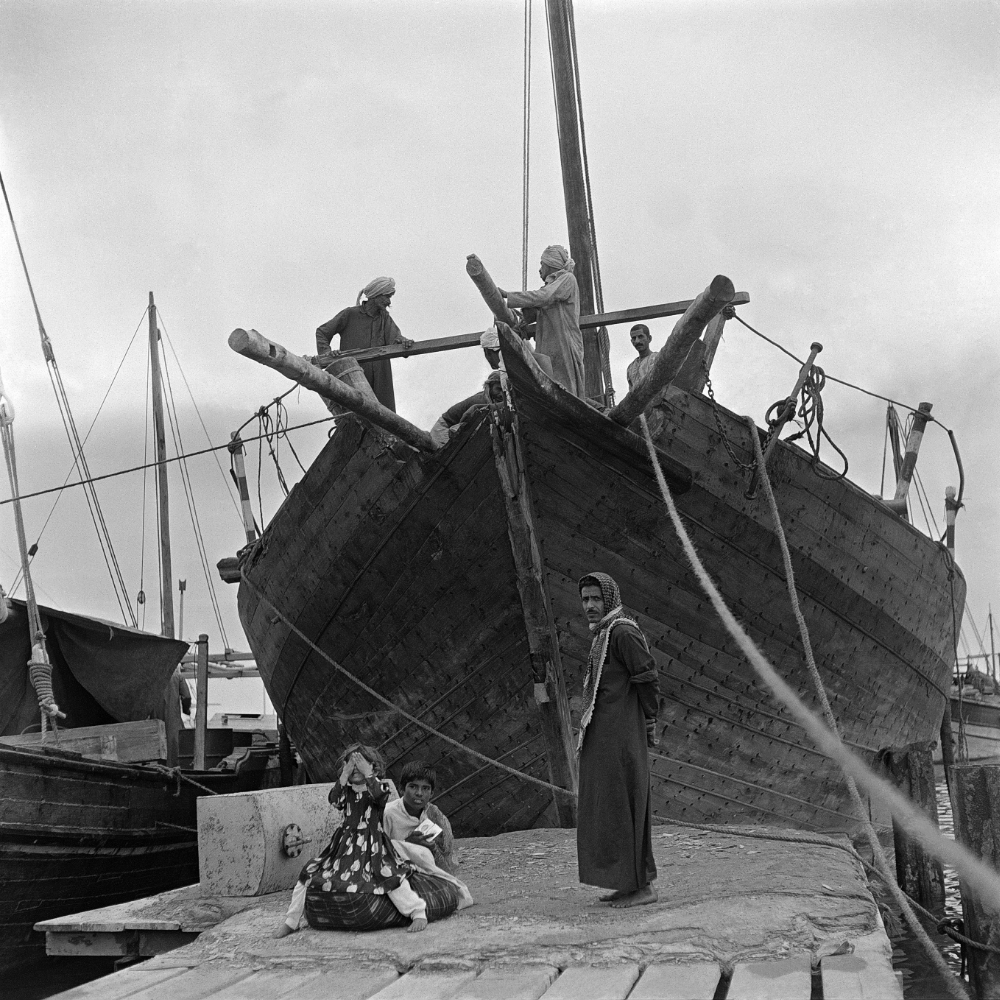
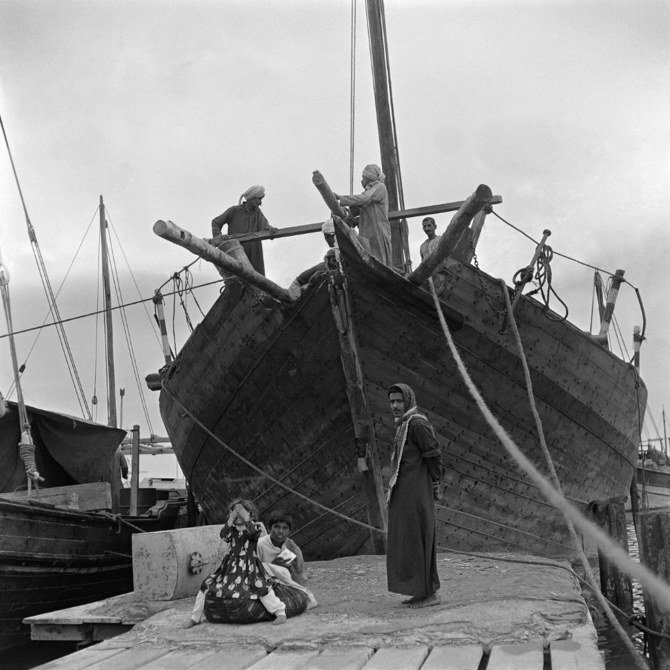
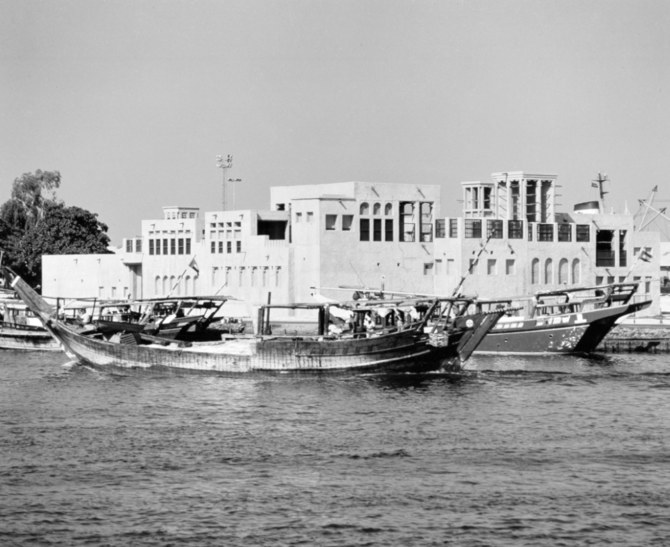
The old dhow wharfage in Deira in Dubai. (Photo by Ramesh Shukla)
Despite his desire to see the world, Shukla, it transpired, was not well suited to sea travel. Shortly after his ship, the Dwarka, set sail from Mumbai he began to feel horribly seasick.
Desperate to escape the incessant rocking of the waves, he disembarked at Sharjah, one of the Trucial States that at the time collectively were an informal protectorate of the British Empire.
Here he found lodgings with a local, who urged the young visitor to go to the Sharjah camel racetrack where a big event was taking place at the time. Eager to witness the authentic sights and sounds of Arabia, Shukla duly went along, camera in hand.
There, squatting on the ground alongside the racetrack, he spotted a group of men who would go on to found the UAE. Among them was Sheikh Zayed bin Sultan Al-Nahyan, who would soon become the new country’s first president, a position he held until his death on Nov. 2, 2004.
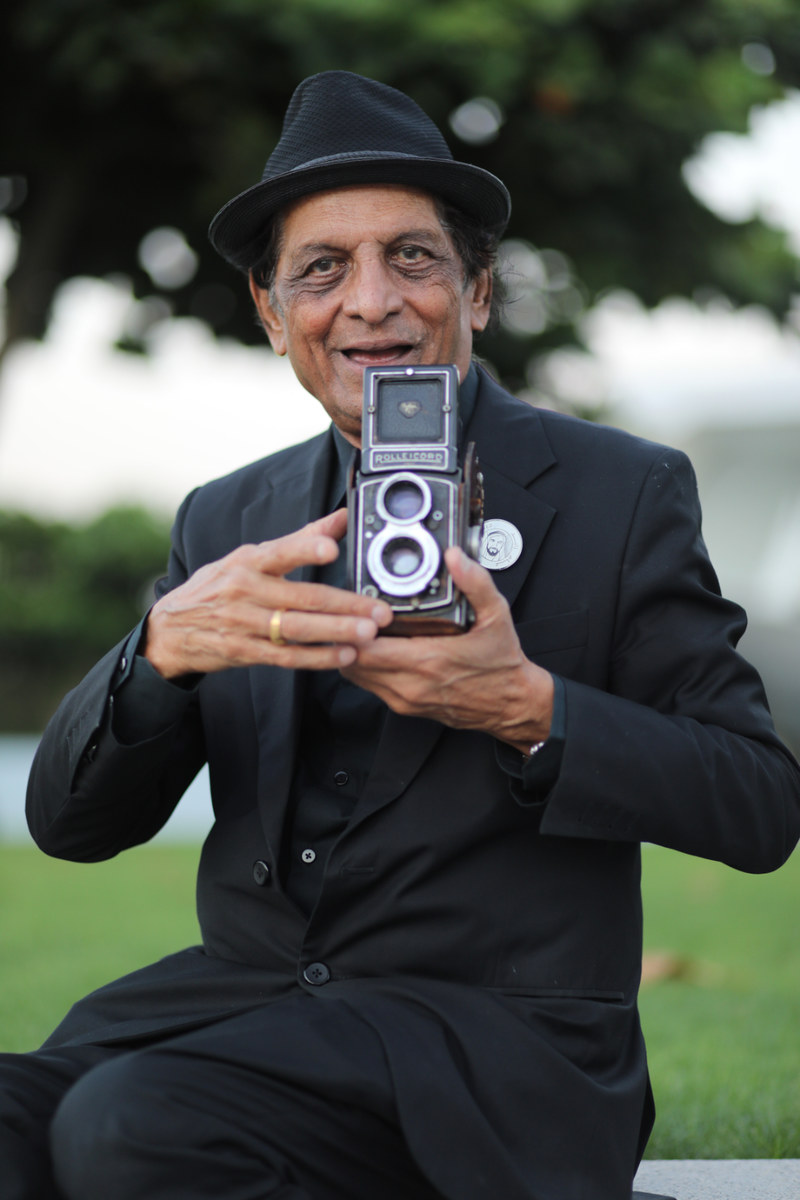
Ramesh Shukla cradling his vintage Rolleicord camera. (AN photo/Mohamed Fawzy)
Shukla took 12 photographs of Sheikh Zayed watching the races, and returned the following day to present him with one of his portraits. The ruler of Abu Dhabi, now commonly referred to as the “Father of the Nation,” was so impressed, he signed the print and gave Shukla his pen as a gift.
“That’s when the first connection took place,” Shukla’s son Neel, an art director, told Arab News. “That was the first time he met his highness. From that point on, Sheikh Zayed said: ‘Don’t leave this region. Stay.’”
Determined to remain, Shukla brought his wife and their son to live with him in his adopted country, during its formative years.
“I was with him all the time,” said Neel. “Before taking a picture, he would take my picture to make sure the lighting was accurate and then he would take the shot.”
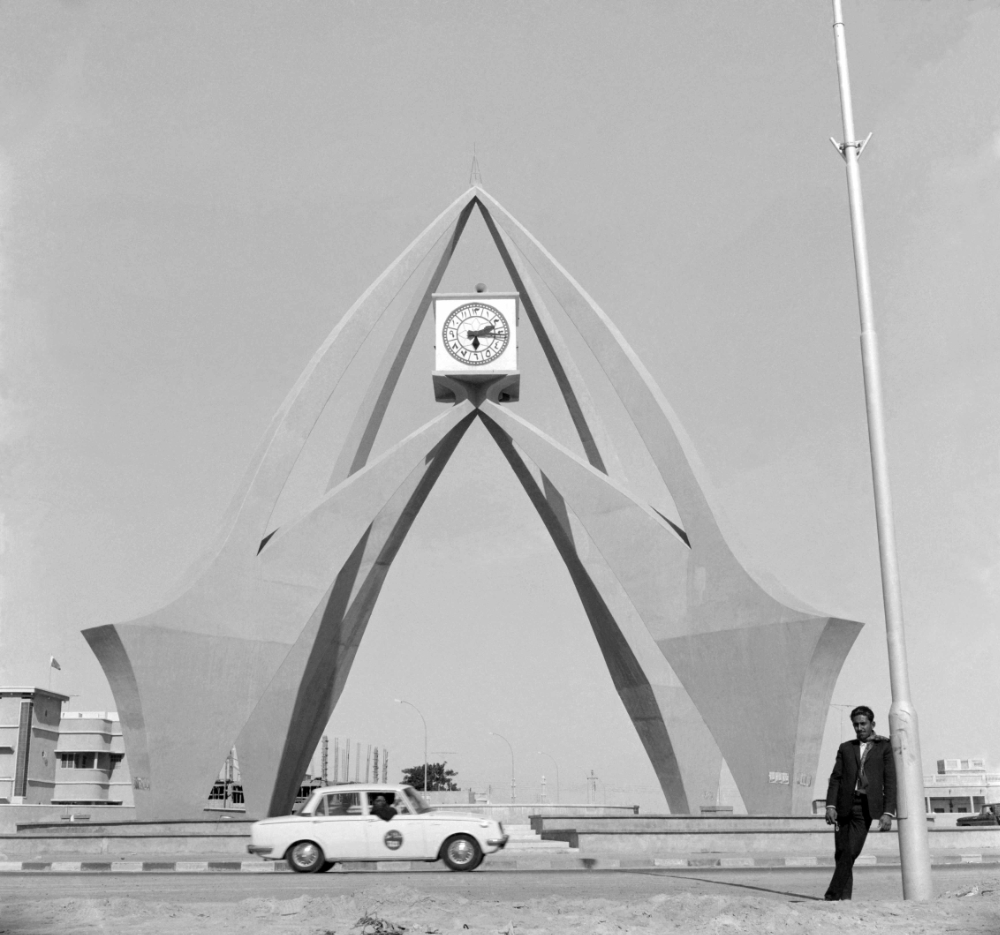
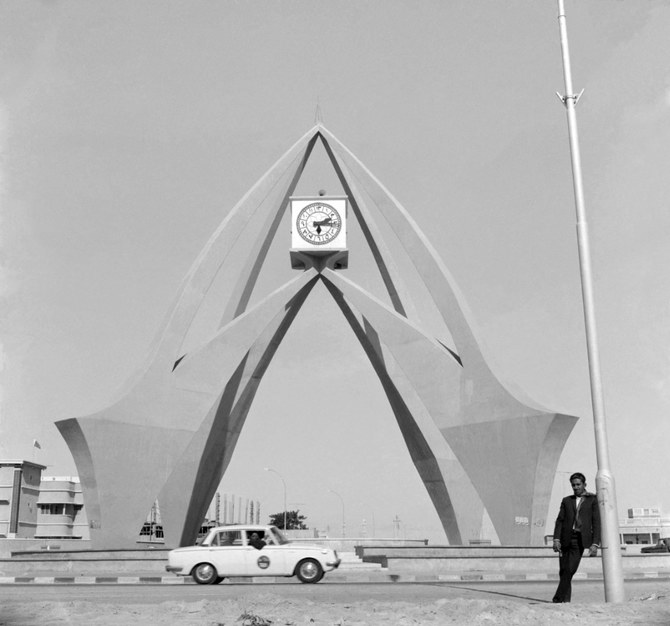
The clock tower in Deira, Dubai. (Photo by Ramesh Shukla)
Entirely self-taught, Shukla developed a signature style of photography, capturing scenes of everyday life on black-and-white film, highlighting the simplicity of nomadic life in the country prior to unification and the oil boom.
Recurring subjects of his early work included hardworking Bedouin, herds of camels, traditional abra boats on Dubai Creek and Deira’s clock tower, photographed from above. He also documented the early days of Dubai’s first commercial airport and the city’s first museum.
“This was life in the UAE; there was nothing. There was no light and no water in my house,” Shukla said, highlighting the contrast between the limited amenities available then and the advanced infrastructure in the country now. Even the water he needed to develop his photos had to be drawn from a nearby well.
Though his lifestyle was modest, Shukla built a strong rapport with the UAE’s leaders, earning the informal title of “royal photographer.” His prized access to the royal courts meant that his photographs were much sought after, especially by the Indian news media.
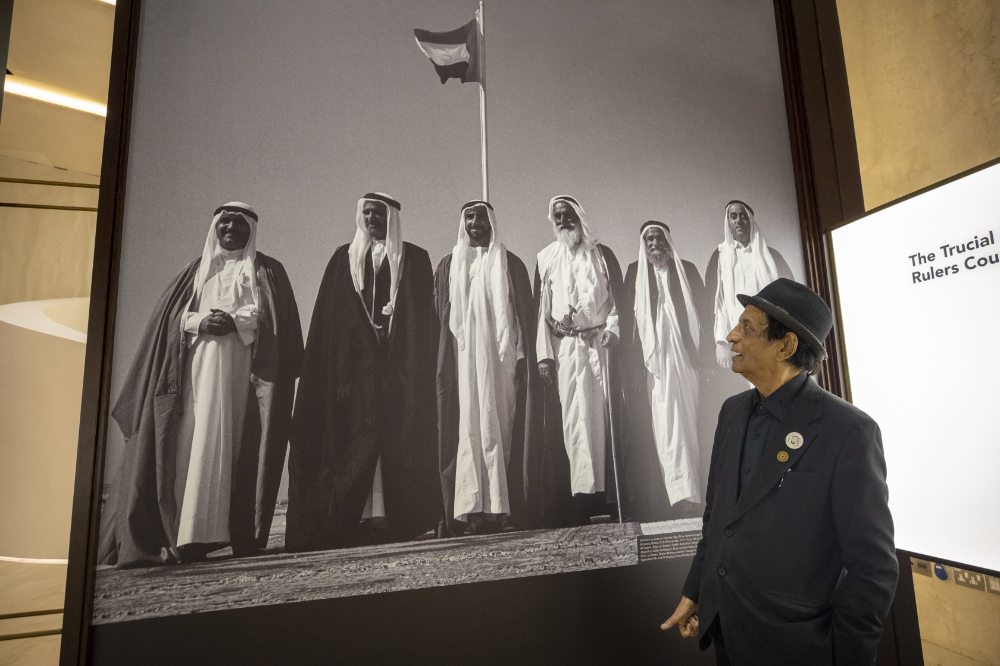
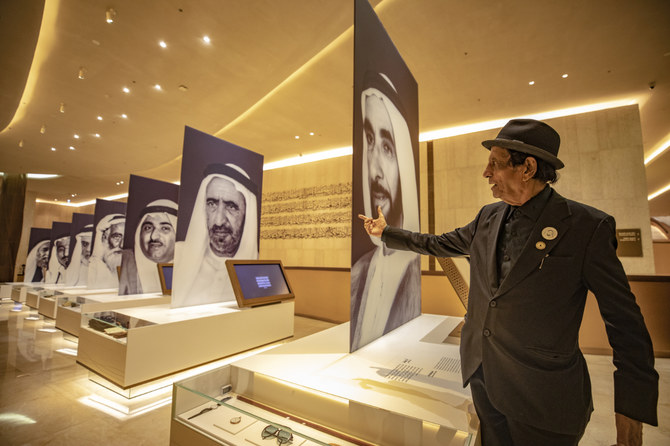
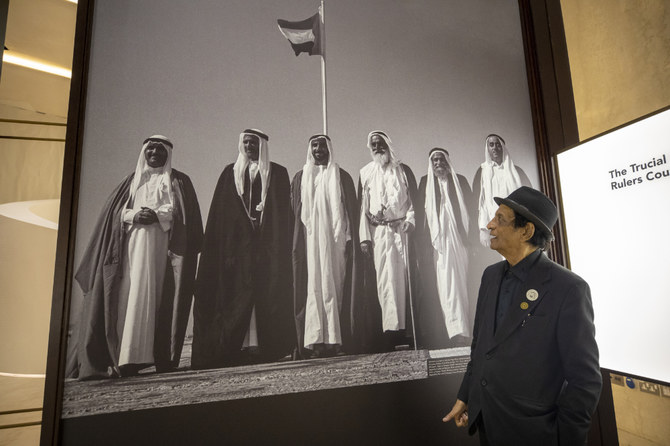
Ramesh Shukla with his iconic image of the UAE's founding fathers. (AN photo/Mohamed Fawzy)
Much of Shukla’s collection has been preserved for posterity thanks to his wife, Tarulatta, who carefully archived her husband’s negatives, protecting them from the humidity and dust, at their modest home in Deira, which consisted of a dark room, a kitchen and a bedroom. The archive offers a compelling account of the UAE’s 50-year journey as a nation.
“He kept documenting history,” said Neel. “We are very careful about the collection. We don’t commercialize it — this is history. This is why he is loved more than anything else, because he’s keeping history sacred and close to him.”
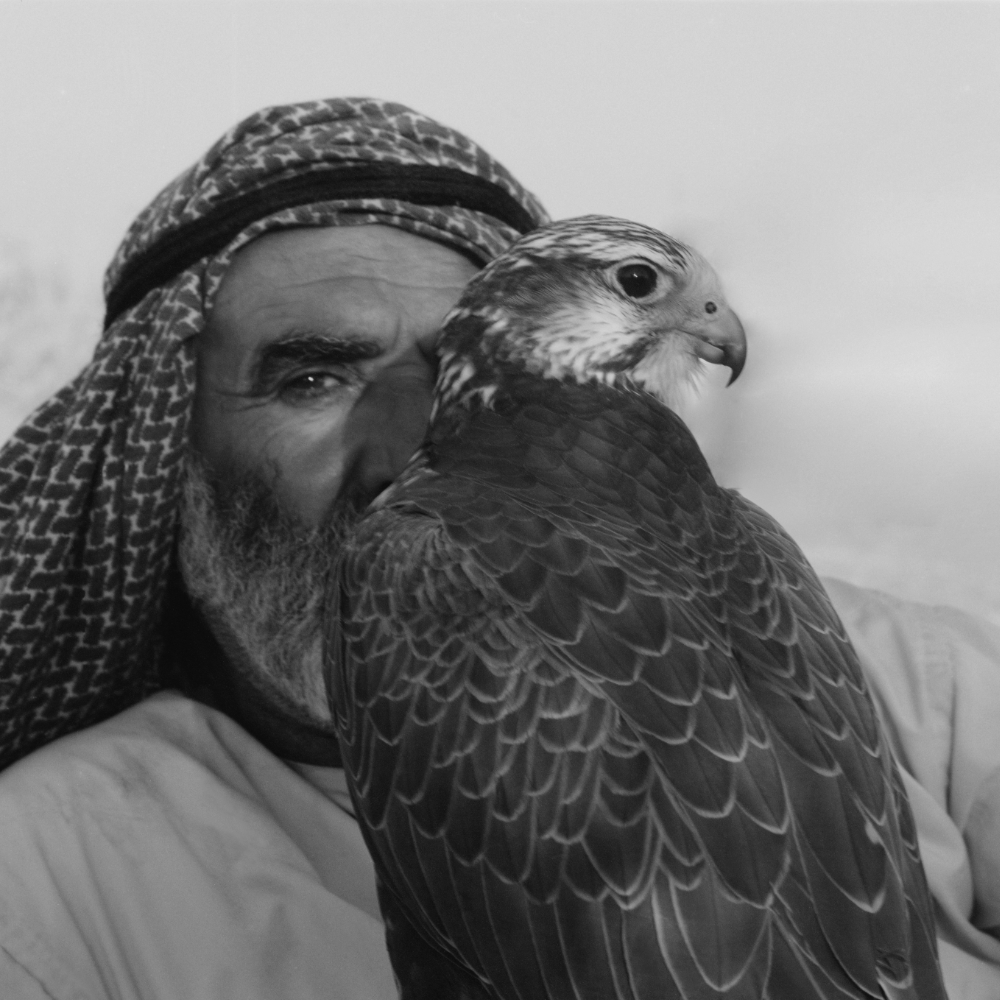
A royal falcon keeper. (Photo by Ramesh Shukla)
Shukla’s business card features a miniature print of a photograph of which he is especially proud. On Dec. 2, 1971, he attended the historic ceremony during which the rulers of Dubai, Abu Dhabi, Sharjah, Ajman, Fujairah and Umm Al-Quwain came together to mark their independence from Britain and the establishment of their own unified country. Ras Al-Khaimah would join the union the following month.
It was here that Shukla captured on film what would become an iconic image of the sheikhs standing under the national flag of their new country. The flagpole stands to this day in Dubai’s Jumeirah district.
“There was great happiness,” said Shukla, recalling the day, half a century ago, he took the photograph under the same flagpole. “With one family, the UAE started.”
Union House, where the agreement that created the UAE was signed, is nearby. Shukla was there, of course, to capture on camera the historic moment when Sheikh Zayed added his signature to the document. His photo of the assembled sheikhs became the “Spirit of the Union” logo, which was widely used on the 45th UAE National Day five years ago.
Many of Shukla’s photos are displayed at stations along the Dubai Metro line. More recently, his image of Sheikh Zayed signing the union agreement has featured in the Expo 2020 Dubai passports.
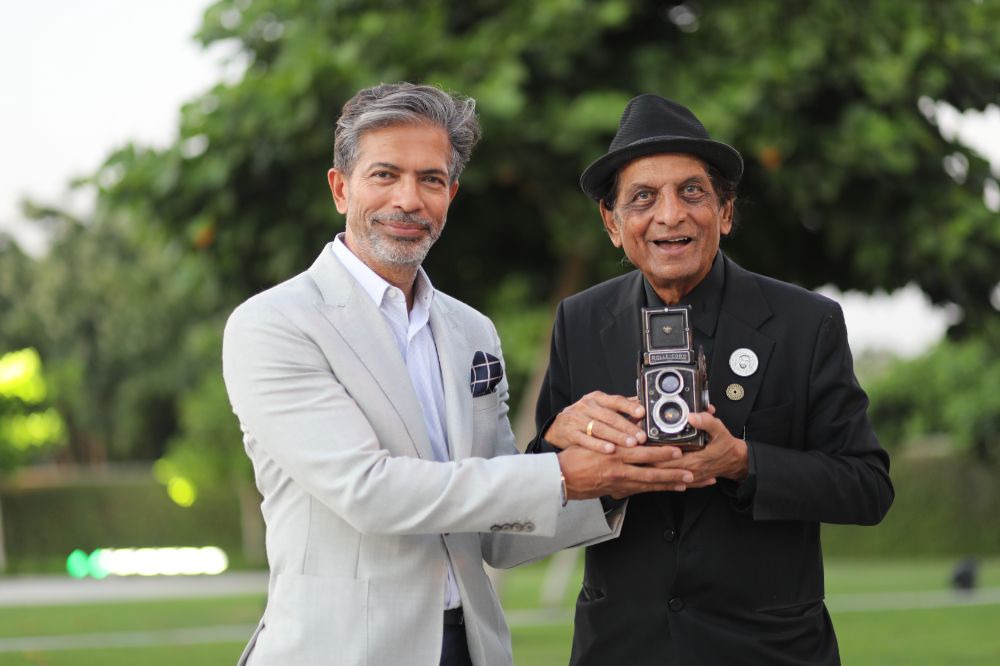
Ramesh Shukla with his son art director Neel Shukla. (AN photo/Mohamed Fawzy)
In recognition of his remarkable contribution to the UAE’s national story, the photographer was among the first of Dubai’s creative community to receive a coveted Golden Visa, which grants holders long-term residency rights without the need for a national sponsor, and 100 percent ownership of their own businesses.
Shukla has certainly led an eventful life, documenting the history of a nation from its very inception, including its natural and cultural heritage, its most pivotal and proudest moments, and even the lives of its heads of state.
Yet, he does not believe in retirement despite working so hard for so many years.
“After the age of 100, life starts,” he said.


