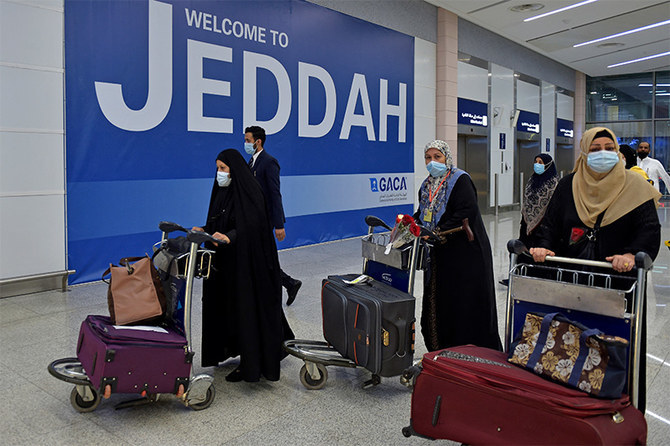
ISLAMABAD: Saudi Arabia’s ban on direct travel from Pakistan and several other countries came to an end on Wednesday as the country continues to relax travel restrictions imposed due to the coronavirus pandemic.
Saudi Arabia suspended all flights to and from the kingdom on March 14, 2020, after the World Health Organization declared the COVID-19 outbreak a global pandemic.
Entry to the kingdom by air, land and sea resumed on January 3, 2021, though a direct entry ban was imposed on certain countries of concern the following month.
Now, however, travelers from six countries — India, Egypt, Pakistan, Indonesia, Brazil and Vietnam — can arrive in the Kingdom without having to spend 14 days outside those countries before entering Saudi Arabia.
The travelers will need a valid, polymerase chain reaction PCR certificate and register on the Qdoom platform 72 hours before their flight departs. They will need to enter institutional quarantine for five days when they arrive, regardless of their immunization status outside the kingdom, and will need to take tests on the first and fifth days of their quarantine.
Though Saudi Arabia has eased travel from some destinations, it has been forced to implement new restrictions on some African countries after a concerning new coronavirus variant, Omicron, was detected in South Africa last week.
Last week, Pakistan International Airlines announced to expand its flight operations to Saudi Arabia two days after the kingdom lifted an entry ban on expats from six countries that was introduced to curb the spread of COVID-19.
The policy is going to take effect from December 1.
“The PIA administration has decided to expand its operations to Saudi Arabia by operating 35 flights from the beginning of December to Jeddah, Riyadh, Dammam and Al-Qassim,” the airline spokesperson, Abdullah Khan, told Arab News, last week.
Flights would originate from Pakistani cities of Peshawar, Islamabad, Lahore, Multan and Karachi.


![]()

Saudi Arabia ban on direct travel from Pakistan ends today
Short Url
https://arab.news/r2b83
Saudi Arabia ban on direct travel from Pakistan ends today
- Travelers from Pakistan and other nations will still need to enter institutional quarantine for five days when they arrive
- Saudi Arabia suspended all flights to and from kingdom in March 2020 after WHO declared global pandemic
Latest updates



© 2026 SAUDI RESEARCH & PUBLISHING COMPANY, All Rights Reserved And subject to Terms of Use Agreement.