

Emirates Global Aluminium, General Electric agree to cut greenhouse gases 

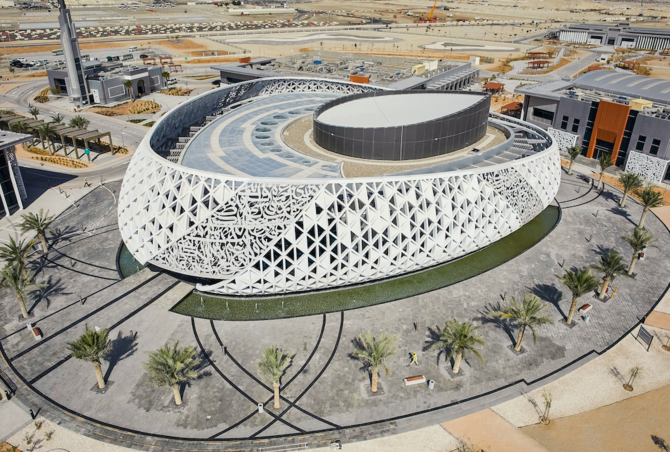
Ariel view of EGA headquarters (Emirates Global Aluminium)
Short Url
Updated 29 November 2021
Follow

Emirates Global Aluminium, General Electric agree to cut greenhouse gases 

The Middle East’s biggest metal producer, Emirates Global Aluminium, has signed an agreement with the global energy company General Electric to cut greenhouse gas emissions at its turbines in the UAE.

The companies aim to reduce greenhouse emissions from GE’s natural gas plants by exploring hydrogen as a fuel, as well as carbon capture, utilisation, and storage solutions, WAM reported. 

EGA handles 33 GE natural gas turbines at Jebel Ali and Al Taweelah with a power generation capacity of 5200 MW. They produce a significant proportion of the company’s total greenhouse gas emissions. 

The agreement is in line with UAE Government’s Hydrogen Leadership Roadmap objectives that were unveiled during COP26.


IMF managing director Kristalina Georgieva commends GCC economic success

Updated 4 sec ago
Follow

IMF managing director Kristalina Georgieva commends GCC economic success

DUBAI: The managing director of the International Monetary Fund, Kristalina Georgieva, has commended the Gulf’s economic success and said she admires its efforts.

Speaking at the World Governments Summit on Tuesday, Georgieva said discussions with ministers of finance and central bank governors in the region were showing maturity, which helped them move their economies forward.

“If you want to compete in the world we are today, you have to come up with a sense of purpose and unity and the Gulf has demonstrated capacity to do so,” she added.

Georgieva said she admired what the Gulf Cooperation Council had done with investing in human capital and recognizing the importance of dialogue and cooperation: “Because you have invested in human capital before AI took over, you have such a strong comparative advantage today when this new technology is coming to life.”

She also urged Gulf countries to learn from Europe’s mistakes.

“In the Gulf I am enthusiastic about what I see, there is more interest in harmonization of regulations, more collective decision making and focus on interregional trade,” she said. “Potential for that is huge and the Gulf is thinking about how to make the GCC a more impactful institution. Don't copy European institutions, they are too complicated.”

Georgieva added that, despite political challenges and obstacles, the world still needed trading.

“Trade is like water, you put an obstacle and it moves around it,” she said. “The world is trading because the majority of small and medium sized countries can’t produce anything at home and they need an integrated global economy.

“We live in a world of exhaustive shocks, we live in a world of uncertainty, this is not going to change.”

Georgieva also urged governments to get their economies in the best possible order and to cooperate with their neighbors to build economic bridges and connections.