RAMALLAH, West Bank: A Palestinian man was critically wounded after Jewish settlers pelted his car with stones as he drove through the occupied West Bank on Wednesday, causing him to veer off the road and crash, Palestinian officials said.
Raid Kharaz lost control of his vehicle when rocks hurled by settlers smashed through the windshield near the West Bank village of Al-Mughayir, according to Ghassan Daghlas, a Palestinian Authority official who monitors settler violence.
Kharaz was flown to a nearby hospital, while his son, who was also in the vehicle, sustained lighter injuries, the official Palestinian Wafa news agency reported.
The Israeli army referred questions to the police, who did not immediately respond to a request for comment.
The autumn has seen a sharp uptick in settler violence. In mid-November, dozens of settlers attacked a group of Palestinians and Israeli activists with stones and clubs, hospitalizing a woman and wounding several others. In the same week, Jewish settlers attacked a group of Palestinian farmers with pepper spray and clubs near an evacuated settlement outpost, wounding four people.
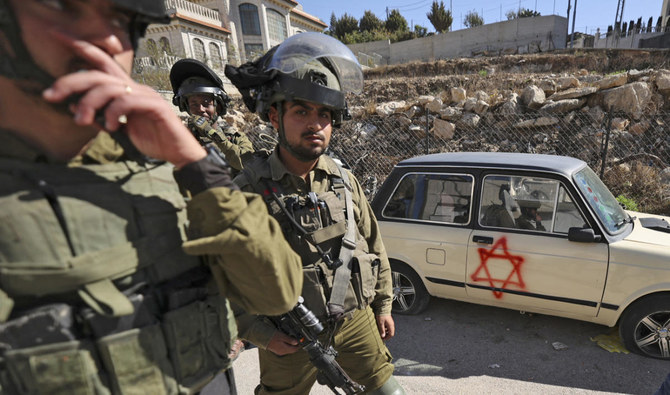
Recent months have also seen a steep rise in settler vandalism of Palestinian property known as “price tag” attacks, a term coined by far-right settlers in response to perceived efforts by Israel to restrict settlement expansion.
Israeli officials have spoken out against the violence, especially after dozens of settlers attacked a Palestinian village in September, wounding a toddler. But the Palestinians and rights groups say Israeli soldiers rarely intervene and often side with the settlers.
Israel captured the West Bank in the 1967 Mideast war, along with east Jerusalem and the Gaza Strip, territories Palestinians seek for a future state. Most of the international community views settlements as illegal and a barrier to peace. Israel views the West Bank as the biblical and historical heartland of the Jewish people, and says its status should be decided in negotiations.
Nearly 500,000 Jewish settlers live in over 130 settlements across the West Bank. Many are highly built up and resemble urban suburbs, while more radical settlers have established dozens of rural outposts without Israeli authorization.


![]()

Palestinian seriously hurt after settlers hurl stones at car
Short Url
https://arab.news/mzdfx
Palestinian seriously hurt after settlers hurl stones at car


Latest updates


© 2026 SAUDI RESEARCH & PUBLISHING COMPANY, All Rights Reserved And subject to Terms of Use Agreement.