ATHENS: Greek Prime Minister Kyriakos Mitsotakis proposed on Wednesday that the EU’s executive arm make having a booster shot against COVID-19 a condition for some Europeans to travel freely across the bloc, amid a resurgence in infections.
Data from a large study released by Pfizer Inc. and German partner BioNTech SE has shown that a booster dose of the COVID-19 vaccine developed by them was 95.6 percent effective against the coronavirus when compared with a vaccinated group that did not get the third shot.
The European Center for Disease Prevention and Control (ECDC), the EU public health agency, has also recommended vaccine boosters for all adults, with priority for those aged over 40, in a major shift of policy.
In a letter addressed to European Commission head Ursula von der Leyen, Mitsotakis proposed that the third dose of the COVID-19 vaccine be considered as a condition of safe travel within the European Union for European citizens over 60 years old.
He said this should be reflected in a European digital certificate, a proof of vaccination used by EU citizens to travel freely within the bloc.
“Such a policy initiative will help our health systems to ... sustain control over the virus and pandemic without moving to new horizontal restrictions that would put in jeopardy the recovery of our economies,” Mitsotakis wrote in the letter.
Greece has been relying on tourism for a fifth of its output and its economy has been recovering strongly this year after a dismal 2020 thanks to higher tourist inflows this summer following the lifting of most COVID restrictions.


![]()


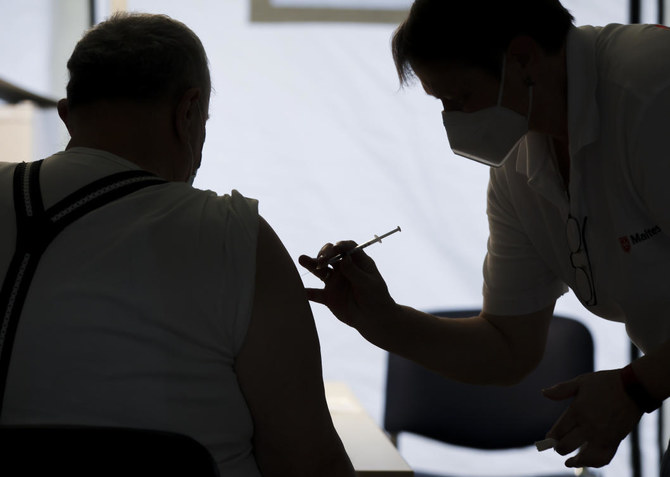
EU should make COVID-19 booster shot a condition for free travel, Greek PM says
Short Url
https://arab.news/9d6rp
EU should make COVID-19 booster shot a condition for free travel, Greek PM says
- EU public health agency has recommended vaccine boosters for all adults, with priority for those aged over 40
- Mitsotakis proposed a 3rd dose of COVID-19 vaccine be considered as a condition of safe travel within EU


Rubio to visit eastern Europe, bolster ties with pro-Trump leaders
- Energy cooperation and NATO commitments will be discussed
- Trump’s hard-right supporters view Hungary’s Orban as a model
MUNICH: US Secretary of State Marco Rubio is set to begin a two-day trip on Sunday, to bolster ties with Slovakia and Hungary, whose conservative leaders, often at odds with other European Union countries, have warm ties with President Donald Trump.
Rubio will use the trip to discuss energy cooperation and bilateral issues, including NATO commitments, the State Department said in an announcement last week.
“These are countries that are very strong with us, very cooperative with the United States, work very closely with us, and it’s a good opportunity to go see them and two countries I’ve never been in,” Rubio told reporters before departing for Europe on Thursday.
Rubio, who in his dual role also serves as Trump’s national security adviser, will meet in Bratislava on Sunday with Slovak Prime Minister Robert Fico, who visited Trump in Florida last month. The US diplomat’s trip follows his participation in the Munich Security Conference over the last few days.
WILL MEET VIKTOR ORBAN ON MONDAY
On Monday, Rubio is expected to meet with Hungarian leader Viktor Orban, who is trailing in most polls ahead of an election in April when he could be voted out of power.
“The President said he’s very supportive of him, and so are we,” Rubio said. “But obviously we were going to do that visit as a bilateral visit.”
Orban, one of Trump’s closest allies in Europe, is considered by many on the American hard-right as a model for the US president’s tough policies on immigration and support for families and Christian conservatism. Budapest has repeatedly hosted Conservative Political Action Conference events, which bring together conservative activists and leaders, with another due in March.
TIES WITH MOSCOW AND CLASHES WITH THE EU
Both Fico and Orban have clashed with EU institutions over probes into backsliding on democratic rules.
They have also maintained ties with Moscow, criticized and at times delayed the imposition of EU sanctions on Russia and opposed sending military aid to Ukraine.
Even as other European Union countries have secured alternative energy supplies after Moscow invaded Ukraine in 2022, including by buying US natural gas, Slovakia and Hungary have also continued to buy Russian gas and oil, a practice the United States has criticized.
Rubio said this would be discussed during his brief tour, but did not give any details.
Fico, who has described the European Union as an institution that is in “deep crisis”, has showered Trump with praise saying he would bring peace back to Europe.
But Fico criticized the US capture of Venezuelan President Nicolas Maduro in early January.
Hungary and Slovakia have also so far diverged from Trump on NATO spending.
They have raised defense spending to NATO’s minimum threshold of 2 percent of GDP.
Fico has, however, refused to raise expenditure above that level for now, even though Trump has repeatedly asked all NATO members to increase their military spending to 5 percent. Hungary has also planned for 2 percent defense spending in this year’s budget.
On nuclear cooperation, Slovakia signed an agreement with the United States last month and Fico has said US-based Westinghouse was likely to build a new nuclear power plant.
He also said after meeting the chief of France’s nuclear engineering company Framatome during the week he would welcome more companies taking part in the project.
Rubio will use the trip to discuss energy cooperation and bilateral issues, including NATO commitments, the State Department said in an announcement last week.
“These are countries that are very strong with us, very cooperative with the United States, work very closely with us, and it’s a good opportunity to go see them and two countries I’ve never been in,” Rubio told reporters before departing for Europe on Thursday.
Rubio, who in his dual role also serves as Trump’s national security adviser, will meet in Bratislava on Sunday with Slovak Prime Minister Robert Fico, who visited Trump in Florida last month. The US diplomat’s trip follows his participation in the Munich Security Conference over the last few days.
WILL MEET VIKTOR ORBAN ON MONDAY
On Monday, Rubio is expected to meet with Hungarian leader Viktor Orban, who is trailing in most polls ahead of an election in April when he could be voted out of power.
“The President said he’s very supportive of him, and so are we,” Rubio said. “But obviously we were going to do that visit as a bilateral visit.”
Orban, one of Trump’s closest allies in Europe, is considered by many on the American hard-right as a model for the US president’s tough policies on immigration and support for families and Christian conservatism. Budapest has repeatedly hosted Conservative Political Action Conference events, which bring together conservative activists and leaders, with another due in March.
TIES WITH MOSCOW AND CLASHES WITH THE EU
Both Fico and Orban have clashed with EU institutions over probes into backsliding on democratic rules.
They have also maintained ties with Moscow, criticized and at times delayed the imposition of EU sanctions on Russia and opposed sending military aid to Ukraine.
Even as other European Union countries have secured alternative energy supplies after Moscow invaded Ukraine in 2022, including by buying US natural gas, Slovakia and Hungary have also continued to buy Russian gas and oil, a practice the United States has criticized.
Rubio said this would be discussed during his brief tour, but did not give any details.
Fico, who has described the European Union as an institution that is in “deep crisis”, has showered Trump with praise saying he would bring peace back to Europe.
But Fico criticized the US capture of Venezuelan President Nicolas Maduro in early January.
Hungary and Slovakia have also so far diverged from Trump on NATO spending.
They have raised defense spending to NATO’s minimum threshold of 2 percent of GDP.
Fico has, however, refused to raise expenditure above that level for now, even though Trump has repeatedly asked all NATO members to increase their military spending to 5 percent. Hungary has also planned for 2 percent defense spending in this year’s budget.
On nuclear cooperation, Slovakia signed an agreement with the United States last month and Fico has said US-based Westinghouse was likely to build a new nuclear power plant.
He also said after meeting the chief of France’s nuclear engineering company Framatome during the week he would welcome more companies taking part in the project.
Latest updates


Recommended



© 2026 SAUDI RESEARCH & PUBLISHING COMPANY, All Rights Reserved And subject to Terms of Use Agreement.