

Historic Red Sea shipwreck to attract 7 million dive tourists

1 / 4
2 / 4
3 / 4
4 / 4
Short Url
Updated 24 November 2021
Follow

Historic Red Sea shipwreck to attract 7 million dive tourists

The vast Red Sea Project encompasses urban development, mass tourism and the ‘greening’ of an entire region — in addition to the cultural dimension: A major potential draw for around 7 million dive tourists to Saudi Arabia. 

No fewer than 1,600 archeological sites have been identified in the region, of which 20 have been narrowed down as potential touristic attractions. These include Nabataean and other pre-Islamic remains as well as Islamic-era ports and castles.

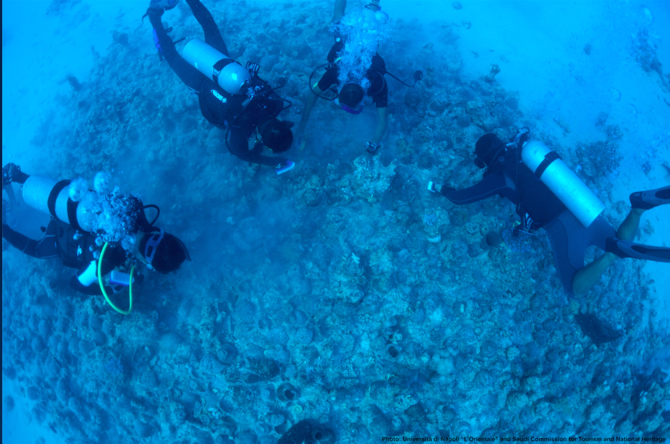
Perhaps the most significant of these is an early 18th Century shipwreck, discovered in 2016 and very likely of Egyptian origin. The ship’s construction has apparently no parallels and continuity with present-day traditional Arab boats, judging by the massive dimension of its frames and the presence of unusual architectural elements.

“We don’t know a lot about this period in Saudi history,” Michael Slage of The Red Sea Development Company told Arab News, “or what life was like for sailors traversing the Red Sea region back then, which is why this wreck is extremely important to excavate, as it will give us a better picture.” 


The ship’s relatively large size indicates that it was capable of going as far as China and India to bring back goods ultimately destined for the Ottoman Empire and Europe.

The TRSDC is partnering with the Saudi Ministry of Culture’s Heritage Commission along with a team of archaeologists from the University of Naples “L’Orientale,” the oldest school of sinology and oriental studies in Europe. The UN team have conducted a survey of the wreck and will undertake the laborious and sensitive job of salvaging the wreck and ultimately displaying its fascinating contents in a purpose-built museum. 

“Our plans are to create a unique destination unlike any other in the world,” the senior director, venture development and innovation at TRSDC, said. “Access to the treasures of the shipwreck will be either through diving on the site or viewing them in the museum, and our goal is to have these in place when the rest of our development is ready to welcome visitors on a large scale.”

Of particular interest is a horde of 2000-plus Chinese porcelain cups and jars, possibly meant for sale to pilgrims in Makkah for the purpose of collecting holy “ZamZam” water. Many are still in excellent condition even after hundreds of years on the sea floor. These items depict, for example, a junk on a river, a multi-storied pagoda and human figures. 

Other artifacts include items reflecting the day-to-day life of the crewmen including their Ottoman pipes, remains of meals and the plates they ate from, and even a perfectly preserved coconut. 

“We believe that this will be a unique dive site”, Slage said, “attracting many of the 7 million dive tourists around the world. For non-divers we are looking at other ways to access the site through submarines and glass bottom boats as well as visiting the museum to see the artifacts being conserved and displayed.”

The wreck and its associated museum will contribute to Saudi Arabia’s position as an important cultural hub. 

“According to UNESCO, 60 percent of visitors’ choice in destination are influenced by having heritage assets in place,” Slage said. “And 40 percent will stay longer than in locations without heritage assets. We, therefore, believe that by developing accessibility to our heritage sites, of which the shipwreck is only the first of many, we will be able to attract a significantly higher number of visitors.”


PIF-backed AviLease achieves revenue of $664m and 19% growth in 2025

Updated 8 sec ago
Follow

PIF-backed AviLease achieves revenue of $664m and 19% growth in 2025

RIYADH: Saudi Arabia’s Public Investment Fund-backed AviLease achieved exceptional performance and sustainable business growth during 2025, supported by the strategic expansion of its global platform.

According to its financial results for 2025, AviLease recorded total revenues of $664 million, an annual increase of 19 percent, driven by disciplined growth in its asset portfolio and strong performance in aircraft remarketing amid sustained global demand for modern, fuel-efficient aircraft, the Saudi Press Agency reported.

Profit before tax doubled compared to the previous year, reaching $122 million. The year witnessed an expansion in AviLease’s portfolio, reaching 202 owned and managed aircraft, leased to over 50 airline companies in more than 30 countries. 

The total value of the company’s assets stabilized at $9.3 billion. AviLease maintained a 100 percent fleet utilization rate, reflecting the resilience of its business model, the efficiency of its asset management, and the strength of its strategic relationships with airlines around the world.

AviLease concluded purchase agreements for aircraft from Airbus, including the A320neo family and A350F, and Boeing 737 aircraft, aiming to enhance its future asset portfolio with modern, fuel-efficient aircraft. This step will contribute to supporting future growth and meeting increasing customer demand for the latest aircraft, aligning with the Kingdom’s ambitions to become a leading global aviation hub.

AviLease strengthened its prestigious credit standing by obtaining a strong Baa2 credit ratings from Moody’s and BBB from Fitch, reflecting its financial solidity, managerial discipline, and efficiency in managing leverage. The company also successfully issued senior unsecured bonds worth $850 million last November under Regulation 144A/RegS. This issuance contributed to diversifying its funding sources and enhancing its financial flexibility.

Commenting on the results, AviLease CEO Edward O’Byrne said: “This exceptional performance reflects the quality of the company’s investment portfolio, the strength of its partnerships with airlines, and its strategic focus on responsibly deploying capital into highly sought-after, efficient, modern aircraft assets.”

He added: “As aviation markets continue to grow, AviLease is strategically positioned to continue its expansion plans and deliver sustainable long-term value for shareholders, contributing to the Kingdom’s ambitions.”

Throughout 2025, AviLease continued to play a pivotal role in the Kingdom’s growing aviation sector and contributed directly to the launch and scaling of the new national carrier, Riyadh Air, by completing a sale and leaseback transaction for a Boeing 787-9 aircraft, which thereby became the first aircraft to join the airline’s fleet.

AviLease also established a strategic partnership with Hassana Investment Co. This partnership aims to provide an opportunity for local and international investors to enter the aircraft financing asset class and benefit from AviLease’s technical expertise and operational capabilities to support partnership growth and enhance performance. 

Hassana Investment Co. has agreed to acquire an initial portfolio of 10 modern aircraft from AviLease.