

Arab coalition targets locations in Yemen’s capital

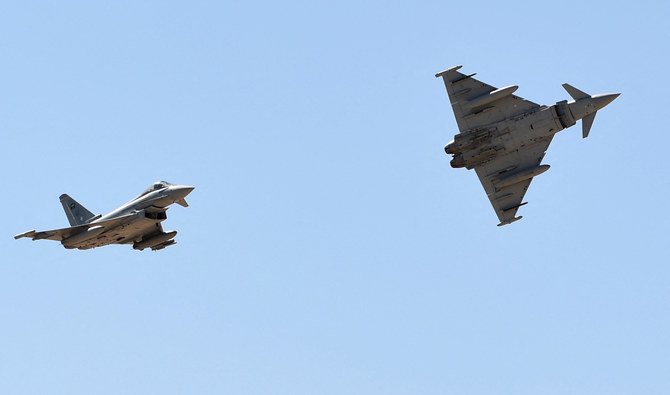
The coalition has cautioned civilians in Sanaa from approaching or gathering near the targeted locations. (AFP/File)
Short Url
Updated 24 November 2021
Follow

Arab coalition targets locations in Yemen’s capital

  • The strikes hit sites storing ballistic missiles sites in Sanaa
  • Coalition says Houthis have escalated hostile acts by indiscriminately deploying 11 naval mines

RIYADH: The Arab coalition said on Tuesday that it had carried out airstrikes in Yemen’s capital.

The coalition cautioned civilians in Sanaa from approaching or gathering near the targeted locations in the Dhahban neighborhood of the city.

The strikes hit sites storing ballistic missiles, said the coalition, accusing the Iran-backed Houthi militia of endangering Yemeni civilians by using them as human shields.

Residents told Reuters the strikes targeted two military sites.

Meanwhile, the coalition said later on Tuesday the Houthis have escalated their hostile behavior by randomly deploying 11 naval mines.
The coalition added that it had destroyed “231 sea mines that threatened commercial ships and large oil tankers.”
It also said that it’s “maritime efforts have contributed to the freedom of navigation and global trade.”

The coalition said on Monday that the Houthi militia in Yemen have turned Sanaa airport into a military base for experiments and cross-border attacks.

Saudi Arabia is targeted by the militia nearly daily using explosive drones, which are often easily destroyed by the Kingdom’s air defenses.

Houthi attempts to target civilians has been labeled as war crimes by the Kingdom.

The Arab coalition has been supporting the internationally recognized Yemeni government regain full control of the country after the Houthis seized the capital, Sanaa, in 2014.


EU warns Israel suspending Gaza NGOs would block ‘life-saving aid’

Updated 31 December 2025
Follow

EU warns Israel suspending Gaza NGOs would block ‘life-saving aid’

BRUSSELS: The EU warned Wednesday that Israel's threat to suspend several aid groups in Gaza from January would block "life-saving" assistance from reaching the population.
"The EU has been clear: the NGO registration law cannot be implemented in its current form," EU humanitarian chief Hadja Lahbib posted on X, after Israel said several groups would be barred for failing to provide details of their Palestinian employees.
"IHL (international humanitarian law) leaves no room for doubt: aid must reach those in need," Lahbib wrote.
NGOs had until December 31 to register under the new framework, which Israel says aims to prevent "hostile actors or supporters of terrorism" operating in the Palestinian territories, rather than impede aid.
Israeli authorities announced Tuesday that organisations which "refused to submit a list of their Palestinian employees in order to rule out any links to terrorism" had received notice that their licences would be revoked as of January 1, with an obligation to cease all activities by March 1.
Israel has not disclosed the number of groups facing a ban, but it has specifically called out Doctors Without Borders (MSF) for failing to meet the rules. It accused the medical charity of employing two individuals with links to Palestinian armed groups.
The Israeli government told AFP earlier this month that 14 NGO requests had been rejected as of November 25.
Several NGOs said the new rules will have a major impact on aid distribution in Gaza, with humanitarian organisations saying the amount of aid entering Gaza remains inadequate.
While an accord for a ceasefire that started on October 10 stipulated the entry of 600 trucks per day, only 100 to 300 are carrying humanitarian aid, according to NGOs and the United Nations.
COGAT, the Israeli defence ministry body responsible for Palestinian civilian affairs, said last week that on average 4,200 aid trucks enter Gaza weekly, which corresponds to around 600 daily.