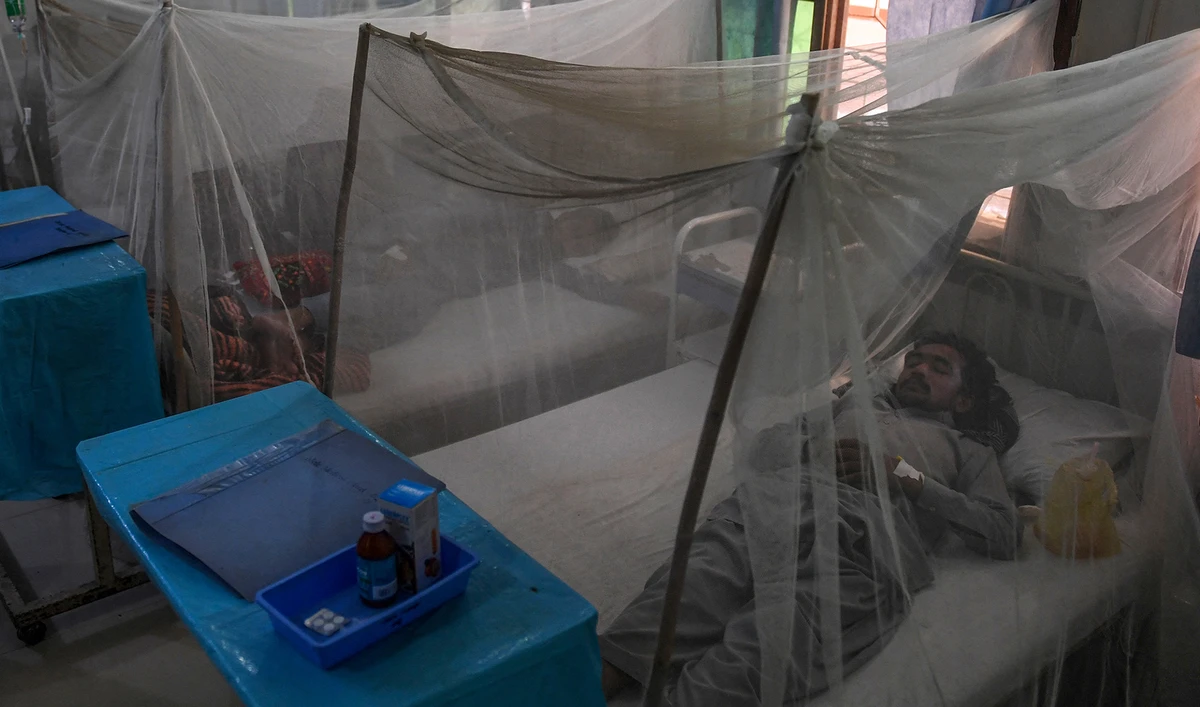
- Leading pathologists in Karachi say they have seen people with dengue symptoms who tested negative for the mosquito-borne infection
- The Pakistan Medical Association confirms the mysterious cases in Karachi are triggered by some virus, though the country lacks equipment to detect it
KARACHI: A top body of doctors in the country urged the government to set up a modern virology lab to analyze mysterious viruses in Pakistan after health practitioners recently claimed a new pathogen had infected a significant number of people in Karachi.
Leading doctors and pathologists in the country’s southern port city of Karachi told Arab News last week they had treated several individuals who displayed all the symptoms of a dengue patient but tested negative for the mosquito-borne infection.
“The Pakistan Medical Association [PMA] has been demanding for the last twenty years to set up a modern virology laboratory in every province of Pakistan to ensure timely detection of viruses,” Dr. Qaisar Sajjad, PMA secretary general, said in a video statement.
He noted the prevalent fevers in the country were caused by typhoid, coronavirus, malaria and chikungunya infections.
“In addition to these, there is now a new mysterious virus which is infecting people in Karachi,” the statement continued. “Everyone tests negative but children and adults have high fever. I believe this fever is certainly some virus and we do not have the kits to detect it.”
Medical practitioners in Karachi said last week they were trying to determine if the fever was caused by a new virus or an existing one that had mutated.
“We have observed a number of cases where patients displayed dengue symptoms but tested negative for the disease,” Dr. Ghulam Sarwar, a top official at the Saylani Blood Bank, said.
Describing the symptoms, he informed that the mysterious disease caused blood platelets to drop and resulted in high fever.
He also added that the recovery process was slow among patients.
“Clinically, these look like dengue cases, though hematological findings suggest otherwise,” he said, adding that his organization was maintaining a record of all such cases.
“Like any new virus, we don’t have kits to detect this one as well,” he continued, though he also hoped that testing equipment would soon be available in the market.
Dr. Zeeshan Hussain, a senior hematopathologist with a public sector civil hospital, also confirmed reports of such cases while talking to Arab News, saying he had seen several patients with dengue symptoms who were otherwise not suffering from the disease.
“Although we don’t have the exact figures, but the number of patients suffering from this illness have remained high in the last couple of weeks,” he added. “This cannot be because of false negative tests since the population of such patients is quite large.”