

Regional designers take the chance to shine at Arab Fashion Week

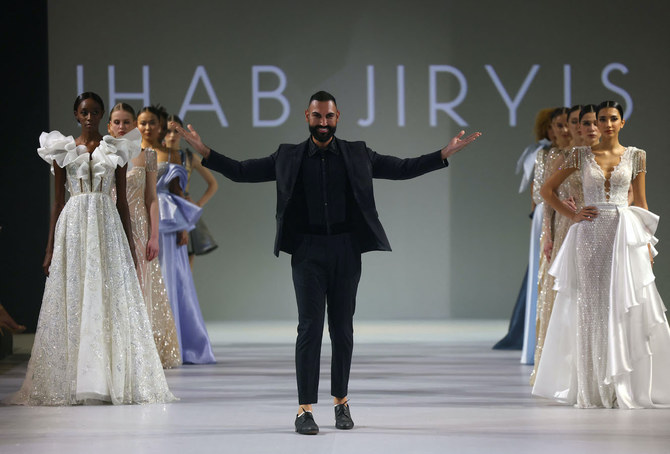
Jiryis launched his eponymous label 12 years ago. (AFP)
Short Url
Updated 19 November 2021
Follow

Regional designers take the chance to shine at Arab Fashion Week

  • Highlights from MENA-based labels’ collections at last month’s fashion gala in Dubai

Ihab Jiryis


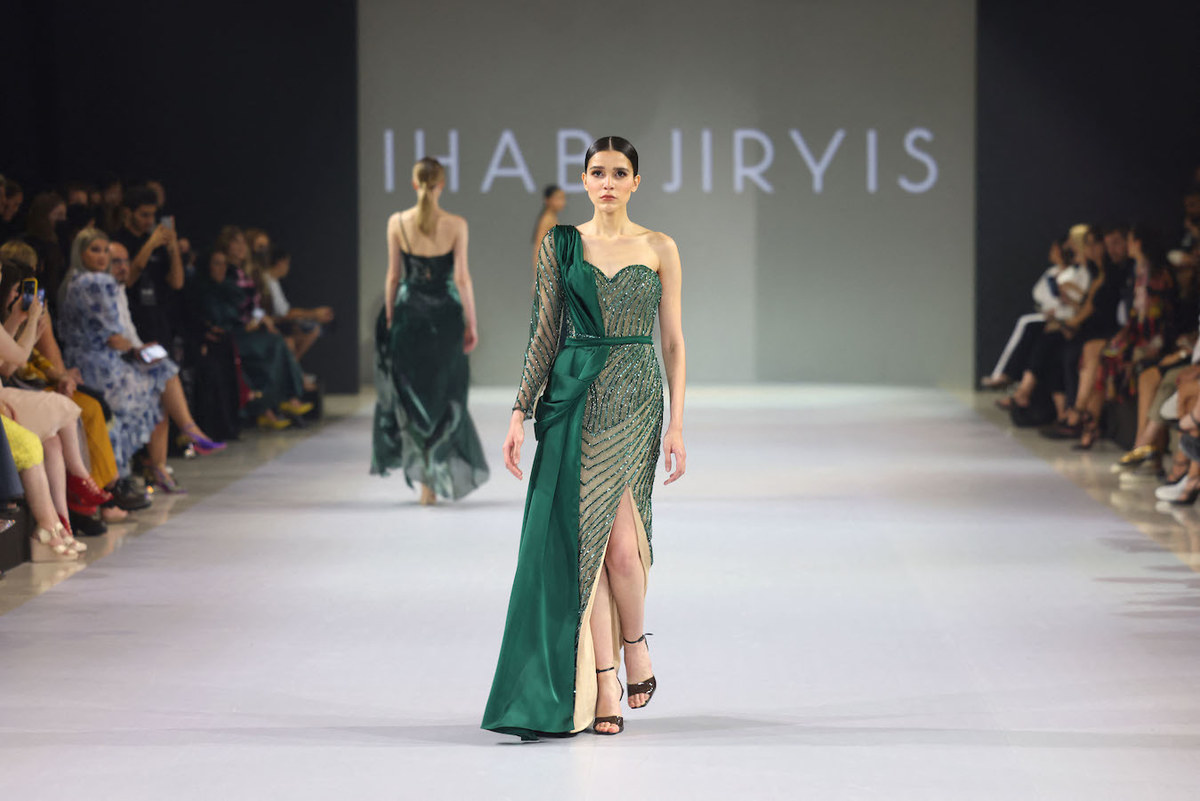
“Ever since I was a child, I remember dreaming about being a fashion designer. The colors, the fabrics, the cuts, the shapes … this is my game in life. This is how I can express everything I am feeling or thinking,” the Palestinian evening wear and bridal gown designer told Arab News earlier this year. His Spring/Summer 2022 collection bore out his words, dazzling the audience with asymmetrical designs, glamorous silhouettes, subtle high-end embroidery, seductive maxi dresses, and sequins galore.

“The tough times or the scarcity that we live in creates bigger challenges for us,” he said of working in Palestine. “It makes us, as designers, create more and express ourselves in artistic ways through which we can communicate with the world.”

Jiryis launched his eponymous label 12 years ago, but this was his first physical show (having appeared in last year’s digital-only event). It was a triumph. And it suggested it’s just a matter of time before his stated goal of ‘going global’ is realized.

Emergency Room
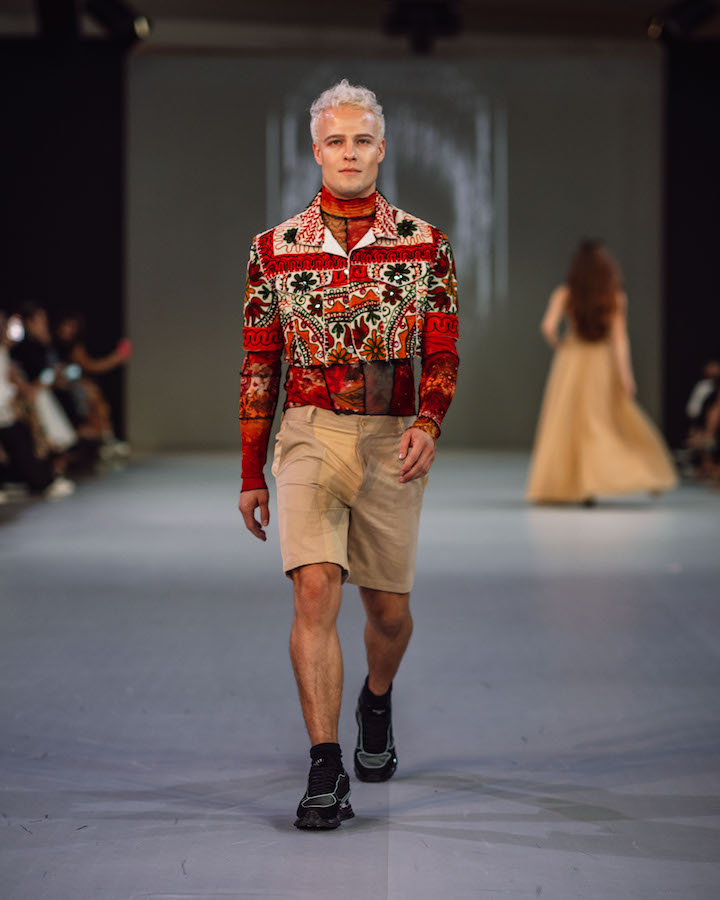
Beirut-based designer Eric Ritter explained the thinking behind his label’s name to Arab News in May this year. “We decided to call it Emergency Room because we were going to truly do things a way that is environmentally friendly, ethical, and respectful of the environment,” he said. Doing things differently is at the core of Ritter’s design philosophy, and informed much of the presentation of his “Neverland” collection at Arab Fashion Week. In the event’s most dramatic show, as the models (a group of clients, friends and fans) walked, there was no soundtrack save for Ritter’s own voiceover discussing the inspiration behind his striking upcycled collection, which he also explains on the brand’s website: “Through the collection, we aim to capture, process and catalyze the essence and energy of any conversation happening in Beirut at the moment, the socio-economic crisis, the truly slow post-pandemic remission, and most importantly, the deafening ‘Should-I-Stay-Or-Should- I-Go’ inhabiting the minds of every Lebanese today, young or old,” he writes. “(We) started as a brand centered around a community, harnessing the latter’s highs and lows, and working towards a better tomorrow. ‘Neverland’ is the natural continuation — a response to a severe situation, a cry of frustration, but also resistance. Resistance through process, resistance through work, resistance through art, resistance through standing ground.”

Michael Cinco

The Dubai-based designer’s catwalk show was as meticulously crafted and artfully designed as you’d expect for a collection called “Impalpable Dream of Gustav Klimt.” Klimt’s artwork graced the runway, but perhaps the most eye-catching part of Cinco’s show was the model lineup — spectacularly diverse and inclusive, featuring models with prosthetic limbs, models of various ethnicities, and plus-sized models showcasing Cinco’s couture collection.

The clothes themselves lived up to the high-concept presentation: Flamboyant dresses with immaculate detailing, dazzling beadwork, and glittering suits and gowns. It was a fitting climax to the week, and received a well-deserved standing ovation from the packed house.

Amato
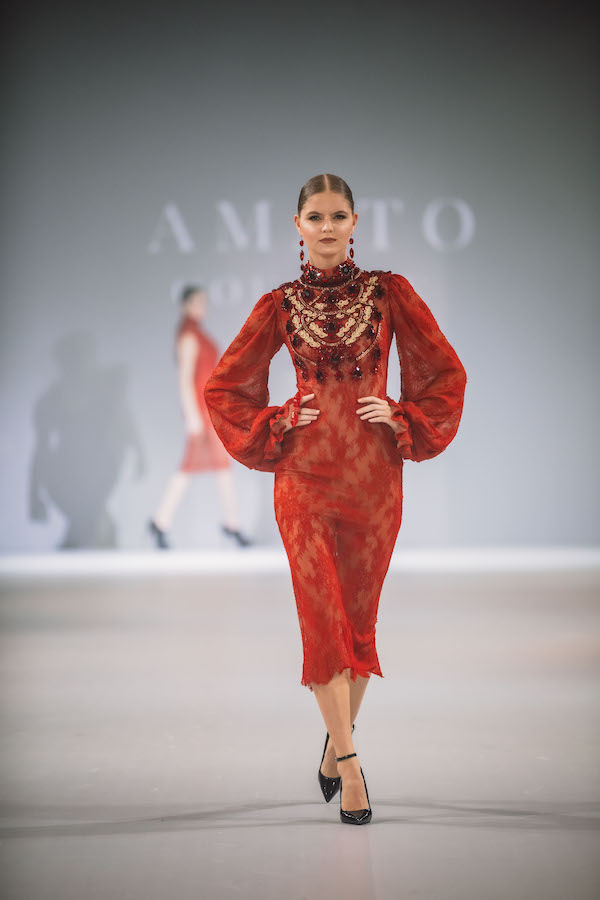
The Dubai-based label produced a typically dramatic collection for Spring/Summer 2022, dominated by a color palette of reds and blacks and featuring sweeping evening gowns and tailored body suits, all presented with the handcrafted flair that is the signature of Amato’s Filipino creative director Furne One.

Zeena Zaki
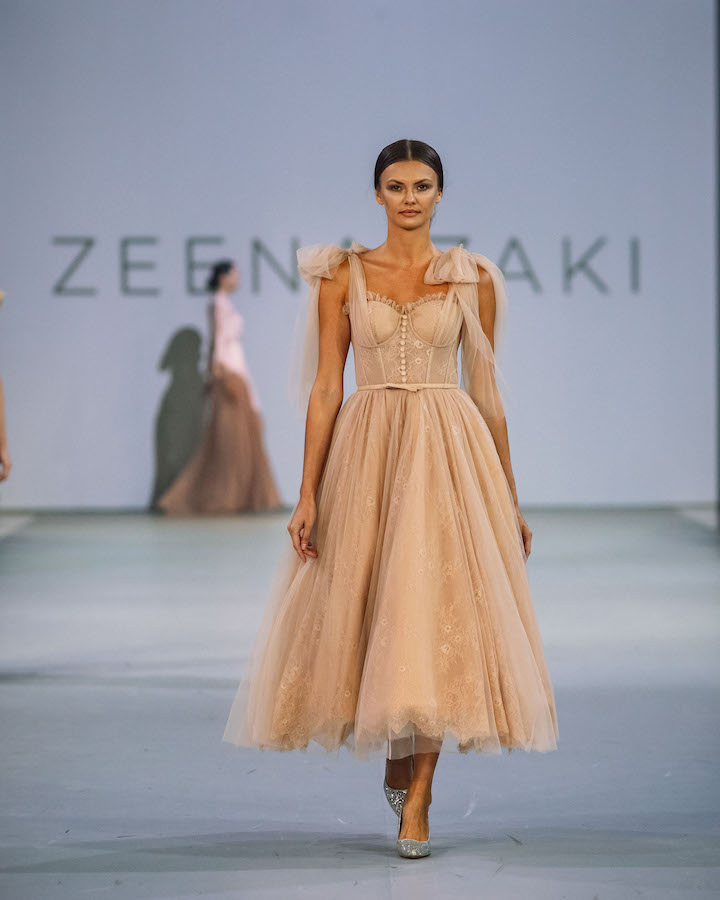
The Dubai-based Iraqi designer’s show kicked off Arab Fashion Week’s final day. Zaki herself was in Costa Rica at the time, but appeared via video link to introduce her Spring/Summer 2022 collection, consisting of elegant evening gowns characterized by, the organizers said in a press release, “pastel colors, simple cuts and ruffled silhouettes.” Once again, sequins proved popular in a lineup that was both regionally appropriate and internationally appealing.

BLSSD
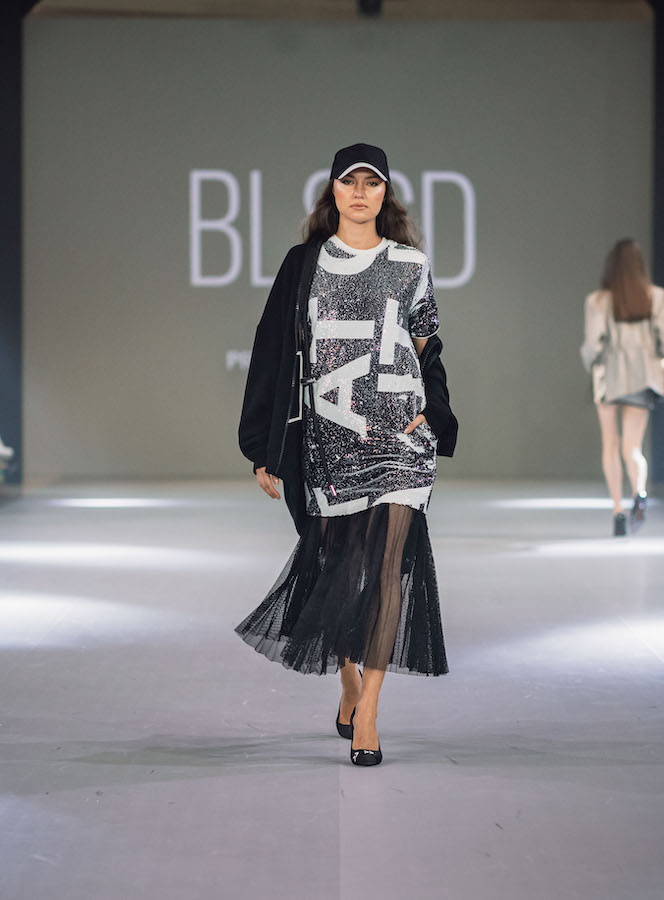
The Dubai-based Lebanese label showed a relaxed, ready-to-wear collection tailored for the mass market. Jacket-and-maxi-skirt combos mixed with oversized outfits in a palette dominated by white, black and metallic silver. The brand was definitely on-trend with its asymmetrical silhouettes too.

Euphoria
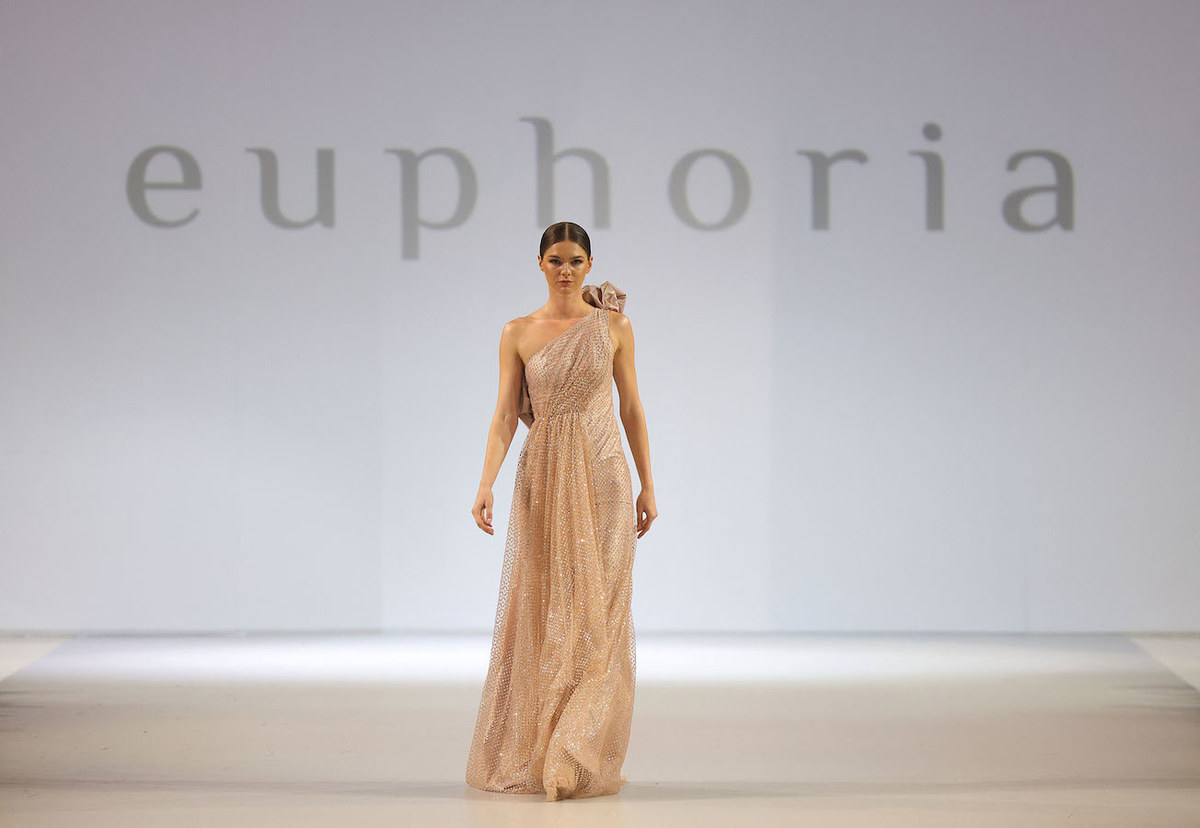
The Emirati label hasn’t been around long, but it’s made a big splash on the regional scene — landing deals with major department stores and online vendors. The label’s collection, showcased at October’s event, combined the sophistication of red-carpet evening wear with the ease and comfort of ready-to-wear couture in a range of pastel colors — often spruced up with sequins.


From historic desert landscapes to sound stages: AlUla’s bid to become the region’s film capital

Updated 07 February 2026
Follow

From historic desert landscapes to sound stages: AlUla’s bid to become the region’s film capital

DUBAI: AlUla is positioning itself as the center of cinema for the MENA region, turning its dramatic desert landscapes, heritage sites and newly built studio infrastructure into jobs, tourism and long‑term economic opportunity.

In a wide‑ranging interview, Zaid Shaker, executive director of Film AlUla, and Philip J. Jones, chief tourism officer for the Royal Commission for AlUla, laid out an ambitious plan to train local talent, attract a diverse slate of productions and use film as a catalyst for year‑round tourism.

“We are building something that is both cultural and economic,” said Shaker. “Film AlUla is not just about hosting productions. It’s about creating an entire ecosystem where local people can come into sustained careers. We invested heavily in facilities and training because we want AlUla to be a place where filmmakers can find everything they need — technical skill, production infrastructure and a landscape that offers limitless variety. When a director sees a location and says, ‘I can shoot five different looks in 20 minutes,’ that changes the calculus for choosing a destination.”

At the core of the strategy are state‑of‑the‑art studios operated in partnership with the MBS Group, which comprises Manhattan Beach Studios — home to James Cameron’s “Avatar” sequels. “We have created the infrastructure to compete regionally and internationally,” said Jones. “Combine those studios with AlUla’s natural settings and you get a proposition that’s extremely attractive to producers; controlled environment and unmatched exterior vistas within a short drive. That versatility is a real selling point. We’re not a one‑note destination.”

The slate’s flagship project, the romantic comedy “Chasing Red,” was chosen deliberately to showcase that range. “After a number of war films and heavy dramas shot here, we wanted a rom‑com to demonstrate the breadth of what AlUla offers,” said Shaker. “‘Chasing Red’ uses both our studio resources and multiple on‑location settings. It’s a story that could have been shot anywhere — but by choosing AlUla we’re showing how a comical, intimate genre can also be elevated by our horizons, our textures, our light.

“This film is also our first under a broader slate contract — so it’s a proof point. If ‘Chasing Red’ succeeds, it opens the door for very different kinds of storytelling to come here.”

Training and workforce development are central pillars of the program. Film AlUla has engaged more than 180 young Saudis in training since the start of the year, with 50 already slated to join ongoing productions. “We’re building from the bottom up,” said Shaker. “We start with production assistant training because that’s often how careers begin. From there we provide camera, lighting, rigging and data-wrangling instruction, and we’ve even launched soft‑skill offerings like film appreciation— courses that teach critique, composition and the difference between art cinema and commercial cinema. That combination of technical and intellectual training changes behavior and opens up real career pathways.”

Jones emphasized the practical benefits of a trained local workforce. “One of the smartest strategies for attracting productions is cost efficiency,” he said. “If a production can hire local, trained production assistants and extras instead of flying in scores of entry‑level staff, that’s a major saving. It’s a competitive advantage. We’ve already seen results: AlUla hosted 85 productions this year, well above our initial target. That momentum is what we now aim to convert into long‑term growth.”

Gender inclusion has been a standout outcome. “Female participation in our training programs is north of 55 percent,” said Shaker. “That’s huge. It’s not only socially transformative, giving young Saudi women opportunities in an industry that’s historically male-dominated, but it’s also shaping the industry culture here. Women are showing up, learning, and stepping into roles on set.”

Looking to 2026, their targets are aggressive; convert the production pipeline into five to six feature films and exceed 100 total productions across film, commercials and other projects. “We want private-sector partners to invest in more sound stages so multiple productions can run concurrently,” said Jones. “That’s how you become a regional hub.”

The tourism case is both immediate and aspirational. “In the short term, productions bring crews who fill hotels, eat in restaurants and hire local tradespeople,” said Shaker. “In the long term, films act as postcards — cinematic invitations that make people want to experience a place in person.”

Jones echoed that vision: “A successful film industry here doesn’t just create jobs; it broadcasts AlUla’s beauty and builds global awareness. That multiplies the tourism impact.”

As “Chasing Red” moves into production, Shaker and Jones believe AlUla can move from an emerging production destination to the region’s filmmaking epicenter. “We’re planting seeds for a cultural sector that will bear economic fruit for decades,” said Shaker. “If we get the talent, the infrastructure and the stories right, the world will come to AlUla to film. And to visit.”