




CAIRO: Egypt, the land of Tutankhamun, Cleopatra, Naguib Mahfouz and Ahmed Zewail, is witnessing a renaissance in its arts and cultural scene. A few weeks ago, the 4,500-year-old UNESCO World Heritage site of the Giza pyramids was transformed into a platform for contemporary art at “Forever Is Now.”
The exhibition, organized by Art d’Egypte, showcased the work of 10 international artists for the first time in the historic setting.
The renewal movement is backed by the government, institutional players, independent patrons, artists and curators who are pushing the cultural scene in two directions: The revival of a prolific past and the celebration of a promising future.
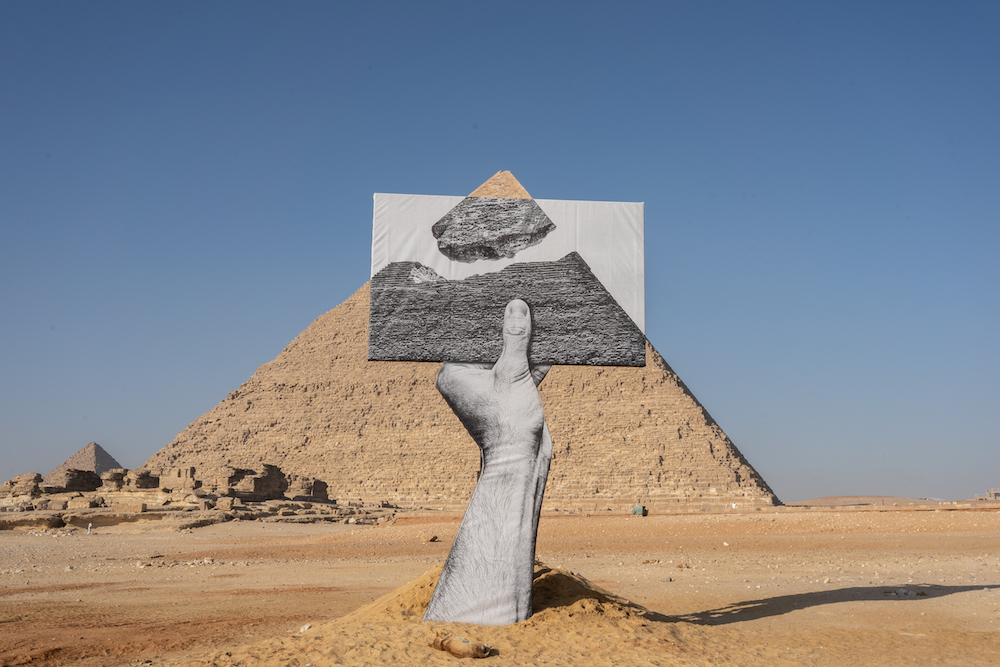
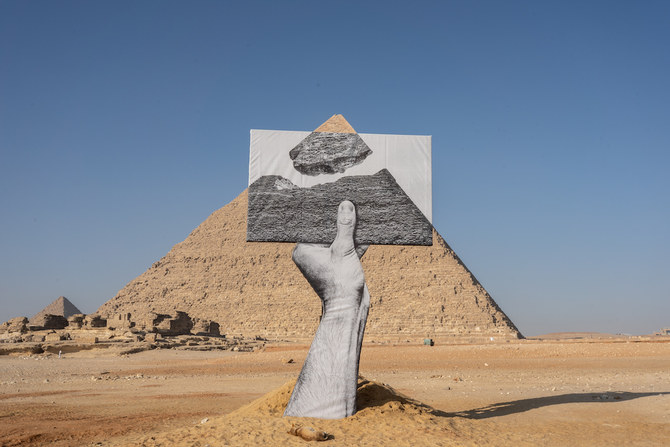
JR’s Installation ‘Greetings from Giza’ - Credit: Hesham El Sayfi - Courtesy of Art d’Egypte. (Supplied)
Nadine Abdel-Ghaffar, the founder of arts and heritage consultancy Art d’Egypte, said: “The world knows Egypt’s artistic and cultural past. However, they are not aware of the present, the contemporary. We aim to educate, raise awareness, and bring opportunity to these places by activating spaces and involving the surrounding community.”
“Forever Is Now” presented artistic installations against the backdrop of the pyramids, and featured Italian artist Lorenzo Quinn and French artist JR — the latter accompanied by his friend and supporter American record-producer and singer Pharrell Williams.
The exhibition sought to establish a dialogue between the ancient past and the present, and to “question time as a continuum that both separates and unites civilizations.”
Abdel-Ghaffar told Arab News that the display, which ended on Nov. 8, “succeeded in its mission of democratizing art by making it accessible in public spaces, attracting 20,000 visitors a day from schools, universities and people from all walks of life.”
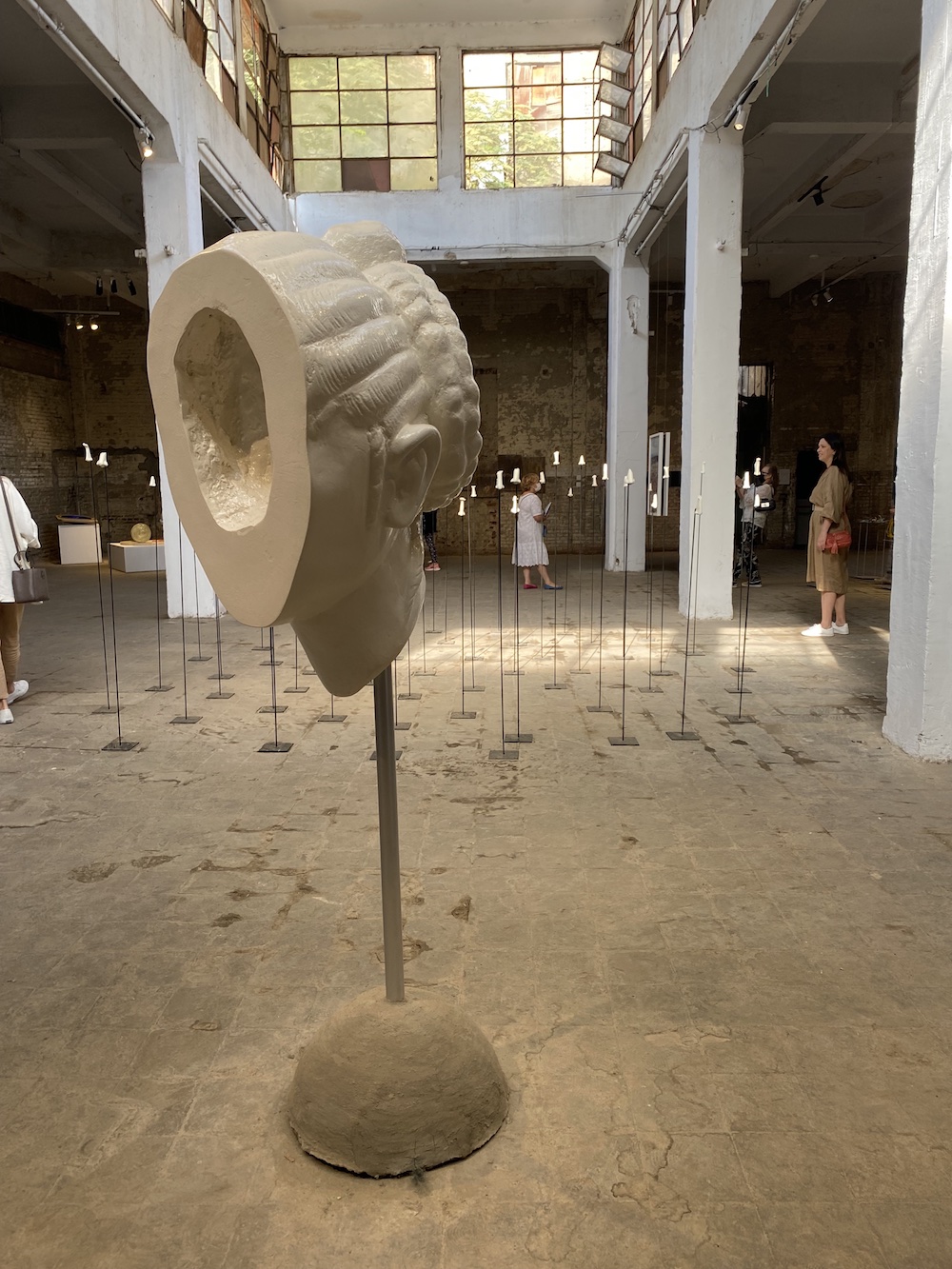
Contemporary Art displayed in old Downtown Cairo. (May Barber)
In April this year, the world watched in awe as the “Golden Parade” of 22 mummies (18 kings and four queens) traveled in decorated carriages through the streets of Cairo from the Egyptian museum in Tahrir Square to their new home of the National Museum of Egyptian Civilization.
NMEC now showcases selections from the artifacts of the ancient Egyptian pharaohs, highlighting their contributions, such as the invention of writing and mummification.
Royal mummies carefully displayed in temperature-controlled glass cases include Ramses II, known as Ramses the Great; Thutmose III, once described as the Napoleon of Egypt; and Queen Hatsheput, one of the few women who ruled ancient Egypt.
Preserving the past is central to today’s thriving Egyptian cultural scene, and lends itself to architectural restoration. Al-Ismaelia, an Egyptian real estate investment company, has joined partners in efforts to restore the capital’s 150-year-old architectural legacy established by the Khedive Ismail in the 19th century.
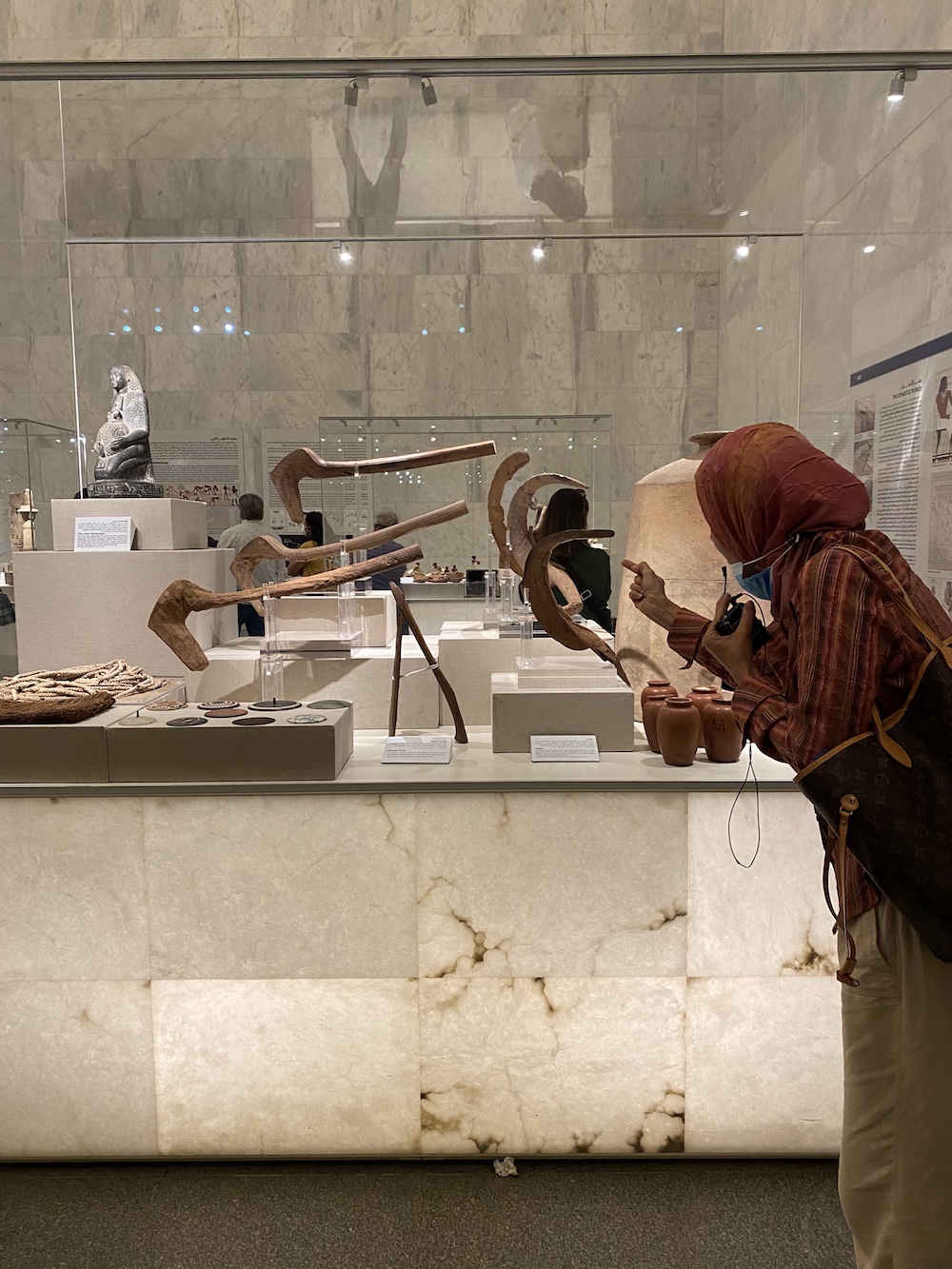
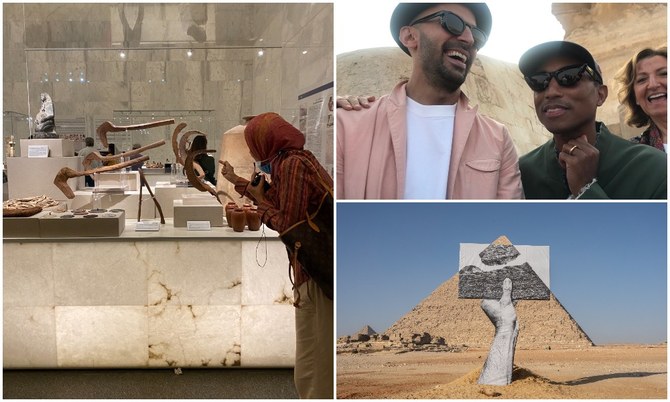
Egyptian Guide Hiba leading a tour Inside the National Museum of Egyptian Civilization. (May Barber)
“Breathing life into design magic,” the company set out to preserve iconic buildings such as La Viennoise, a 125-year-old landmark built in 1896 by English architect La Viennoise, and Cinema Radio Complex, built in 1932 as the center of Cairo’s theater and performance arts scene. The center has hosted performances ranging from Umm Kulthum in the 1920s to recent acts by Bassem Youssef and Abla Fahita.
“In the pursuit of reviving a district and building of a community, some opt for politics and others opt for football. We opted for art and culture,” Eman Hussein, deputy CEO of Al-Ismaelia, told Arab News.
Aiming to transform the downtown area into an inclusive district, Al-Ismaelia linked restoration projects with a range of art and culture exhibitions.
“When you uplift one aspect of the community, the whole ecosystem is uplifted,” said Hussein.
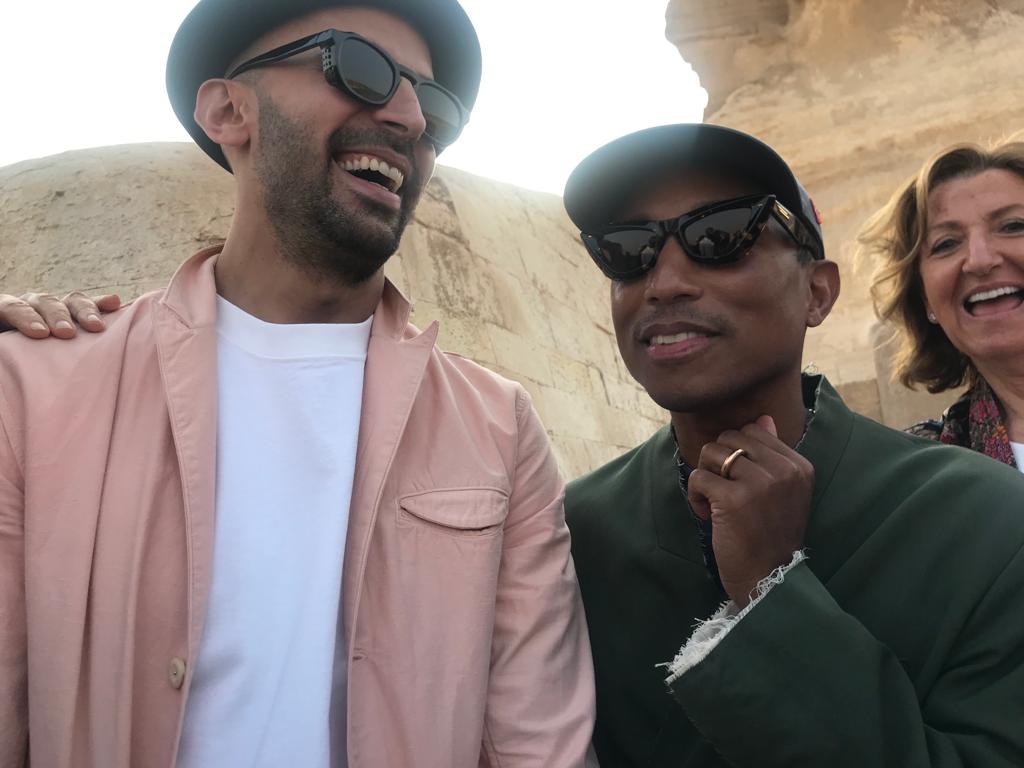
A close exchange between French Artist JR and his friend, musician Pharell at Giza. (May Barber)
Today, the company owns 25 properties in downtown Cairo, many of which have been transformed as co-working spaces, rental accommodation, retail outlets and offices.
Al-Ismaelia’s plans were put on hold amid the turmoil surrounding the 2011 Egyptian uprising before the projects resumed in collaboration with the government.
“Restoration has challenges in every step,” Hussein said. These range from acquiring the building from as many as 90 different owners all the way to licensing, infrastructure issues and operational limitations such as power supply.
However, she is pleased with the outcome, and said the district is benefiting from an authentic revival of the past, a contemporary flair, plus strong support for art, culture and homegrown concepts.
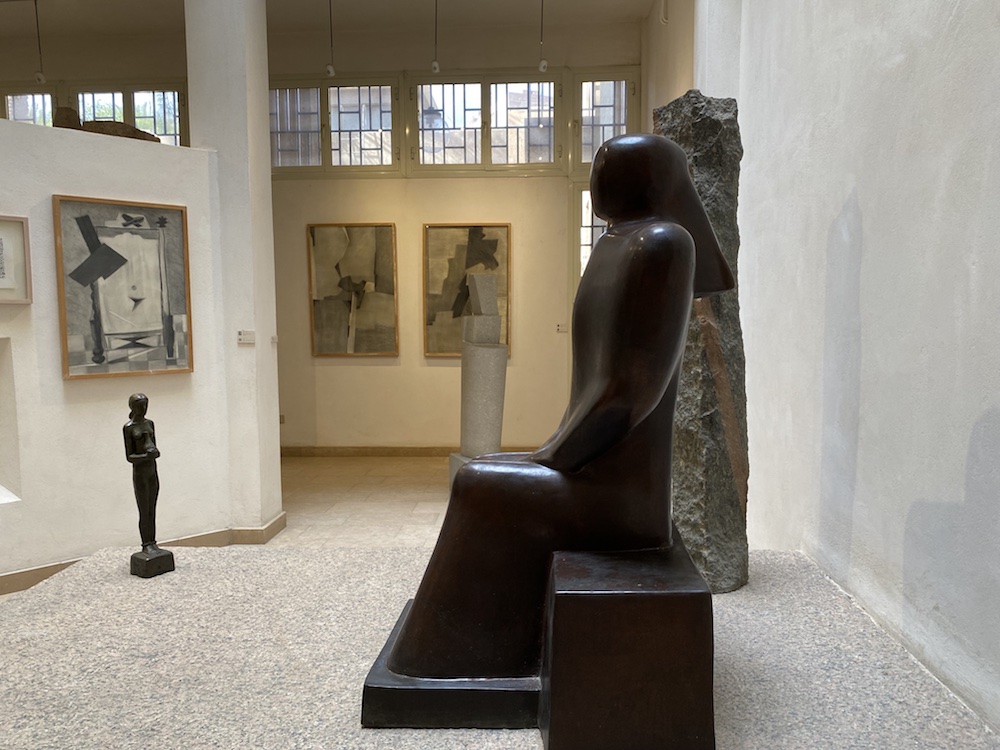
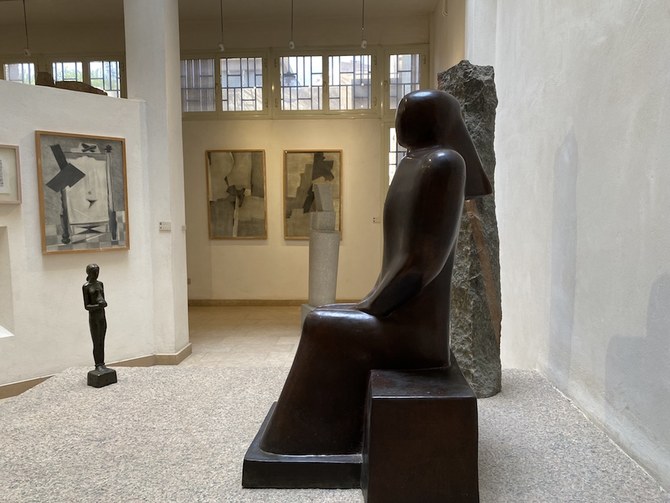
Views inside the late Egyptian Sculptor Museum Adam Henein. (May Barber)
The movement to revive the past is accompanied by a strong contemporary cultural agenda. Today, the historic old Cairo district is home to pop-up galleries and contemporary art exhibitions.
Perhaps one of the most intriguing showcases is Ai-Da, a three-legged robot that responds to the Riddle of the Sphinx with AI-generated messages and AI-informed drawings. Ai-Da’s arrival in Egypt caused controversy after the robot was briefly detained by authorities who feared that it was a spying device.
Cairo’s affluent Zamalek district is also home to established contemporary art galleries, including Zamalek Art Gallery, Art Talk Gallery and the Ubuntu art gallery.
The three-story Adam Henein Museum in the Giza district includes a sculpture park owned by the late artist Adam Henein (formerly known as Samuel) and managed today by Inas Luca, who, as the Adam Henein Foundation director, has been “entrusted with his treasures,” as she puts it.
Henein, who died in 2020, founded the annual Aswan International Sculpture Symposium. The museum is dedicated to displaying his drawings, paintings and sculptures, including a collection previously displayed in the Metropolitan Museum in 1999-2000.

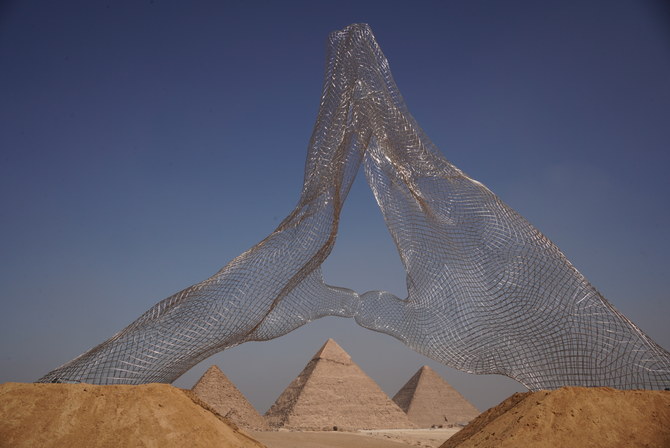
Lorenzo Quinn’s Sculpture ‘Together’ at Forever Is Now - Credit: Hesham El Sayfi - Courtesy of Art d’Egypte. (Supplied)
What is next for Egypt’s cultural scene? The country is patiently awaiting the outcome of the latest expeditions of Zahi Hawass, the archaeologist, National Geographic explorer and former minister of state for antiquities
Hawass has partnered with Netflix for a five-episode docu-series to be aired next year that will unlock the mystery of the death of Tutankhamun.
The world is also eagerly awaiting the opening of the Grand Egyptian Museum, which promises to be another momentous occasion.
For a country of 105 million people and an ancient civilization that continues to influence literature, film architecture and fashion, it is evident that there is no shortage of human capital and intellectual wealth, and that Egypt is ready to enchant the world once again.
------------
May Barber is an architect and brand management consultant focused on sustainability and purpose-driven projects.


