

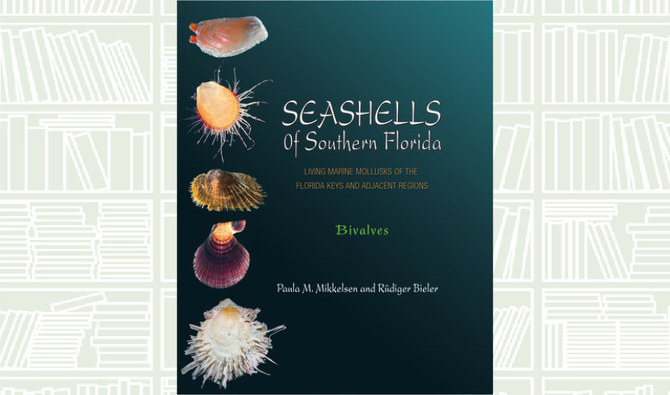
What We Are Reading Today: Seashells of Southern Florida

Short Url
Updated 19 November 2021
Follow

What We Are Reading Today: Seashells of Southern Florida

Edited by Paula M. Mikkelsen & Rudiger Bieler

Located where the Atlantic Ocean, Gulf of Mexico, and Caribbean Sea converge, the Florida Keys are distinctive for their rich and varied marine fauna. The Keys are home to nearly sixty taxonomic families of bivalves such as clams and mussels —  roughly half the world’s bivalve family diversity. The first in a series of three volumes on the molluscan fauna of the Keys and adjacent regions, Seashells of Southern Florida: Bivalves provides a comprehensive treatment of these bivalves, and also serves as a comparative anatomical guide to bivalve diversity worldwide.

Paula Mikkelsen and Rüdiger Bieler cover more than three hundred species of bivalves, including clams, scallops, oysters, mussels, shipworms, jewel boxes, tellins, and many lesser-known groups. For each family they select an exemplar species and illustrate its shell and anatomical features in detail. They describe habitat and other relevant information, and accompany each species account with high-resolution shell photographs of other family members.


What We Are Reading Today: Can College Level the Playing Field? 

Updated 46 sec ago
Follow

What We Are Reading Today: Can College Level the Playing Field? 

Authors: Sandy Baum and Michael McPherson

We often think that a college degree will open doors to opportunity regardless of one’s background or upbringing. In this eye-opening book, two of today’s leading economists argue that higher education alone cannot overcome the lasting effects of inequality that continue to plague us, and offer sensible solutions for building a more just and equitable society.

Sandy Baum and Michael McPherson document the starkly different educational and social environments in which children of different races and economic backgrounds grow up, and explain why social equity requires sustained efforts to provide the broadest possible access to high-quality early childhood and K–12 education. 

They dismiss panaceas like eliminating college tuition and replacing the classroom experience with online education.