


ALGIERS: Algeria has expressed a determination to become a platform for energy transition. How can it meet this challenge and what could be its strategy to get out of its current almost total dependence on fossil fuels?
Before answering these two questions, it is necessary to recall that 97 percent of this country’s electricity is generated from fossil fuels, the vast majority from gas.
On one hand, there is the need to resort to renewable energies — the sooner the better. On the other hand, the production of energy by solar, wind and other resources that are both “clean” and “environmentally friendly” is currently very low, which shows the enormous task that lies ahead.
To this end, the Algerian state has developed an energy transition strategy and an ambitious development program involving to renewable energies and energy efficiency, which must be completed in 2030.
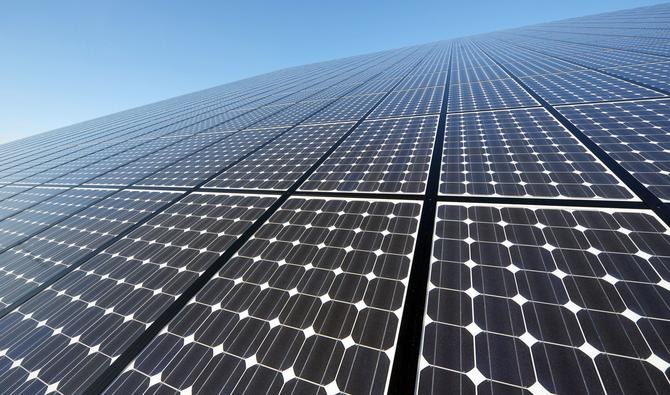
The vast areas of the Algerian Sahara that have maximum sunshine lend themselves well to the production of solar energy, as an inexhaustible energy potential to produce around 3,000 kWh per square meter, according to forecasts.
The priority is therefore to make the most of the energy potential available in the country. The Algerian government is counting on a program with a capacity of 15,000 megawatts (MW) by 2035. The country is now considering bids for solar photovoltaic plants to produce electricity. The Algerian government is doing everything in its power to improve the business climate for both local and foreign investors.
Green hydrogen is another energy trend which will make it possible to achieve the objectives set out by COP26. Capable of compensating for the irregularity of renewable energies, green hydrogen represents invaluable economic potential, particularly for the industrial sector, and on the long run, for the residential sector.
The national plan for the production of green hydrogen, which is obtained by the electrolysis of water, was approved last May. It includes the launch of market studies, development and regulations. Algeria hopes to sell hydrogen instead of natural gas to Spain and Italy starting 2030, using the same pipelines.
Dr. Nadjib Drouiche, a researcher at the Semiconductor Technology Research Center for Energy Energy (CRTSE), told Arab News en Francais that Algeria is well off and has all the assets to succeed in this leap forward in energy transition. He said that there are already four production sites for green hydrogen, in steel complexes such as El-Hadjar (Annaba) or glass factories such as Larbaa (Blida).
Around 20 million tons of CO2 are generated annually by Algerian cars. To encourage a transition toward electric cars, the import of hybrid vehicles is now prioritised.
The Minister of Energy Transition and Renewable Energies, Benattou Ziane, said: “Many mechanical workshops already practice a technique called ‘retrofitting’ [renovation of equipment], which consists of an electrical conversion. It is a question of equipping any type of vehicle (heat, gasoline or diesel engine) with electric energy.”
In terms of intermediate solutions, a program dedicated to the conversion of fuel modes in the transport sector is included in the government’s action plan. In 2021, 150,000 vehicles were using LPG, whether individuals, taxis or public administrations.
Algeria is committed, under the terms of the Paris agreement, to reduce carbon emissions by 7 percent by the year 2030. It could reach a 22 percent target if the country manages to obtain financial and technological assistance. Will Algeria succeed in becoming the African Eldorado of renewable energies? Only time will tell.
This story was originally published in French on Arab News en Français


