ISLAMABAD: Islamabad on Thursday rejected Washington’s “arbitrary and selective assessment” under a domestic legislation on religious freedom and its designation of Pakistan as a “country of particular concern,” the Pakistani foreign office said.
US Secretary of State Antony Blinken on Wednesday said he was designating Russia, as well as China and eight other states, as countries of concern “for having engaged in or tolerated systematic, ongoing, and egregious violations of religious freedom.”
The other countries on the US list for “religious freedom violations” included Myanmar, Eritrea, Iran, North Korea, Pakistan, Saudi Arabia, Tajikistan and Turkmenistan. Algeria, Comoros, Cuba and Nicaragua were placed on a watch list.
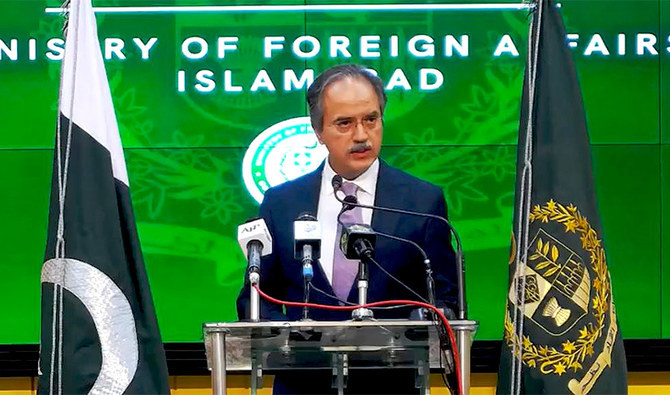
In its response, a Pakistani foreign office spokesman said the classification was against the ground realities.
“The designation of Pakistan as a ‘country of particular concern’ is completely against the realities on the ground and raises serious doubts about the credibility of this exercise,” foreign office spokesman Asim Iftikhar Ahmad said during the weekly press briefing in Islamabad.
He said Pakistan and the US had been constructively engaging on the subject at the bilateral level, a fact regrettably overlooked by the US.
“Pakistani society is multi-religious and pluralistic with a rich tradition of inter-faith harmony,” he said. “Religious freedom and the protection of the rights of minorities are guaranteed by our constitution and ensured through a range of legislative, policy and administrative measures.”
The spokesman said such “subjective designations” did not contribute toward promoting the cause of religious freedom worldwide.
Earlier in the first week on November, US Commission on International Religious Freedom (USCIRF) in its annual report said that “in 2020, religious freedom conditions in Pakistan continued to worsen.”
In one of its key findings in the report, the USCIRF said that influential groups [in Pakistan] actively promoted “hate speech and incitement to violence against religious minorities” via digital platforms and public sermons.


![]()

Islamabad rejects Washington’s ‘selective assessment’ of religious freedom in Pakistan
Short Url
https://arab.news/6f73c
Islamabad rejects Washington’s ‘selective assessment’ of religious freedom in Pakistan
- United States on Wednesday designated Pakistan among 10 states as ‘countries of particular concern’
- Classification ‘regrettably overlooked’ Pakistan-US constructive engagement on subject, Islamabad says
Latest updates


© 2026 SAUDI RESEARCH & PUBLISHING COMPANY, All Rights Reserved And subject to Terms of Use Agreement.