KHARTOUM, Sudan: A pro-military minister in Sudan says time is running out for the country’s deposed prime minister to agree to take a post in a military-led government after top generals seized power last month.
Prime Minister Abdalla Hamdok is currently under house arrest in the capital of Khartoum. He and more than 100 other government officials were detained during the coup. Many have been kept in undisclosed locations.
“The country cannot wait forever, so if he didn’t take the job, then someone else will definitely take it,” Gibreil Ibrahim, the finance minister of the deposed government, told The Associated Press late Tuesday.
Speaking from his office in Khartoum, Ibrahim said calls by some pro-democracy groups, the United States and its western allies to return the pre-coup transitional government are “unrealistic.”
Ibrahim, 66, is a rebel leader who joined the government earlier this year after the transitional administration reached a peace deal with a rebel alliance, ending years of civil war. He was one of those leading protests against Hamdok and others in Khartoum before the top generals initiated their coup to seize power.
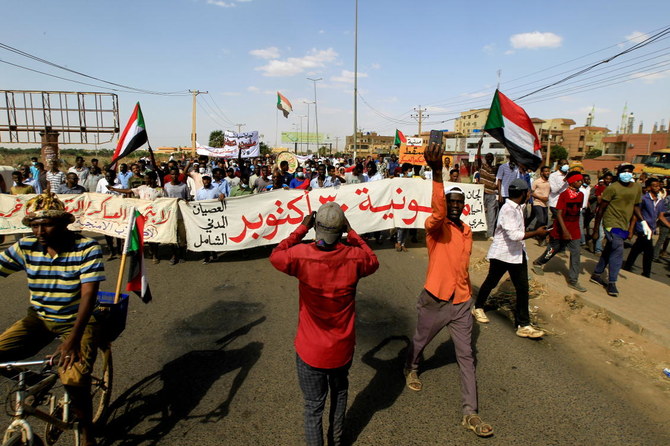
He spoke to the AP ahead of rallies Wednesday in Khartoum and other cities across the country against the military’s takeover. Authorities have shut bridges linking Khartoum and its twin city of Omdurman and tightened security across the capital. Security forces fired tear gas at anti-coup protesters in at least one location in Khartoum, according to activists.
The Sudanese military seized power Oct. 25, dissolving the transitional government and arresting dozens of officials and politicians. The takeover upended a fragile planned transition to democratic rule, more than two years after a popular uprising forced the removal of longtime autocrat Omar Al-Bashir and his Islamist government.
The coup has drawn international criticism and massive protests in the streets of Khartoum and elsewhere in the country. A total of 24 people were killed, and hundreds wounded in protests since Oct. 25, according to doctors.
The US has retaliated for the coup by suspending $700 million in direct financial assistance. The World Bank also suspended disbursements for its operations in Sudan, whose economy has been battered by years of mismanagement and sanctions. It also was dealt a blow when the oil-rich south seceded in 2011 after decades of war, taking with it more than half of public revenues and 95 percent of oil exports.
Ibrahim, who earned a PhD in economy at Japan’s Meiji University, urged the international community to weigh on the policies of the new government, regardless those leading it. He said it doesn’t matter who the next prime minister is. “If the policies are good, then Sudan should receive financial support,” he said.
Cracks, meanwhile, have started to surface among members of the broader pro-democracy movement. The main protests groups have insisted on the military fully handing power over to civilians.
Other political parties and groups have demanded a return to the power-sharing deal that established the deposed transitional government late in 2019, as well as a full handover to civilians to lead the transition to democracy.
Ibrahim, however, dismissed such demands. He argued that the situation has changed since the coup — an apparent reference to military’s tightening grip on power.
“It is rather unrealistic to say, ‘Either we turn to October 23rd or 24th or we are not going to talk to you,’” he said. “There is a new reality, and we need to look into it.”
Gen. Abdel-Fattah Burhan reappointed himself as the chairman of newly formed sovereign council, in a move that angered the protesters and frustrated the US and its western allies.
The top US diplomat for Africa, Molly Phee, met Tuesday with Hamdok, Burhan and others, part of ongoing mediation efforts to reach a compromise between civilians and the generals.
Burhan said the leaders of Sudan were willing to engage in dialogue with all political forces without conditions. He also said the military have already started releasing political prisoners who don’t face criminal charges.
Ibrahim said those detained, including Hamdok, would be free “very soon.”
“I don’t expect these people to stay in detention for long,” he said.


![]()

Sudan minister: Return to pre-coup arrangement ‘unrealistic’
Short Url
https://arab.news/2d9de
Sudan minister: Return to pre-coup arrangement ‘unrealistic’
- “The country cannot wait forever, so if he didn’t take the job, then someone else will definitely take it,” said the finance minister of the deposed government
- Gibreil Ibrahim was one of those leading protests against Hamdok and others in Khartoum before the top generals initiated their coup to seize power


Latest updates


© 2026 SAUDI RESEARCH & PUBLISHING COMPANY, All Rights Reserved And subject to Terms of Use Agreement.