DUBAI: Refusing to bow down to the US pressure to pump oil faster, Saudi Arabia, the UAE and Russia, all part of the grouping called OPEC+, on Monday indicated that the oil producers will continue to follow the production quota as earlier decided by the alliance.
UAE Energy Minister Suhail Al-Mazrouei said it is enough that OPEC+ is raising daily supply by 400,000 barrels per month.
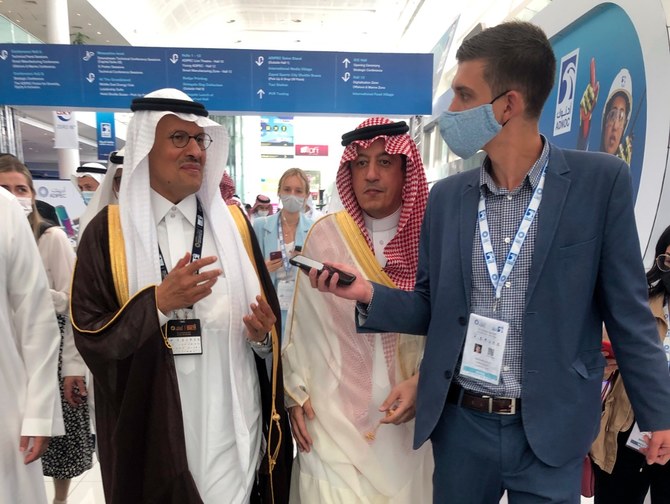
Speaking at the annual Abu Dhabi International Petroleum Exhibition and Conference, Mazrouei added the oil market will switch from a supply deficit to a surplus early next year, and that is one of the main reasons for OPEC+ not being more aggressive.
Energy ministers from across the developing world gathered in Abu Dhabi to attend the event and stressed the need for continued investment in fossil fuel production.
“After almost a decade of under-investment in our industry, the world has sleepwalked into a supply crunch. It is time to wake up,” said Sultan Al-Jaber, managing director and CEO of the Abu Dhabi National Oil Co.
Al-Jaber argued over $600 billion annually will need to be invested in the oil and gas industry until 2030 — just to keep up with expected global demand. Al-Jaber, who is also chairman of Abu Dhabi’s renewable energy firm Masdar, said that while a future run on renewable energy is coming “it is not here yet” and the world is still heavily reliant on oil and gas.
President Joe Biden’s administration, while rallying nations to shift away from burning fossil fuels, has simultaneously called on the Organization of the Petroleum Exporting Countries to increase production as prices climb for consumers at the pump, including singling out Saudi Arabia.
Major oil producers in the OPEC+ group have so far refused to veer from their gradual approach of restoring production levels slashed amid the pandemic of 2020.
Saudi Energy Minister Prince Abdulaziz bin Salman, said he is not worried about the US potentially selling crude from its Strategic Petroleum Reserve to force prices down.
“Everybody is predicting a surplus of supply starting from the first or second quarter,” Russian Deputy Energy Minister Pavel Sorokin said to Bloomberg Television at the same conference, referring to reports from the likes of the International Energy Agency.
“Inventories have stopped drawing, which shows there is no deficit at the moment.”
The Saudi minister argued oil markets were calm relative to those for coal and natural gas, prices for which soared to record highs last month.
“The oil market is not responsible for energy shortages,” he said. “Compare us to every other source of energy. Volatility is coming from the other sources of energy.”
Oman’s energy minister also said there was no need for OPEC+ to accelerate its production increases. The group will probably decide at its December meeting to stick with monthly hikes of 400,000 barrels, Mohammed Al-Rumhy said.


![]()

OPEC+ members rule out production increase
Short Url
https://arab.news/cq3td
OPEC+ members rule out production increase
- Energy ministers stress the need for continued investment in fossil fuel production

Latest updates


Recommended


© 2026 SAUDI RESEARCH & PUBLISHING COMPANY, All Rights Reserved And subject to Terms of Use Agreement.