

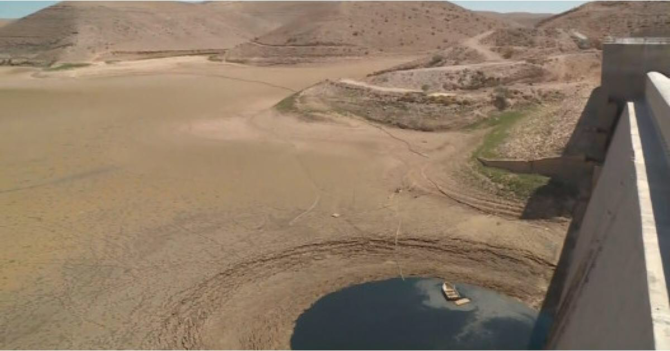
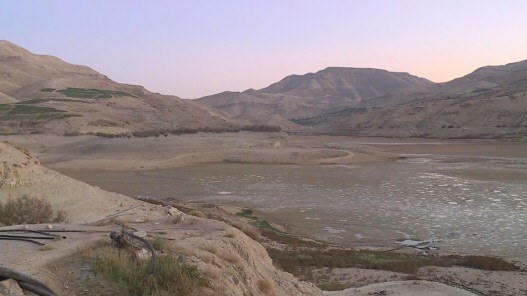


AMMAN: Amid a delay in rainfall, Jordan’s major dams are either completely empty or facing critically low water levels, putting the country on the verge of an unprecedented drought crisis should dry weather conditions persist.
Of the kingdom’s 14 major dams, three are now empty, according to officials, who said that emergency plans are being put in place to save farmers in the fertile Jordan Valley, known as the food basket of Jordan.
In recent remarks to Arab News, Omar Salameh, spokesperson of the water ministry, said that the Waleh, Mujib and Tanour dams in the southern desert regions have dried up due to crippling drought.
Salameh added that the King Talal and Wadi El Arab dams in the north are not yet empty, but are reporting critically low water levels.
“All in all, all the country’s dams have reached their lowest water levels due to extremely dry seasons over the past two years,” he said.
The official explained that the 2020-2021 rain season — from December to May — was “very low” and brought 60 percent less rainfall than the annual average.
“This coupled with high temperatures and high demand on water has led to all the consequences we are having now.”
However, citing data from the Jordan Meteorological Department, the official said that the delay in rainfall is “not exceptional” and that “it’s still too early to declare an emergency water situation.”
In a recent report, the JMD said that delayed rainfall is expected as a result of climate change, adding that rainfall in autumn makes up less than 20 percent of the total wet season.
Salameh said that the ministry has put in place short and long-term plans to address a possible dry season.
With low water storage in dams meaning less water to be portioned out to farmers, Minister of Agriculture Khaled Hneifat announced that farmers in the Jordan Valley are now permitted to drill wells to access groundwater for irrigation — a practice that was previously prohibited in the country.
During a recent meeting with the Lower House’s water and agriculture committee, Secretary General of the Water Authority of Jordan Bashar Bataineh said that Jordan’s water deficit in 2021 stands at 40 million cubic meters, of which half is in Amman, the densely populated capital of about 4 million people.
Head of the Jordan Valley Farmers’ Union Adnan Khaddam blamed the government for the “risky” water situation, adding that it “stood idly by and took no action.”
Khaddam was quoted in local media outlets as saying that the King Talal Dam, the largest in the kingdom, has reached “dangerously low levels.”
He added: “The dam covers 80 percent of the water needs of farmers in the Jordan Valley, but the available quantity in the dam is very low,” he said, warning of serious drought if rain does not arrive.
National conveyor project
Jordan, classified as the world’s second most water-scarce country, announced the launch of the Aqaba-Amman Water Desalination and Conveyance National Project (AAWDC), described as “the largest water generation scheme to be implemented in the history of the kingdom.”
During a meeting with lawmakers, Bataineh of Jordan’s Water Authority said that the megaproject will “ensure the country’s water stability until 2040.”
The water ministry announced that the AAWDC, once completed, will generate 130 million cubic meters of water each year.
Launching the project’s first phase in February 2020, the government said that the AAWDC will be implemented on a build-operate-transfer basis and will provide a sustainable water resource for future generations in all parts of the kingdom.
The government said at the time that the strategic scheme is part of the Jordan’s efforts to adapt to climate change, dwindling water resources and population growth.
Additional water from Israel
On Oct. 12, Jordan signed an agreement with Israel to purchase an additional 50 million cubic meters of water outside the framework of the peace agreement and what it stipulates in regard to water quantities.
The additional water Israel will provide will come from the Sea of Galilee.
The water ministry issued a statement at the time, quoting an unnamed source who said that the agreement was signed following a meeting in Amman of technical committees from both sides.
The agreement “was proof that we want good neighborly relations,” Karine Elharrar, Israel’s minister of infrastructure, energy and water resources, told Israeli media.
Jordan and Israel in July said that they had reached a deal under which the latter will sell an additional 50 million cubic meters of water annually to the kingdom following a meeting between the foreign ministers of both countries.


