

Jordan launches emergency response plan ‘infectious diseases’ at border crossings

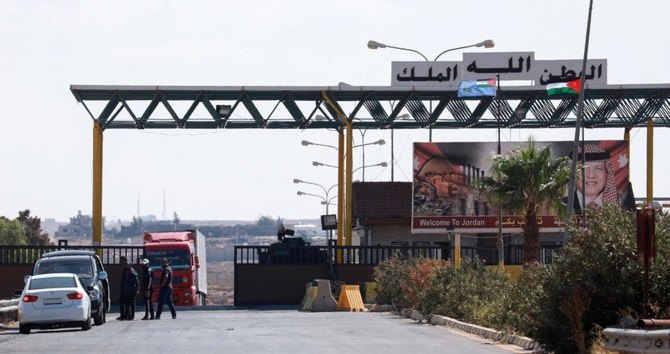
Vehicles enter Syria through the Nassib/Jaber border post with Jordan. (AFP/File)
Short Url
Updated 12 November 2021
Follow

Jordan launches emergency response plan ‘infectious diseases’ at border crossings

  • The plan will introduce specialized equipment and train staff

DUBAI: Jordan launched this week a plan to protect the country from any infectious diseases that might spread from its border crossing, state news agency Petra reported.

Minister of Health Firas Hawari’s initial plan will focus on Jordan's border crossings in Mudawara, King Hussein Bridge, and Passenger Terminal - Aqaba Port.

The plan will introduce specialized equipment and train staff, Hawari said, adding that the “development of a comprehensive plan for crossings' emergency response will be made in consultation and coordination with the relevant authorities.”

Preparing plans for the various crossings is aimed at creating "clear" guidelines, he noted, which will explain the roles of different sectors in responding to public health emergencies.


Algeria inaugurates strategic railway to giant Sahara mine

President Tebboune attended an inauguration ceremony in Bechar. (AFP file photo)
Updated 02 February 2026
Follow

Algeria inaugurates strategic railway to giant Sahara mine

  • The mine is expected to produce 4 million tons per year during the initial phase, with production projected to triple to 12 million tons per year by 2030
  • The project is financed by the Algerian state and partly built by a Chinese consortium

ALGEIRS: Algerian President Abdelmadjid Tebboune on Sunday inaugurated a nearly 1,000-kilometer (621-mile) desert railway to transport iron ore from a giant mine, a project he called one of the biggest in the country’s history.
The line will bring iron ore from the Gara Djebilet deposit in the south to the city of Bechar located 950 kilometers north, to be taken to a steel production plant near Oran further north.
The project is financed by the Algerian state and partly built by a Chinese consortium.
During the inauguration, Tebboune described it as “one of the largest strategic projects in the history of independent Algeria.”
This project aims to increase Algeria’s iron ore extraction capacity, as the country aspires to become one of Africa’s leading steel producers.
The iron ore deposit is also seen as a key driver of Algeria’s economic diversification as it seeks to reduce its reliance on hydrocarbons, according to experts.
President Tebboune attended an inauguration ceremony in Bechar, welcoming the first passenger train from Tindouf in southern Algeria and sending toward the north a first charge of iron ore, according to footage broadcast on national television.
The mine is expected to produce 4 million tons per year during the initial phase, with production projected to triple to 12 million tons per year by 2030, according to estimates by the state-owned Feraal Group, which manages the site.
It is then expected to reach 50 million tons per year in the long term, it said.
The start of operations at the mine will allow Algeria to drastically reduce its iron ore imports and save $1.2 billion per year, according to Algerian media.