



BADIN, Sindh: In the third month of the Islamic lunar calendar, thousands of devotees flock to the shrine of Syed Saman Shah Sarkar in Badin, a rural region in Sindh province, to pay respect to the saint and mark the anniversary of his death with a special gift: roosters.
Sindh is famously known as the land of Sufis and saints, and is home to the shrines of Hazrat Lal Shahbaz Qalandar in Sehwan, Abdullah Shah Ghazi in Karachi and Geeay Shah Badshah in Sukkur. Many great mystic poets like Shah Abdul Latif Bhitai, Sachal Sar Mast and Shah Abdul Karim also hail from Sindh.
Sarkar is among the well-known saints from the province, and is called “Larr Jo Laal,” or the saint of roosters.
At his death anniversary celebrations held in late October this year, about 25,000 visitors visited the shrine, its management said.
Most arrived carrying roosters in their arms, which they offered to the tomb’s caretaker who caressed the birds, gave his blessings, and then let the owners release them outside the marble building. The birds are then cooked by the management in large metal pots to be distributed among the poor. Devotees believe the offering will help their prayers come true.
The century-old ritual is observed for three days in the Islamic month of Rabi Al-Awwal, though it can extend to over a week before the festive spirit is exhausted.
“During the life of the saint, his followers brought roosters with them on his instructions,” Muhammad Urs Junejo, the shrine’s caretaker for the last 40 years, told Arab News. “He always asked them to bring the male breed of country chicken.”
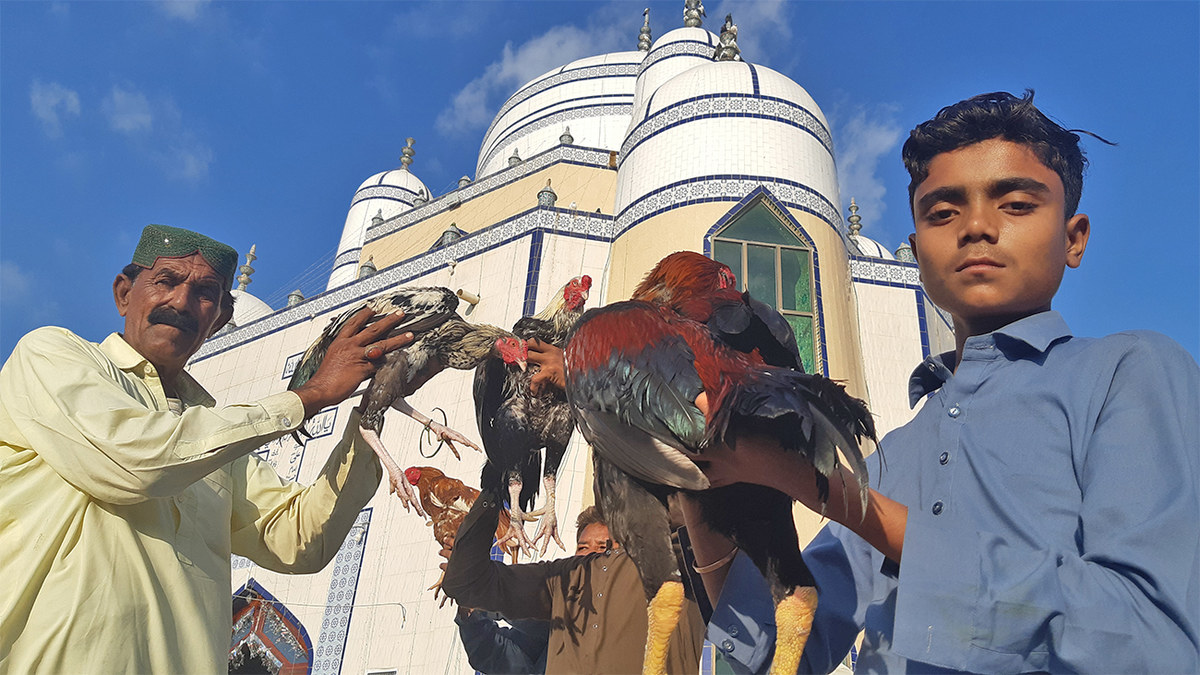
Muhammad Urs Junejo, the caretaker of Saman Sarkar shrine in Badin, in Pakistan's southern Sindh province, gives his blessings to roosters before they are released on October 22, 2021. (AN photo by Zulfiqar Kunbhar)
Different colors of the birds are believed to offer different blessings.
“It is widely believed that those who bring red roosters get a son,” Junejo said.
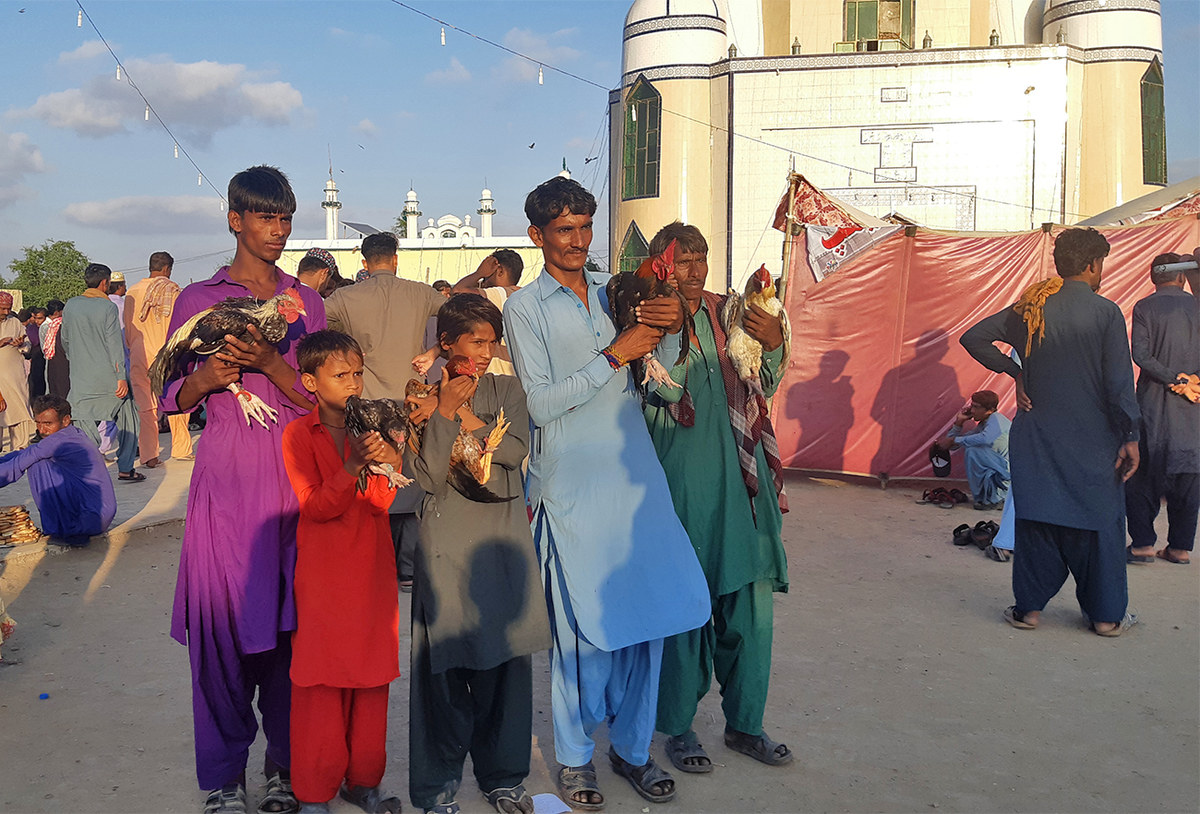
People pose at Saman Sarkar’s shrine in Badin, in Pakistan's southern Sindh province, on October 22, 2021. (AN photo by Zulfiqar Kunbhar)
Though the tradition is that the shrine management prepares the communal meals from the rooster meat, some devotes decide to host sacrificial feasts themselves.
One such devotees was Ali Nawaz, who prepared a meal for his travel companions at an open ground near the tomb.
Asked if his effort would still count if he deviated from the norm, Nawaz said: “The basic objective is to get our wishes fulfilled.”
“I bring a rooster every year, sometimes even two or three,” he told Arab News. “There are occasions when I release them, but there are also times when I bring them back. This year, I’m going to cook this bird myself.”
Another devotee, Ashraf Taghar, had traveled over 130 kilometers traveling with six companions to visit the shrine to release the roosters in the hopes his prayers would be heard.
“I bring a rooster every time I come to this place,” said Taghar, who has a flock of chickens at home and selected the most special among them to offer at Sarkar’s shrine.
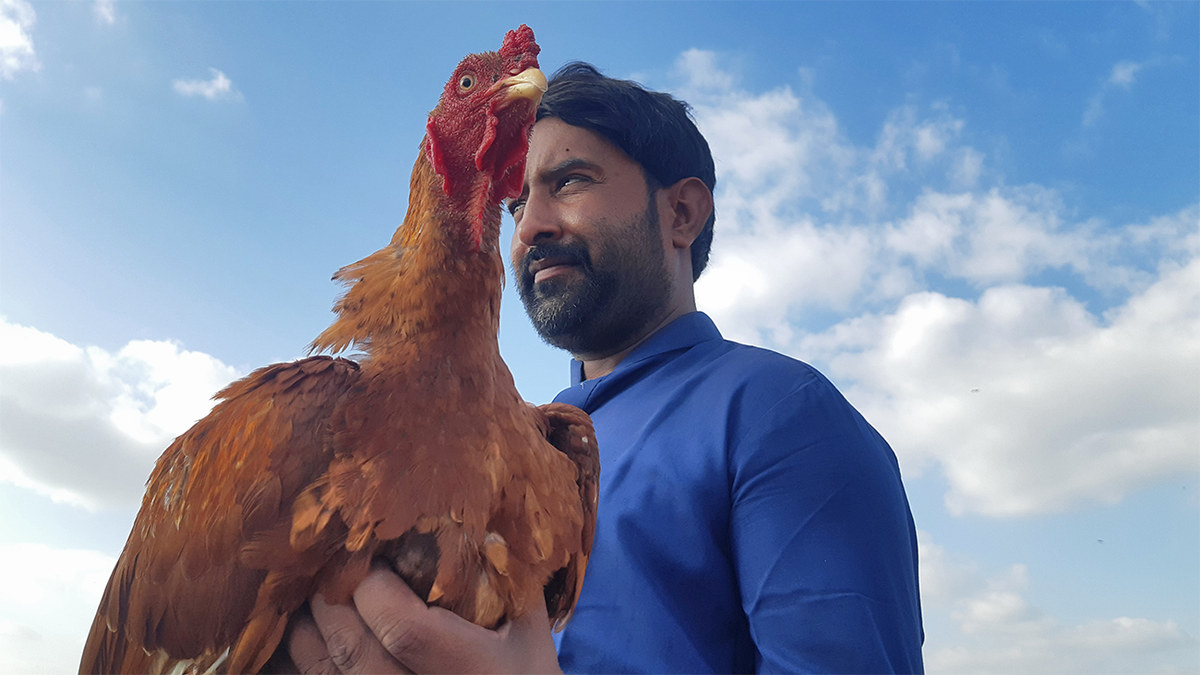
Ashraf Taghar is about to release a rooster while visiting the shrine of Saman Sarkar in Badin, in Pakistan's southern Sindh province, on October 22, 2021. (AN photo by Zulfiqar Kunbhar)
“I raised this rooster with extreme love and dedication,” he said, gently touching the bird with his index finger. “It is pedigreed and mostly used for cockfighting. So, it is very precious.”
“Like previous years, I also brought a new wish with me this time.”


