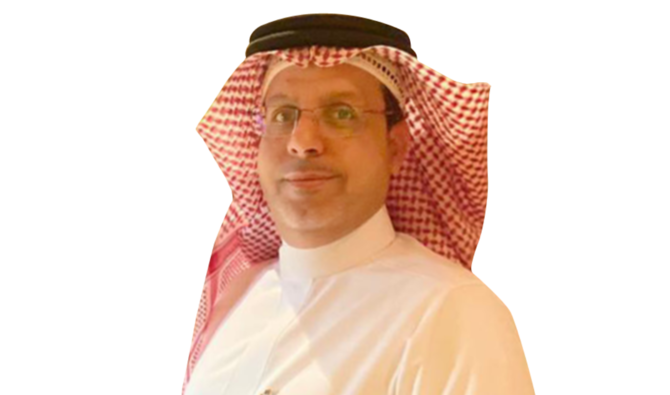
Who’s Who: Mohammed Al-Marzouq, shared services strategic sourcing lead at the Industrialization and Energy Services Co.

Short Url
Updated 05 November 2021
Follow

Who’s Who: Mohammed Al-Marzouq, shared services strategic sourcing lead at the Industrialization and Energy Services Co.

Mohammed A. Al-Marzouq has been a shared services strategic sourcing lead at the Industrialization and Energy Services Co. since September.
He has served as acting supply chain manager at the Arabian Geophysical and Surveying Co. since August 2020. His responsibilities include building the procurement project plan for onshore and offshore projects to ensure all requirements are procured and delivered on time. He also builds the infrastructure of the strategic sourcing hub for the region to ensure an adequate supply of materials, services and qualified sources in every country.
Prior to that, Al-Marzouq was the sourcing and contracting unit head at the same company from July 2019 to July 2020 where he led the processes of identifying, qualifying and approving new suppliers by conducting site assessments and first-piece qualifications. This was achieved with the support of the quality and HSE team. It involved producing the infrastructure of strategic sourcing and contracting in all regions.
Al-Marzouq served as the inventory planning and order management lead at Baker Hughes from July 2018 to April 2019. In this role, he managed a $146 million inventory for pressure pump, drilling fluid, drill bit and wire line product lines, and maintained optimal stock levels to ensure their timely availability. He also established and executed the repair and returns process to improve productivity.
He held the position of supply and logistic unit head at Rawabi Electric from August 2014 to June 2018 and sourcing manager at Cooper Industries Middle East from July 2012 to July 2014. Al-Marzouq has also served in a number of companies at different positions including as a material manager, sourcing manager and project manager from October 2006 to July 2012.
Al-Marzouq received a bachelor’s degree in industrial engineering from King Fahd University of Petroleum and Minerals.


Automatic defense systems ‘hugely important’ in dealing with threats

Updated 9 sec ago
Follow

Automatic defense systems ‘hugely important’ in dealing with threats

RIYADH: Automatic defensive systems that respond to threats in real time without human intervention are “hugely important” in modern air defense, a senior executive at Lockheed Martin told Arab News at the World Defense Show in Riyadh on Thursday.

Joseph Rank, chief executive and vice president at Lockheed Martin Saudi Arabia and Africa, said the ability to connect detection systems directly to interceptors without delay is critical when responding to fast-moving threats such as missiles and drones.

“Integration is hugely important today. There’s so many threats, and the way you deal with threats in a real-time basis is by having everything integrated,” Rank said.

He described systems in which sensors identify incoming projectiles and automatically communicate with defensive assets.

“Your sensors or your radars have to see the incoming missiles or drones, but you don’t want to wait and have a human in loop … The sensors communicate automatically to the missiles that are going to knock those out of the air,” he said.

Rank said latency must be minimal to ensure an effective response.

“The latency has to be almost like nothing there, like a nanosecond, so that immediately, when you pick up that incoming missile or drone, it’s automatically communicated, no human in the loop that’s there,” he said.

He spoke about how the company uses a system called Command IQ to support this interconnectivity, linking sensors and interceptors in real time and incorporating artificial intelligence to assess response options.

The system works by “connecting everything together, sensors to shooters in real time, and it also integrates artificial intelligence. So, it gives you the best options.

“You might have three or four options to shoot or eliminate that drone. It gives you what’s the most cost-effective, what has the most probability of kill. And so, it helps you protect your citizens here, the citizens of the Kingdom.”

Beyond system integration, Rank also addressed the company’s operations in Saudi Arabia, describing a shift from supplying equipment to carrying out manufacturing and maintenance activities locally.

“We used to sell things to the Kingdom. Now we actually make things here in the Kingdom,” he said.

The company is meeting or exceeding the country’s 60 percent localization requirement and is investing in workforce development, he added.

Rank said that the company, which has operated in Saudi Arabia for 60 years, intends to continue expanding its role, including through future co-development of systems in Saudi Arabia.

“We’re going to build new things here in the Kingdom that will be for the Kingdom’s use, and we will export abroad.”

The company also announced in a statement on Thursday that it signed a memorandum of understanding with the Arabian International Co. for Steel Structures to expand localized production of components for the advanced Terminal High Altitude Area Defense weapon system.