

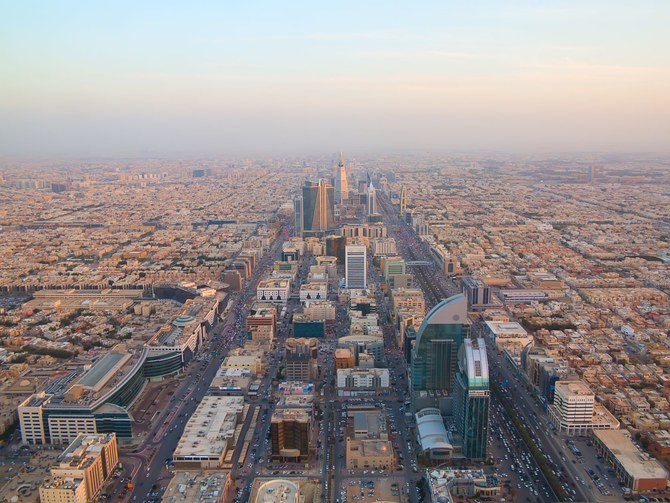
Saudi Arabia apartment prices climb at fastest pace in 5 years: Knight Frank

Short Url
Updated 03 November 2021
Follow

Saudi Arabia apartment prices climb at fastest pace in 5 years: Knight Frank

  • Apartment prices up 17% in the last 12 months
  • 45,000 residential transactions during Q3
  • 160,000 households have benefitted from government initiatives such as Wafi and Sakani in H1

RIYADH: The prices of apartments in Saudi Arabia is growing at the fastest rate in five years, according to a new study from property consultant firm Knight Frank.

Knight Frank highlights in its report today that Riyadh and Jeddah have seen apartment values accelerate by 17 percent and 12 percent respectively over the last 12 months.

Faisal Durrani, head of Middle East Research at Knight Frank, said: “The government’s drive to boost home ownership rates began in 2016, however house prices only began accelerating in 2019. And in fact, apartment prices in Riyadh have increased by 14.4 percent since 2019."

Sakani and Wafi schemes have seen 160,000 households benefit during the first half of 2021, according to Durrani.

Villa price growth is starting to slow, but "they can still cost anywhere between 7-12 times annual incomes,” Durrani said, adding: "Home ownership has actually become more affordable since the launch of the National Transformational Plan." 

The Kingdom is set to have a new residential landscape, where it is now also more culturally acceptable for a family to buy an apartment as their first home. 

The demand for single-person dwellings is likely to accelerate in Riyadh with the job creation acceleration leading to a shift in the market's demand dynamics, according to Durrani. 

The Kingdom will have a limited supply pipeline, which is expected to add 730,000 homes to Riyadh by the end of 2030, reflecting a shortfall of at least 420,000 homes, despite shifting demand-supply dynamics and affordability issues for larger homes.

Jeddah’s residential market has seen apartment prices surge by 11.7 percent over the last 12 months- the strongest growth rate in at least five years while villa prices have risen by just 1.3 percent over the same period.

Average apartment prices in the Dammam Metropolitan Area (DMA) have risen by 5.5 percent in the year to the third quarter of 2021, while average villa prices have declined by 1.9 percent over the same period.


Saudi Arabia leads outcome-based education to prepare future-ready generations: Harvard Business Review

A Harvard sign is seen at the Harvard University campus in Boston, Massachusetts, on May 27, 2025. (AFP)
Updated 10 February 2026
Follow

Saudi Arabia leads outcome-based education to prepare future-ready generations: Harvard Business Review

  • The Riyadh-based school group developed a strategy that links every classroom activity to measurable student competencies, aiming to graduate learners equipped for the digital economy and real-world contexts

RIYADH: Saudi Arabia’s education system is undergoing a sweeping transformation aligned with Vision 2030, shifting from traditional, input-focused methods to outcome-based education designed to equip students with future-ready skills, Harvard Business Review Arabic reported.

The transformation is being adopted and spearheaded by institutions such as Al-Nobala Private Schools, which introduced the Kingdom’s first national “learning outcomes framework,” aimed at preparing a generation of leaders and innovators for an AI-driven future, the report said.

Al-Nobala has leveraged international expertise to localize advanced learning methodologies.

The Riyadh-based school group developed a strategy that links every classroom activity to measurable student competencies, aiming to graduate learners equipped for the digital economy and real-world contexts. The school’s group approach combines traditional values with 21st-century skills such as critical thinking, communication, innovation and digital fluency.

According to the report, the shift addresses the growing gap between outdated models built for low-tech, resource-constrained environments and today’s dynamic world, where learners must navigate real-time information, virtual platforms, and smart technologies.

“This is not just about teaching content, it’s about creating impact,” the report noted, citing how Al-Nobala’s model prepares students to thrive in an AI-driven world while aligning with national priorities.

The report noted that Saudi Arabia’s Ministry of Education has paved the way for this shift by transitioning from a centralized controller to a strategic enabler, allowing schools such as Al-Nobala to tailor their curriculum to meet evolving market and societal needs. This is part of the long-term goal to place the Kingdom among the top 20 global education systems.

Al-Nobala’s work, the report stated, has succeeded in serving the broader national effort to link education outcomes directly to labor market demands, helping to fulfill the Vision 2030 pillar of building a vibrant society with a thriving economy driven by knowledge and innovation.

Last February, Yousef bin Abdullah Al-Benyan, Saudi Arabia’s minister of education, said that the Kingdom was making “an unprecedented investment in education,” with spending aligned to the needs of growth and development. He said that in 2025, education received the second-largest share of the state budget, totaling $53.5 billion.