

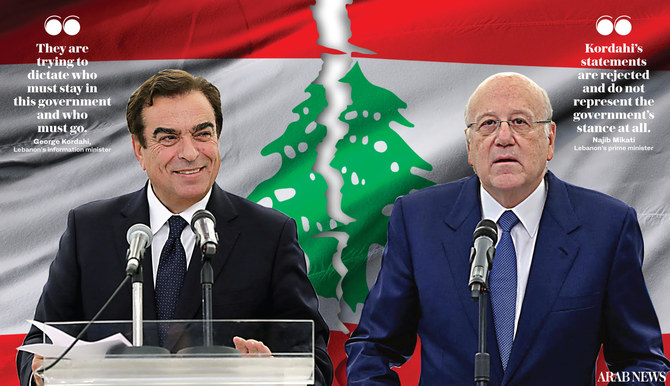

LONDON/BEIRUT: When Lebanese Prime Minister Najib Mikati formed a government in September, ending a 13-month-long political stalemate, a collective sigh of relief was heard across the land. But the writing was already on the wall.
It did not take long for the moment of truth to arrive. But it was not the economic meltdown, or the electricity crisis, or the Beirut blast inquiry deadlock or the unfolding humanitarian disaster in the country that laid bare the Mikati government’s impotence. It was something entirely different.
A TV star-turned-information minister was found to harbor outrageous views on an issue only peripherally related to Lebanon’s problems, but which had the potential to precipitate a serious diplomatic crisis for the country.
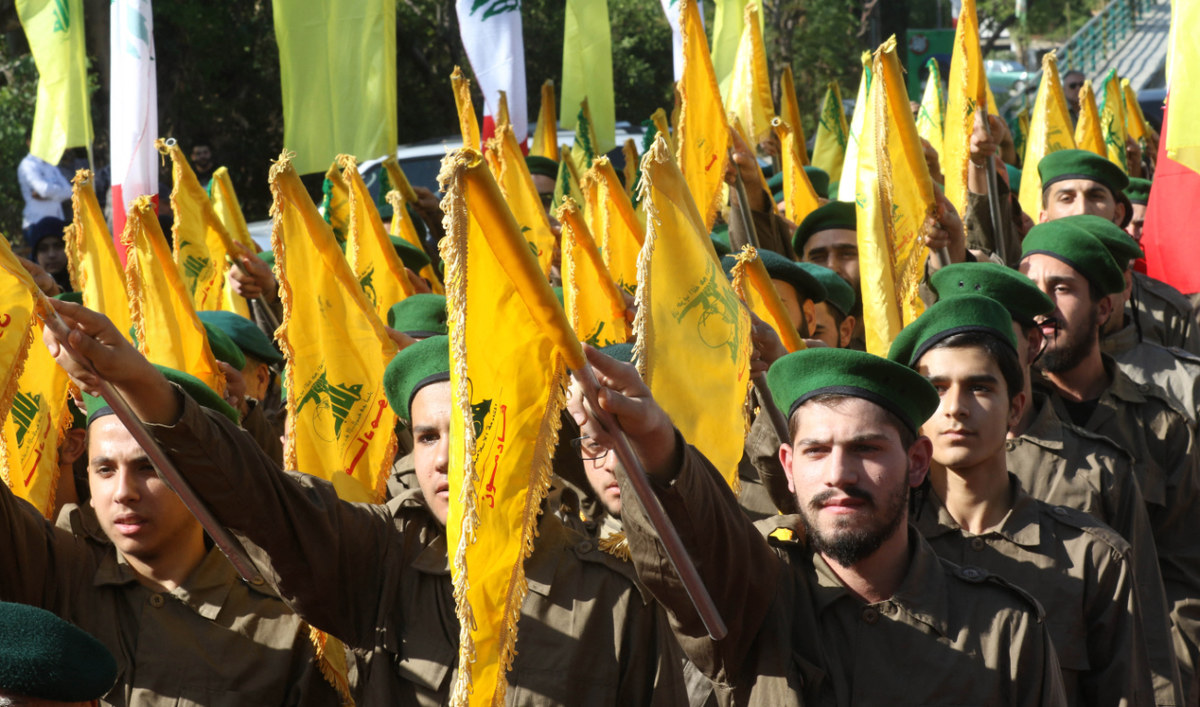
The people of Lebanon know only too well that the government merry-go-round hides the reality of Hezbollah’s role as the puppet master. (AFP)
In an interview that came to light recently, George Kordahi claimed that the Iran-backed Houthi militia in Yemen was defending itself and that the war in Yemen should stop.
Although the interview was recorded before he assumed his cabinet post, Kordahi’s views came as a rude shock to Lebanon’s Gulf Arab friends, who have been on the receiving end of two kinds of lethal exports originating in Lebanon.
For the past six years, there have been continual attempts to smuggle weapons from Lebanon to the Houthis, and narcotic pills, mainly Captagon, from Lebanon to Saudi Arabia and other Gulf countries.
As Waleed Bukhari, Saudi Arabia’s ambassador to Lebanon, said in a tweet earlier this year: “The quantity of drugs and psychotropics smuggled from Lebanon is enough to drown not only Saudi Arabia but also the entire Arab world.”
Against this backdrop, Lebanese leaders are naturally facing pressure to remove Kordahi from his post as a first step toward mending relations with the Gulf countries.
Lebanese officials also have been urging their American and French counterparts to mediate in the dispute sparked by Kordahi’s comments. The Foreign Ministry said on Sunday that Lebanon’s “great concern (is) to have the best relations with its Gulf and Arab brothers.”
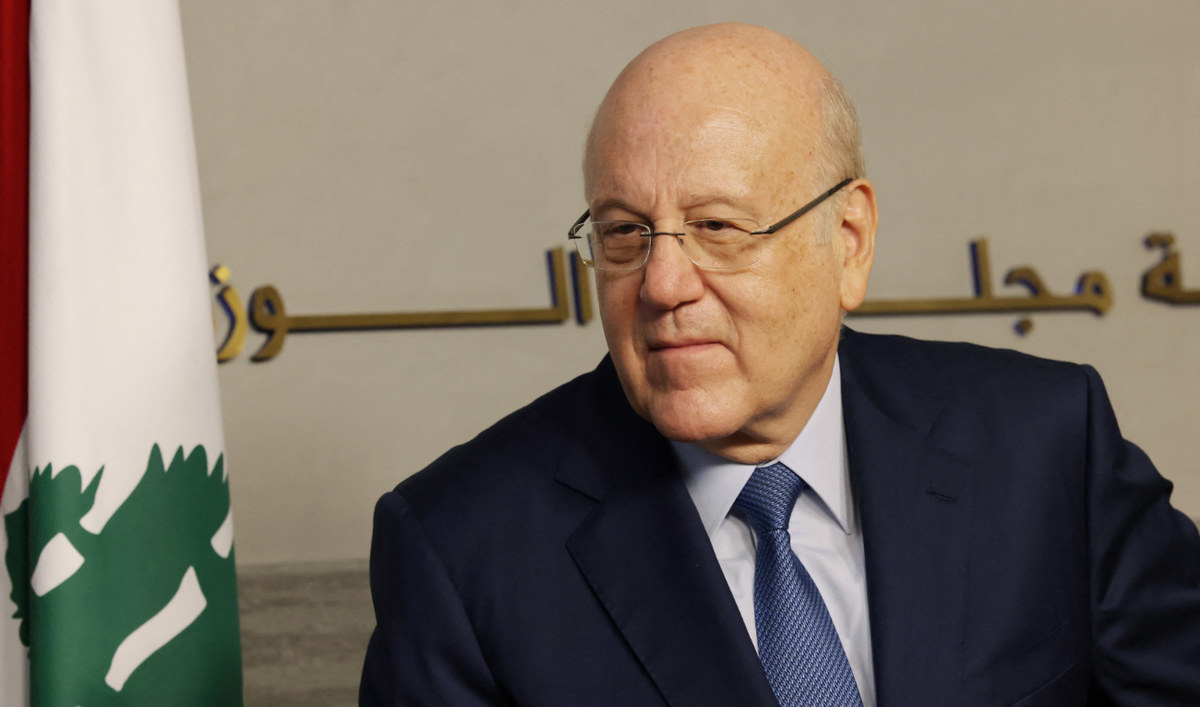
Many Lebanese people think any other leader would have sent Kordahi packing, and accuse Mikati of failing to show strong leadership given that the minister’s views contradict Lebanon’s official position on the Yemen conflict. (AFP)
But all indications are that the situation will get worse before it gets better.
Kordahi has said that he does not intend to quit his post. In a televised speech on Sunday he stated bluntly: “Resigning from the government is not an option.”
Meanwhile, Saudi Arabia, the UAE, Kuwait and Bahrain have recalled their ambassadors from Beirut and ordered their respective Lebanese ambassadors to leave. The UAE has also banned its citizens from traveling to Lebanon.
Prince Faisal bin Farhan, the Saudi foreign minister, has made it clear that Kordahi’s statements are but a symptom of the problem affecting Lebanon: The influence of Hezbollah, which has been the de-facto ruler of Lebanon for a very long time.
Seasoned observers of Lebanese politics view Kordahi as an irrelevance at best. They point out that he has a track record of reading someone else’s script: First from a teleprompter as the host of the Arabic version of the quiz show “Who Wants to Be a Millionaire?;” now, from scripts handed to him by Hezbollah, as described by Arab News Editor in Chief Faisal J. Abbas in a recent column.
What has come as a rude awakening for Lebanon’s friends and well-wishers is not so much Kordahi’s ill-informed views about the war in Yemen, as the feeble response to them from Mikati’s government.
“Compared with the average Lebanese prime minister, Mikati is less confrontational and more consensus-driven,” Chris Abi-Nassif, the Lebanon program director at the Middle East Institute, told Arab News. “Last week’s diplomatic escalation caught him by surprise, especially given that he was banking on his relatively good ties with the Gulf to start reversing Lebanon’s downward trajectory.
“The escalation, however, shows that he clearly has very little maneuvering space and political capital today to stand up against Hezbollah or appease (let alone engage) the Gulf states, which explains the indecision in Beirut over the past few days.”
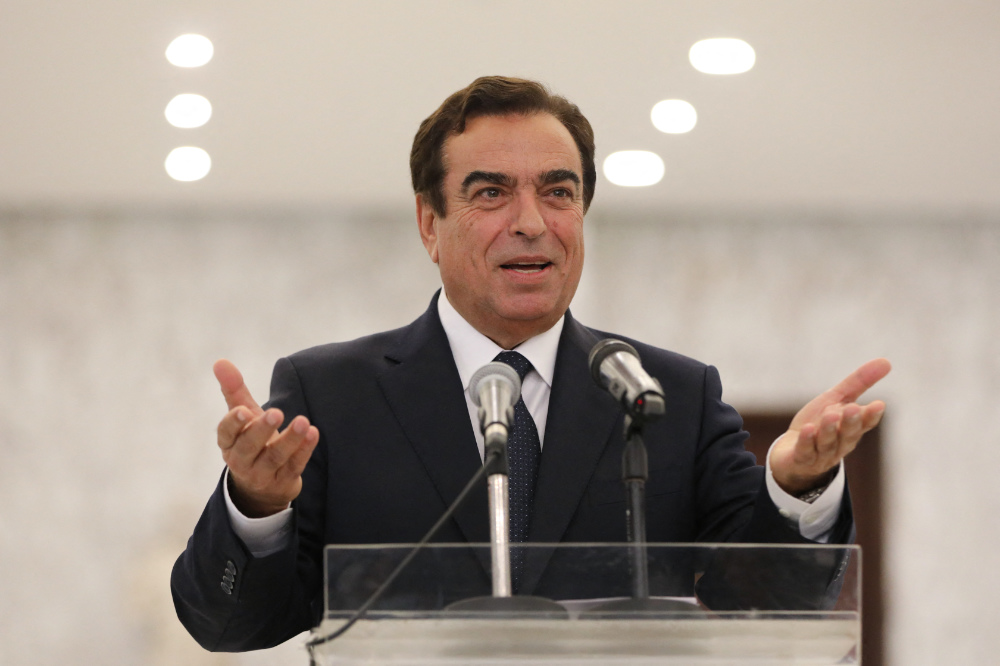
Kordahi has said that he does not intend to quit his post. (AFP)
Mikati, who is currently in Glasgow, Scotland, for COP26, the UN Climate Change Conference, was due to hold “several international and Arab meetings on Monday and Tuesday to discuss the current crisis between Lebanon and Gulf countries” on the sidelines of the event.
Precisely what conciliatory steps he is contemplating are far from clear, even though Fawzi Kabbara, Lebanon’s ambassador to Saudi Arabia, said upon his return to Beirut that “restoring Lebanese-Saudi ties would be possible if Lebanon agrees to the conditions.”
Many Lebanese people think any other leader would have sent Kordahi packing, and accuse Mikati of failing to show strong leadership given that the minister’s views contradict Lebanon’s official position on the Yemen conflict.
They add that it is obvious from the controversy that Kordahi’s protectors are Hezbollah and its ally, the Marada Movement leader Suleiman Frangieh, who have pointedly praised him and are ensuring that he remains in his job.
“Whether it’s Najib Mikati or anybody that comes to the premiership, the individual is not going to be able to turn the ship around,” Firas Maksad, a senior fellow at the Middle East Institute, told Arab News.
If Lebanon has any hope of healing the rift with Saudi Arabia and other Gulf states, he said, the best course would be promising not to get involved in Yemen, taking action on illicit smuggling, and reining in the rhetoric.
“Its pledge not to be involved in foreign wars, including Yemen, and support for the Houthis would be a good place to start,” Maksad said.
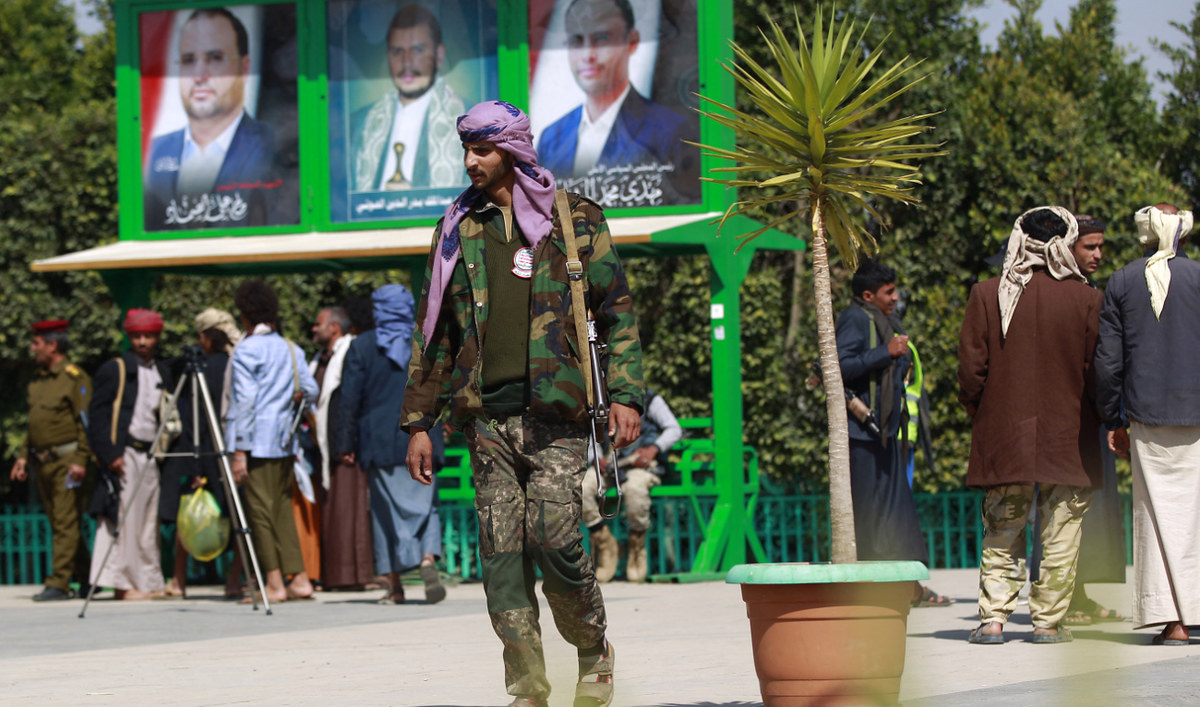
George Kordahi claimed that the Iran-backed Houthi militia in Yemen was defending itself and that the war in Yemen should stop. (AFP)
“Serious, structured efforts to contain and stop the flow of drugs to the Gulf via land and other means of transport would be a gesture that would go down well, and begin to alleviate serious Saudi concerns.
“And then trying to carefully calibrate public pronouncements directed against the Kingdom and its interests from Lebanese officials would be a third, but it would be a distant third.
“I don’t think that the problem begins, and certainly does not end, with folks that make these statements. The statement is a symptom of the illness, not the illness itself. But again, I think the prospects of any of those are limited.”
Hezbollah has not officially been accused of being behind “the flow of drugs to the Gulf” but most fingers point in its direction. According to a report by The Euro-Gulf Information Center: “The sale of drugs represents an important source of revenue for Hezbollah, made more important due to US sanctions on key party members and its main financial sponsor, Iran. The collapse of the Lebanese state has also pushed Hezbollah deeper into the illicit drug trade — there is less to steal from the national economy.”
The accusations are hardly surprising given that Lebanon has long been under Hezbollah’s thumb. The people know only too well that the government merry-go-round hides the reality of Hezbollah’s role as the puppet master. The prime minister enjoys the visible trappings of power but it is ultimately Hezbollah which calls the shots.
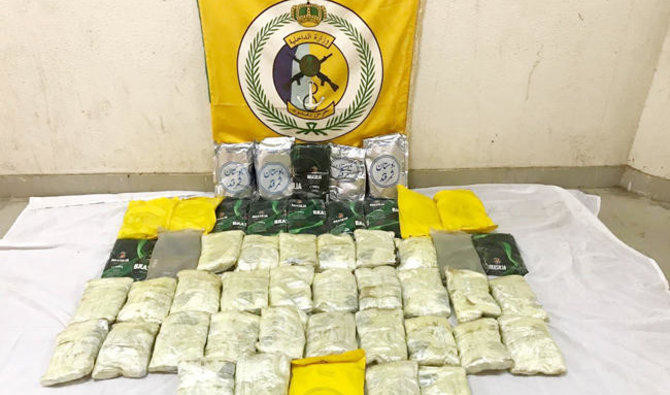
Hezbollah has not officially been accused of being behind the surge in drug-smuggling operations but most fingers point in its direction. (SPA)
“Mikati is not the perfect candidate for any heavy lifting in Beirut, neither when it comes to the required reforms, nor when it comes to the major political crises Lebanon is facing,” Bachar Halabi, a Lebanese political analyst, told Arab News.
“At best, Mikati is a compromise candidate who fills a gap when (former Prime Minister Saad) Hariri is out of power. He does not enjoy the wide popularity or the guts for confrontations. Hence, he is a ‘filler’ in a way. And with all those dossiers blowing up in his face, Mikati is clueless and helpless as well.”
Halabi added: “Today, Hezbollah controls the country. It controls the executive, it controls the legislature, it controls the presidency and it holds a sway over the judiciary and the media.
“With Lebanon falling almost entirely under Iran’s influence, as in the country becoming a satellite state for the regime in Tehran and the Islamic Revolutionary Guard Corps, the particularity of Lebanon and what it represented for the Gulf countries has diminished, whether as a geopolitical asset, banking sector, the health sector or a space with plenty of margin for the press.”
----------------------------------
Tarek Ali Ahmad is the head of the Arab News Research & Studies Unit and a Media Editor. He has covered the October 2019 protests in Lebanon and the country’s 2018 parliamentary elections, as well as the World Economic Forum’s annual meeting in Davos in 2020. He holds an MA in Human Rights Law from SOAS, University of London, and a BA in Media and Communication from the American University of Beirut. Twitter: @Tarek_AliAhmad


