- The country’s central bank purchased $4.5 billion or CNY30 billion from China in the last fiscal year, official record shows
- The value of bilateral currency swap between the two countries has been increased from Rs475 billion in 2020 to Rs731.7 billion in 2021
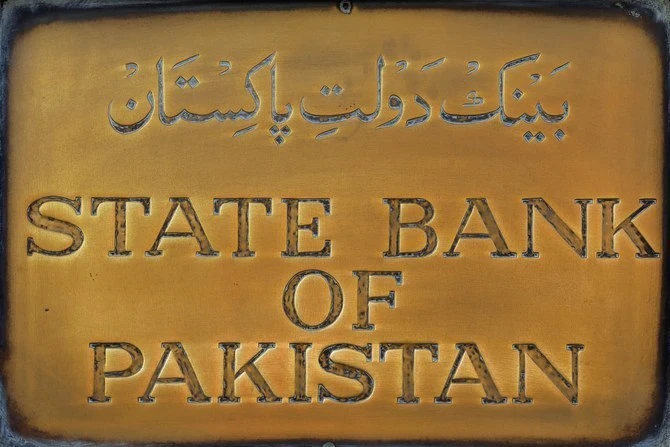
KARACHI: The State Bank of Pakistan (SBP) paid Rs26.1 billion in interest to the Chinese central bank during the last fiscal year (FY21) for utilizing $4.5 billion trade finance and finance investment under the bilateral currency swap, official data released on Friday showed.
A bilateral currency swap agreement (CSA) was signed between Pakistan’s central bank and the People’s Bank of China in December 2011 to promote bilateral trade, finance direct investment, provide short term liquidity support, and serve other mutually agreed financial purposes by the two banks.
The agreement was renewed in December 2014 for a period of three years with an overall limit of 10 billion Chinese Yuan (CNY) and an exchange rate equivalent of the Pakistani rupee.
The currency swap agreement was further extended in 2018 for a period of three years when the two sides mutually agreed to increase the amount from CNY10 billion to CNY20 billion, according to the financial statements released by the SBP.
“The [State] Bank had purchased and utilized CNY20 billion against PKR [Pakistani Rupee] during the year ended June 30, 2020, with the maturity buckets of three months to 1 year,” said the statement that also showed in tabulated form that Pakistan had paid Rs26.1 billion in interest to China in FY21. “During the year, the overall limit of CNY20,000 million has been further extended to CNY30,000 million ($4.5 billion) for a period of three years against PKR with the maturity buckets of three months to 1 year.”
The SBP report showed the country fully utilized the trade facility by the end of the last fiscal year.
“These purchases have been fully utilized by June 30, 2021. Interest is charged on outstanding balance at agreed rates,” it added.
The report showed the country had paid over Rs20.5 billion in interest on bilateral currency swap during the fiscal year 2020 when the country utilized $3 billion under the facility.
The value of the bilateral currency swap has increased from Rs475 billion in 2020 to Rs731.7 billion in 2021, when translated in rupee terms.
The Chinese trade and investment facility of $4.5 billion is part of the foreign exchange reserves held by the central bank.
The existing $17 billion worth of official foreign currency reserves have largely been built through borrowing, including from private commercial banks.
Pakistan has allocated over Rs3 trillion for debt servicing that also includes interest payments for the current fiscal year. The country has set a revenue collection target of Rs5.83 trillion for the current fiscal year.
However, higher debt servicing is leaving less funds for the country to spend on development initiatives at home.
“The cost of borrowed money is taking heavy toll both in terms of debt burden and debt servicing,” Dr. Ikram ul Haq, a Lahore-based tax expert, told Arab News.
“The payment to China for using running finances and paying other short-term loans is now proving to be disastrous,” he added. “It is widening fiscal deficit and bringing more burden due to the spike in dollar rate.”