Iran uses death penalty to target protesters, human rights expert tells UN

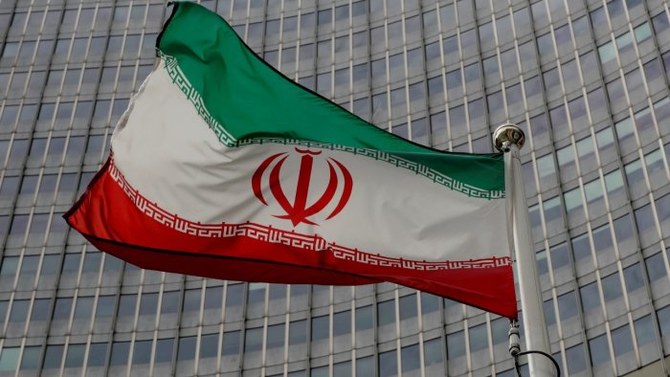
The report highlighted a number of other key human rights concerns in Iran. (Reuters/File Photo)
Short Url
Updated 25 October 2021
Follow

Iran uses death penalty to target protesters, human rights expert tells UN

  • Javaid Rehman said he is particularly disturbed that authorities continue to sentence children to death, in violation of international law
  • The UN’s special rapporteur on human rights in Iran, he was briefing the General Assembly on the latest annual report on the issue

NEW YORK: A human rights expert described executions carried out in Iran as “an arbitrary deprivation of life,” as he called on Tehran to reform its laws and abolish the death penalty. He said the punishment is often used as a political tool.

Javaid Rehman, the UN’s special rapporteur on the situation of human rights in Iran, told the General Assembly on Monday that the death sentence in the country is often imposed on “vague and arbitrary grounds.” He highlighted in particular three criminal charges used to target peaceful demonstrators and political opponents: waging war against God, corruption on earth, and armed rebellion.

“The entrenched flaws in law and in the administration of the death penalty in Iran mean that most, if not all, executions are an arbitrary deprivation of life,” Rehman said.

“The structural flaws of the justice system are so deep and at odds with the notion of rule of law that one can barely speak of a justice system.”

As he briefed the assembly on the fourth annual report on human rights in Iran, the independent expert said that in particular he was “extremely disturbed” by the practice in Iran of sentencing children to death.

“Iran remains one of very countries that continues this practice despite the absolute prohibition under international law,” he said.

The report highlighted a number of other key human rights concerns in Iran, including the repression of civic space, discrimination against religious, ethnic and sexual minorities, and the dire conditions inside prisons.


Israeli settlers target wells, disrupt water supply to 19 Palestinian areas near Ramallah

Updated 8 sec ago
Follow

Israeli settlers target wells, disrupt water supply to 19 Palestinian areas near Ramallah

  • Settlers broke windows, doors, control panels and cut the cables rendering the wells completely inoperable
  • Attacks by Israeli settlers on Palestinian homes and businesses have increased since October 2023

LONDON: Israeli settlers attacked water wells in the Ein Samia area, northeast of Ramallah, overnight, causing a disruption in the water supply for several hours, according to the Jerusalem District Water Department's report on Sunday.

The Palestinian Authority’s water authority reported that settlers targeted wells number two, four, and six in Ein Samia, disrupting their operation from Saturday at 10 p.m. until Sunday at 9 a.m. The attackers broke windows, doors, control panels and cut the cables, rendering the wells completely inoperable.

It warned that attacks on the primary water source jeopardized access to water for over 19 areas in the occupied West Bank, worsening the difficulties faced by residents near Ramallah.

Attacks by Israeli settlers on Palestinian homes and businesses have increased since October 2023.

These incidents include vandalism, arson, shootings, and the destruction of agricultural lands and water sources, often intended to pressure residents into leaving their land. Israeli authorities often provide protection for settlers during attacks, including military deployment to accompany them and suppress local resistance, the Wafa news agency reported.

Excluding East Jerusalem, which was occupied and annexed by Israel in 1967, some 500,000 Israeli settlers live in the West Bank, along with about 3 million Palestinian residents.