

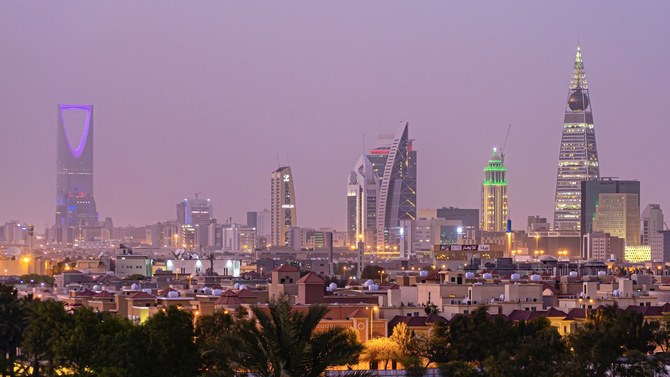
Riyadh leads human capital index ranking in the region

Short Url
Updated 25 October 2021
Follow

Riyadh leads human capital index ranking in the region

RIYADH: Saudi Arabia's capital Riyadh ranks first among GCC cities in Human Capital, according to the Global Cities Index 2021 report by Kearney.

The report measures global engagement of 156 cities across five dimensions, namely business activity, human capital, information exchange, cultural experience, and political engagement.

It attributed the results to the Kingdom’s increased emphasis and ongoing efforts in creating a more diverse and sustainable economy, in support of the realization of Vision 2030.

“In the past five years since the launch of the Kingdom’s vision, Saudi Arabia has created immense opportunities and an attractive business environment to ensure the country’s competitiveness not just in the region but on a global stage,” Kearney’s government practice leader, Antoine Nasr, said.

“Saudi Arabia is poised to drive regional, post-pandemic recovery supported by accelerated efforts of its government across the five dimensions of the report,” he added. 


Saudi stocks rebalance after Kingdom opens market to global investors

Updated 05 February 2026
Follow

Saudi stocks rebalance after Kingdom opens market to global investors

  • Foreign access reforms trigger short-term volatility while underlying market fundamentals hold

RIYADH: Saudi Arabia’s stock market experienced a volatile first week following a landmark decision to fully open the market to foreign investors—a move analysts view as essential to funding the Kingdom’s sweeping economic transformation plans.

The Tadawul All Share Index began the week with a sharp decline, falling 1.89 percent on Feb. 1, the same day new regulations eliminating key restrictions on international investment officially came into force. The index rebounded the following session and remained in positive territory for three consecutive days before slipping once more, ultimately ending the week down 1.34 percent.

Ownership data from Tadawul as of Feb. 1 indicated that foreign non-strategic investors reduced their holdings in nearly half of the companies listed on the TASI. An analysis conducted by Al-Eqtisadiah’s Financial Analysis Unit showed that foreign ownership declined in 120 firms, increased in 97 others, and remained unchanged across the remainder. Despite these shifts, the total number of shares held by foreign investors showed no overall change.

Speaking to Arab News, economist Talat Hafiz addressed the initial volatility in the TASI, explaining: “Stock markets in the Kingdom and globally naturally experience fluctuations driven by profit-taking and price corrections.”

He added that the index’s decline and subsequent recovery “appears to be primarily the result of technical and sentiment-related factors rather than a direct reaction to the opening of the market to foreign investors.”

Hafiz emphasized that this was particularly evident given that foreign participation in the Saudi market is not entirely new, having previously existed under alternative regulatory structures.

The market turbulence coincided with sweeping reforms enacted by the Capital Market Authority and announced in January. These measures included the removal of the restrictive Qualified Foreign Investor framework, which had imposed a $500 million minimum asset requirement, as well as the elimination of swap agreements. The reforms aim to attract billions of dollars in fresh investment while improving overall market liquidity.

Hafiz noted that an initial surge of foreign capital was widely expected to generate short-term volatility as portfolios were rebalanced and liquidity dynamics adjusted. However, the rapid recovery of the index suggests that the market’s underlying fundamentals remained strong and that investor confidence was not significantly undermined.

Earlier in January, experts had told Arab News that the reforms could unlock as much as $10 billion in new foreign inflows. Tony Hallside, CEO of STP Partners, described the move as a pivotal evolution, signaling that the Kingdom is committed to building the most accessible, liquid, and globally integrated financial markets in the region.

Hafiz reinforced this optimistic outlook, stating that broader market access is likely to yield positive effects by boosting liquidity, widening participation, and supporting overall market recovery—ultimately contributing to greater long-term stability once near-term adjustments ease.

He said: “TASI’s swift rebound reflects the market’s constructive response to increased openness and deeper investor participation.”

Hafiz said he does not believe the market opening is primarily intended to function as a conventional financing channel. Instead, he argued that its broader objective lies in the internationalization of the Saudi market, a goal underscored by its inclusion in major global indices.

He explained that attracting foreign capital should be understood less as a short-term funding solution and more as a structural reform aimed at strengthening market depth, efficiency, transparency, and global integration.

The Saudi economist added that while increased foreign participation can indirectly support Vision 2030 by enhancing liquidity and reducing the cost of capital, the opening of the market is “not designed as a direct mechanism to revive or fast-track projects that may have faced funding constraints.”

Rather, it creates a more resilient, globally connected financial ecosystem that can sustainably support long-term development ambitions, according to Hafiz.

As the market continues to stabilize, investors and observers are monitoring which sectors are expected to attract the largest share of investment in the coming weeks and months.

Hafiz told Arab News that foreign investment is expected to initially focus on companies operating in strategically significant, high-growth sectors such as healthcare, transportation, and technology, in addition to mining, energy, and telecommunications.

He added that experienced foreign investors are likely to gravitate toward firms demonstrating strong financial disclosure practices, sound corporate governance, adherence to environmental, social and governance standards, and a track record of consistent dividend payouts.