

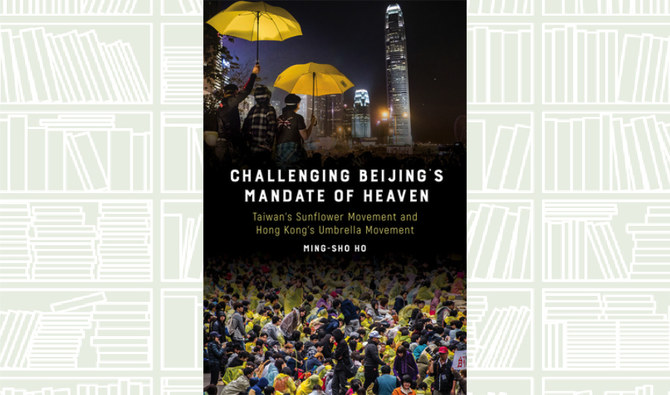
What We Are Reading Today: Challenging Beijing’s Mandate of Heaven by Ming-sho Ho

Short Url
Updated 25 October 2021
Follow

What We Are Reading Today: Challenging Beijing’s Mandate of Heaven by Ming-sho Ho

‘Challenging Beijing’s Mandate of Heaven aims to make sense of the origins, processes, and outcomes of the mass protests in Taiwan and Hong Kong.

Ming-sho Ho compares the dynamics of the political movements, from the existing networks of activists that preceded protest, to the perceived threats that ignited the movements, to the government strategies with which they contended, and to the nature of their coordination, according to a review on goodreads.com.  Moreover, he contextualizes these protests in a period of global prominence for student, occupy, and anti-globalization protests and situates them within social movement studies.


What We Are Reading Today: The Political Economy of Security by Stephen G. Brooks

Updated 04 March 2026
Follow

What We Are Reading Today: The Political Economy of Security by Stephen G. Brooks

In this book, Stephen Brooks provides a systematic empirical and theoretical examination of how economic factors influence security affairs. Empirically, he analyzes how economic variables of all kinds affect interstate war, terrorism, and civil war; in total, 16 pathways are examined.

Brooks shows that the relationship between economic factors and conflict is complex and multifaceted; discrete economic factors—such as international trade, economic development, and globalized manufacturing, to name a few—are sometimes helpful for promoting peace and stability, but at other times are detrimental.

Brooks also develops a stronger theoretical foundation for guiding future research on the economics-security interaction. 

Drawing on Adam Smith, he provides a more complete range of answers to the three key conceptual questions analysts must consider: how economic goals relate to security goals; what economic factors to focus on; and how economic actors influence security policies.

Combining an innovative theoretical understanding with empirical rigor, Brooks’s account will reshape our understanding of the political economy of security.