

PIF-owned ACWA Power to become a net zero energy producer, CEO says

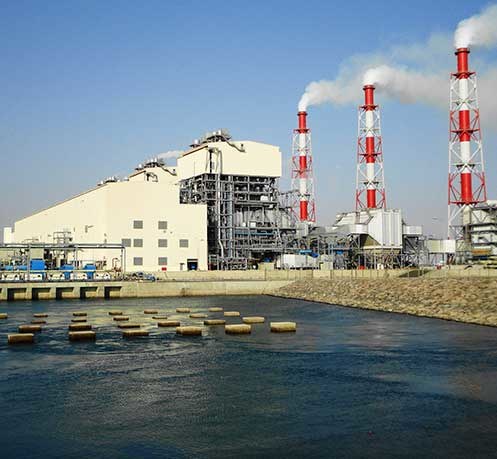
This is the second phase of the Shuqaiq complex that produces water and power for the Assir region and city of Jizan. Shuqaiq is among the 1st projects for ACWA Power (Supplied)
Short Url
Updated 21 October 2021
Follow

PIF-owned ACWA Power to become a net zero energy producer, CEO says

RIYADH: The head of ACWA Power, Saudi Arabia’s only listed company with ambitious renewable projects, plans to end investment in non-renewable schemes as part of the business’s commitment to reaching net zero by 2050.

Speaking ahead of the Saudi Green Initiative forum that will be held in Riyadh on October 23, Paddy Padmanathan, chief executive of ACWA Power, which floated on the Kingdom’s stock exchange earlier this month, told Arab News: “We want to reduce carbon emissions, because climate change is real. We can see it, we can feel it.”

Riyadh-based ACWA, which is 44 percent owned by Saudi Arabia's sovereign wealth fund PIF, is the Kingdom’s most high-profile entity for building renewable energy and hydrogen projects.

The company is expected to deliver at least 70 percent of Saudi Arabia’s renewable schemes by 2030, and is forecast to take part in around $30 billion worth of green projects over the next 10 years, as the Kingdom’s strategy to diversify its economy away from fossil fuels gathers pace. 

ACWA began trading on the Saudi stock market this month after selling an 11 percent stake. The move values the entire company at $10.9 billion.

Padmanathan said: “We will not invest in coal going forward, we will not do any more coal power plants.  We will not obviously do anymore oil. In terms of our existing oil-fired power plants in the Kingdom, the government is committed to shutting those down by 2030, so we'll be working with them on how to shut those down, and then repower them all. The existing fleet of oil assessed will get phased out over the next nine years by repowering.”

Padmanathan confirmed that gas projects will still form part of ACWA’s portfolio but added the business would be “very careful and very selective” about the type of gas-fired power plant schemes it becomes involved in.

He said: “We are working with Saudi counterparts on how best to manage the portfolio in terms of carbon elimination.”

Padmanathan said the increasing reduction in the cost of producing renewable energy means even Middle East petrostates will be able to power their countries more cost effectively with green energy, particularly through increased investment in solar technology.

He said: “Conveniently, the cost comes down to such an extent that for a big part of the energy consumed today it is the cheapest option even for a country like Saudi Arabia, which is blessed with such a low cost of production of fossil fuels, to produce its energy.”

He added: “We have also been able to produce low-cost renewable energy through electrolysis to produce hydrogen, so can now contemplate producing green hydrogen [which doesn’t involve the use of fossil fuels].”

ACWA holds a one-third stake in the massive $5 billion Neom project which will be powered entirely by solar and wind, and will be one of the world’s largest green hydrogen plants when it opens in 2025.


Mawani, Qatar Ports ink cooperation deal to boost regional maritime trade 

Updated 16 sec ago
Follow

Mawani, Qatar Ports ink cooperation deal to boost regional maritime trade 

RIYADH: The Saudi Ports Authority, or Mawani, and Qatar Ports Management Co. signed a memorandum of understanding aimed at boosting maritime and logistics cooperation, contributing to the development of the ports sector, raising operational efficiency, and supporting regional and international trade flows. 

The MoU was signed by Mawani President Suliman Al-Mazroua and Qatar Ports Management Co. CEO Abdullah Mohammed Al-Khanji, in the presence of Qatari Ambassador to Saudi Arabia Bandar bin Mohammed Al-Attiyah. 

The step reflects both sides’ commitment to building effective partnerships, exchanging expertise, establishing an organized framework for cooperation management, and developing joint investment opportunities in line with Saudi Vision 2030 and Qatar National Vision 2030. 

The MoU outlines eight key areas of cooperation, including the exchange of best practices in port management and operations, and studying opportunities for direct maritime and land connectivity between the two countries’ ports to enhance trade efficiency. 

It also includes collaboration in logistics services, exploring the establishment of joint maritime corridors serving bilateral and regional trade, and assessing the feasibility of creating shared regional distribution centers. 

Both parties agreed to enhance cooperation in digital transformation and artificial intelligence, focusing on smart systems, data governance, and a unified maritime window to improve operational efficiency and remain at the forefront of technological progress in the maritime sector. 

The MoU emphasizes maritime safety and environmental protection, including the exchange of expertise on marine pollution control and emergency response, the development of joint maritime emergency plans, and the establishment of a bilateral emergency communication line.  

It also promotes collaboration to ensure compliance with international conventions, conduct joint exercises, and implement risk-monitoring systems. 

Cooperation further extends to human capital development through joint training programs and on-the-ground expertise exchanges, as well as academic and research partnerships in maritime transport and logistics. 

Regarding joint investment, both parties will explore local and international opportunities in ports and related services, coordinating with the private sector to support these initiatives. 

The MoU also includes cooperation in cruise tourism through enhanced maritime connectivity and joint promotion of Gulf cruise routes, as well as coordination of positions in international maritime organizations and support for joint initiatives, notably “Green Ports” and “Safe Sea Corridors.” 

This memorandum reflects the commitment of Mawani and Qatar Ports Management Co. to advancing the ports sector and boosting its role as a key driver of trade and economic growth, contributing to Gulf integration, and enhancing regional competitiveness in maritime services.