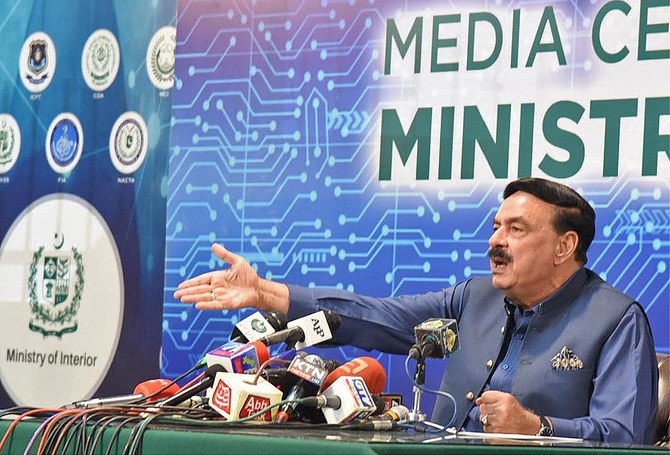
ISLAMABAD: Pakistan’s Interior Minister Sheikh Rashid Ahmed on Monday said that his government had started a free online visa process for the neighboring Afghanistan and abolished the $8 fee for it as a “goodwill gesture.”
The government started issuing visas on arrival to Afghans coming into Pakistan after the Taliban took over Kabul on August 15.
More than 20,000 foreigners, including Afghan nationals, have since traveled to Pakistan and got visas on arrival.
“Online visa will be available now [to Afghans],” Ahmed said at a weekly press briefing in Islamabad. “We have suspended the visa on arrival from Afghanistan.”
The minister said Pakistan would also be issuing a five-year business visa to Afghans. “We are also waiving off some $8 fee till December 31 as a goodwill gesture,” he said.
Pakistan is also installing the Integrated Border Management System (IBMS) at the Badini, Ghulam Khan and Kolachi border crossings with Afghanistan, according to the minister.
“Apart from fencing the 2,680 kilometers [border with Afghanistan], the IBMS will be installed to take fingerprints [of travelers],” he said.
Ahmed said Pakistan was helping Afghanistan to avert a humanitarian crisis as the war-torn country was grappling with food and medicine shortages after the withdrawal of foreign troops.
“We are with Afghanistan, but we also want to take the world along on this issue,” he said.
Speaking about inflation in Pakistan, he said no government wanted to see the prices of commodities increasing in its tenure and Prime Minister Imran Khan was holding weekly meetings on the issue.
“I believe Imran Khan is doing his best and we have to tackle it within this year,” he said. “Pakistan has prevented a default and avoided sanctions in the leadership of Imran Khan.”
Regarding a protest announced by the opposition’s Pakistan Democratic Movement (PDM) alliance, he rejected that there was any threat to the government, calling the PDM a “politically dead elephant.”
“Imran Khan will complete his five-year term,” he said. “It is the good luck of Imran Khan that he has got this incapable opposition.”
The minister also said his ministry was granting a three-month remission to all prisoners with the approval of the federal cabinet, except those jailed for heinous crimes.


![]()

Pakistan starts issuing free online visas to Afghans, waives fee as ‘goodwill gesture’
Short Url
https://arab.news/ggczy
Pakistan starts issuing free online visas to Afghans, waives fee as ‘goodwill gesture’
- Interior Minister Sheikh Rashid Ahmed says visas on arrival introduced after Taliban takeover of Kabul suspended
- Islamabad also installing Integrated Border Management System at three border crossings with Afghanistan
Latest updates


Recommended


© 2026 SAUDI RESEARCH & PUBLISHING COMPANY, All Rights Reserved And subject to Terms of Use Agreement.