Young inventor from Pakistan’s northwest invents vibrating ‘smart shoes’ to help blind people

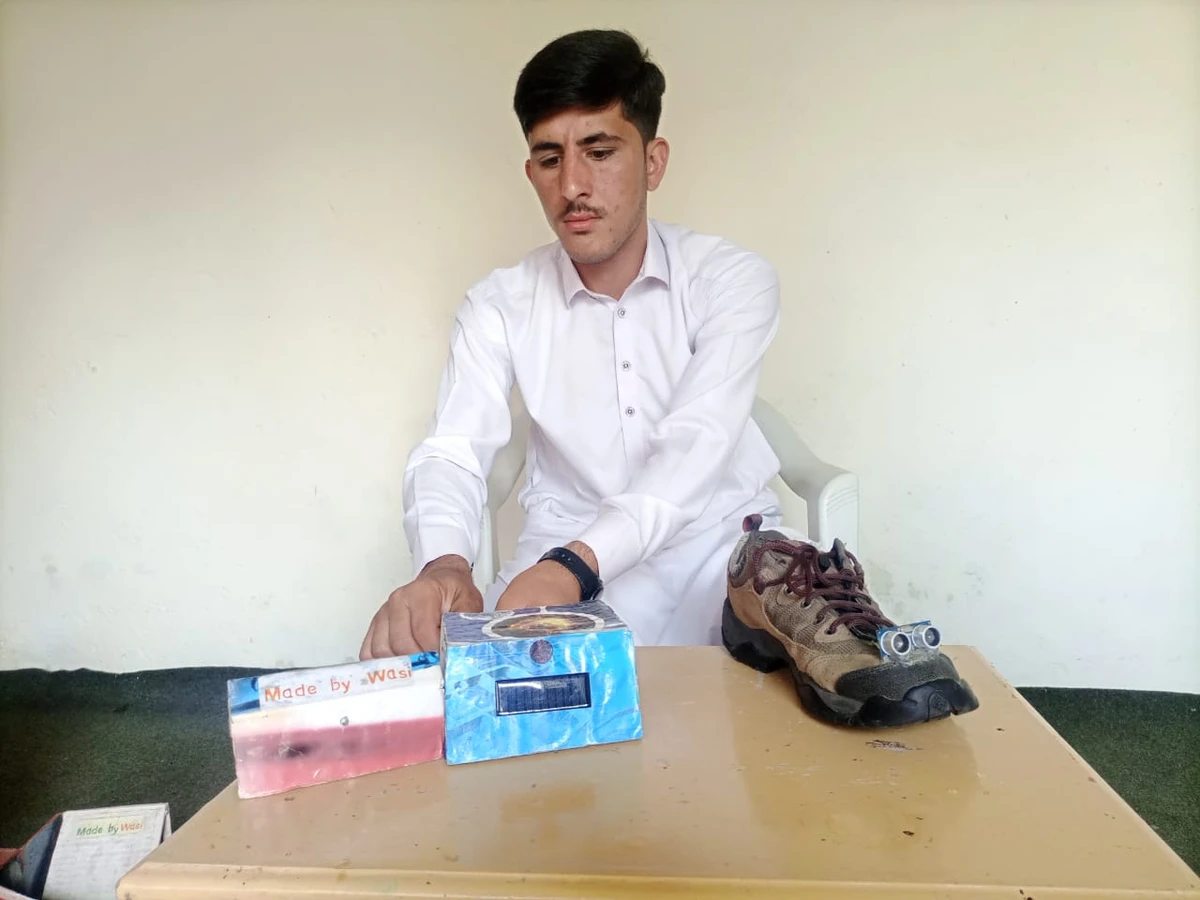
Wasiullah, the inventor of "smart shoes" for the blind poses at his home in Swat, northwestern Pakistan on October 13, 2021. (Photo courtesy: Wasiullah)
Short Url
Updated 18 October 2021
Follow

Young inventor from Pakistan’s northwest invents vibrating ‘smart shoes’ to help blind people

  • Wasiullah, 17, says he entered world of innovation by repairing and fixing damaged battery-operated toys
  • KP Directorate General of Science says will encourage and support the inventor to develop the project

PESHAWAR: A young inventor from Pakistan’s northwest has designed “smart shoes” for visually impaired people that warn them with a sound or vibration about any obstacle on their path within a radius of 120 centimeters 
Hailing from the Swat valley in Khyber Pakhtunkhwa province, the 17-year-old told Arab News he had entered the world of innovation by repairing and fixing damaged battery-operated toys. 
“Visually impaired people will no longer need walking sticks or guides after smart shoes acquire popularity,” Wasiullah, who goes by a single name, said. “The shoes are fixed with ultrasonic sensor and Arduino board to keep blind people safe while they are walking. Such individuals can get a prior notification of any looming hindrance.”
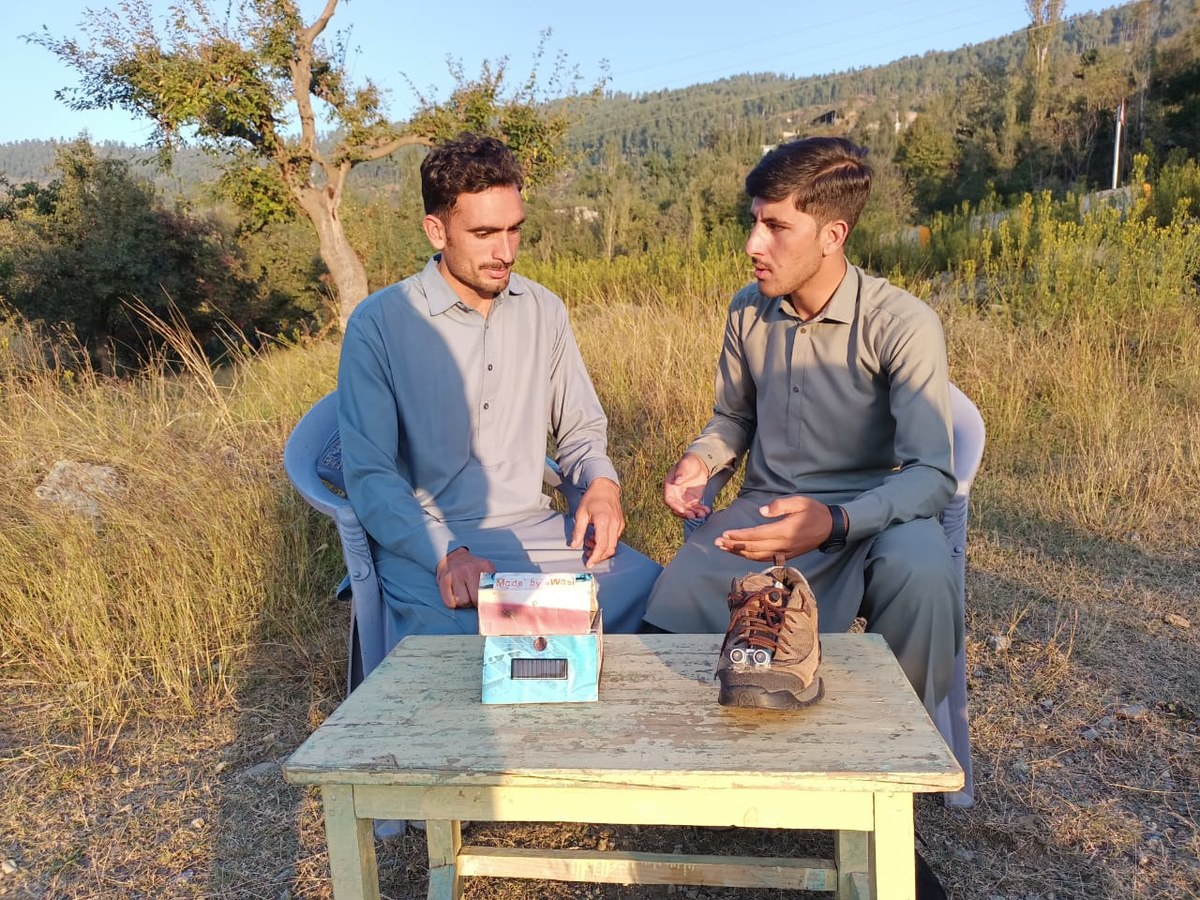


Wasiullah (right) briefs his fellow about his newly invented "smart shoes" for blind in Swat, northwestern Pakistan on October 13, 2021. (Photo courtesy: Wasiullah)

Physics teacher Muhammad Farooq said Wasiullah was his most brilliant student and that he had planned to design a new type of a wheelchair to help visually impaired people navigate their surroundings, but he could not do it due to financial constraints. 
Budget restrictions did not stifle his inventiveness and when he designed the shoes earlier this year, it was proved even further.
“I still believe he has the potential to emerge as a leading scientist if he gets proper coaching and opportunity,” Farooq said.
One such opportunity, which would also help Wasiullah afford higher education in the field of science, could be introducing his invention to the market.
“Smart shoes for visually impaired people are available in foreign countries,” Farooq said. “But their prices are beyond the reach for many in this country. The government should own the project because the shoes Wasiullah has made are comparatively cheaper and more affordable.”
Mian Sayed, a social activist from Swat has seen Wasiullah’s smart shoes and is positive that they could even become an export product. 
“I knew Wasiullah who is one of the brilliant students and can bring laurels for the country,” Sayed added. “The shoes invented by him can even be exported if the project is owned by the government.”
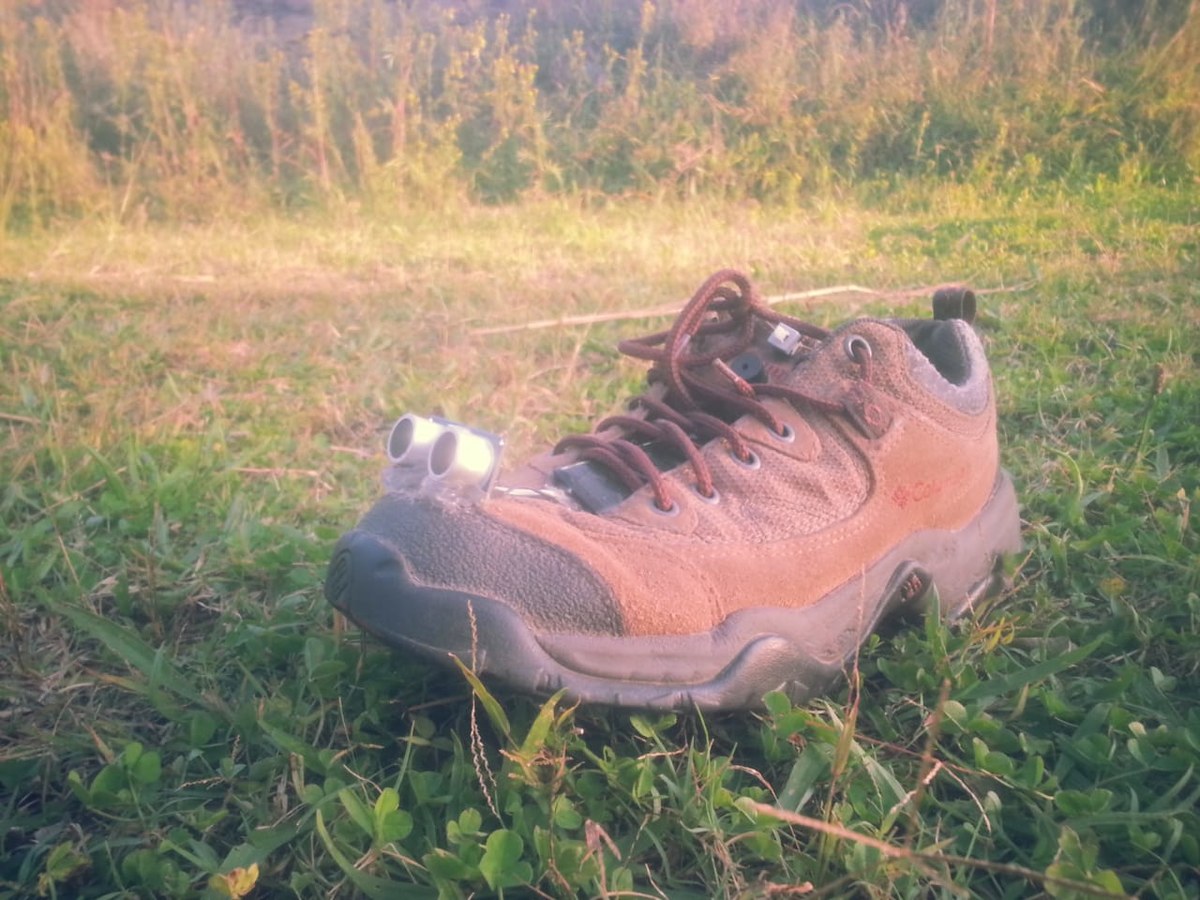


The picture shows newly invented "smart shoes" for blind by Wasiullah in Swat, northwestern Pakistan on October 13, 2021. (Photo courtesy: Wasiullah)

Wasiullah said a pair of his smart shoes could cost about Rs4,500 ($26), but he would not be able to finance production himself as he also needs to finance his college himself. 
An opportunity may come from the local government.
Sajid Shah, head of the provincial directorate general of science, told Arab News the shoes will soon be evaluated by experts.
“After evaluation by our scientists,” he said, “our department will promote the project of smart shoes invented by Wasiullah for commercial purposes.” 

UN torture expert decries Pakistan ex-PM Khan’s detention

Updated 12 December 2025
Follow

UN torture expert decries Pakistan ex-PM Khan’s detention

  • Khan’s party alleges government is holding him in solitary confinement, barring prison visits
  • Pakistan’s government rejects allegations former premier is being denied basic rights in prison

GENEVA: Pakistan’s former prime minister Imran Khan is being held in conditions that could amount to torture and other inhuman or degrading treatment, the United Nations’ special rapporteur on torture warned Friday.

Alice Jill Edwards urged Pakistan to take immediate and effective action to address reports of the 73-year-old’s inhumane and undignified detention conditions.

“I call on Pakistani authorities to ensure that Khan’s conditions of detention fully comply with international norms and standards,” Edwards said in a statement.

“Since his transfer to Adiala Jail in Rawalpindi on September 26, 2023, Imran Khan has reportedly been held for excessive periods in solitary confinement, confined for 23 hours a day in his cell, and with highly restricted access to the outside world,” she said.

“His cell is reportedly under constant camera surveillance.”

Khan an all-rounder who captained Pakistan to victory in the 1992 Cricket World Cup, upended Pakistani politics by becoming the prime minister in 2018.

Edwards said prolonged or indefinite solitary confinement is prohibited under international human rights law and constitutes a form of psychological torture when it lasts longer than 15 days.

“Khan’s solitary confinement should be lifted without delay. Not only is it an unlawful measure, extended isolation can bring about very harmful consequences for his physical and mental health,” she said.

UN special rapporteurs are independent experts mandated by the Human Rights Council. They do not, therefore, speak for the United Nations itself.

Initially a strong backer of the country’s powerful military leadership, Khan was ousted in a no-confidence vote in 2022, and has since been jailed on a slew of corruption charges that he denies.

He has accused the military of orchestrating his downfall and pursuing his Tehreek-e-Insaf (PTI) party and its allies.

Khan’s supporters say he is being denied prison visits from lawyers and family after a fiery social media post this month accusing army leader Field Marshal Asim Munir of persecuting him.

According to information Edwards has received, visits from Khan’s lawyers and relatives are frequently interrupted or ended prematurely, while he is held in a small cell lacking natural light and adequate ventilation.

“Anyone deprived of liberty must be treated with humanity and dignity,” the UN expert said.

“Detention conditions must reflect the individual’s age and health situation, including appropriate sleeping arrangements, climatic protection, adequate space, lighting, heating, and ventilation.”

Edwards has raised Khan’s situation with the Pakistani government.