OPEC, OPEC+ market management needs to be copy, pasted by others: Saudi energy minister

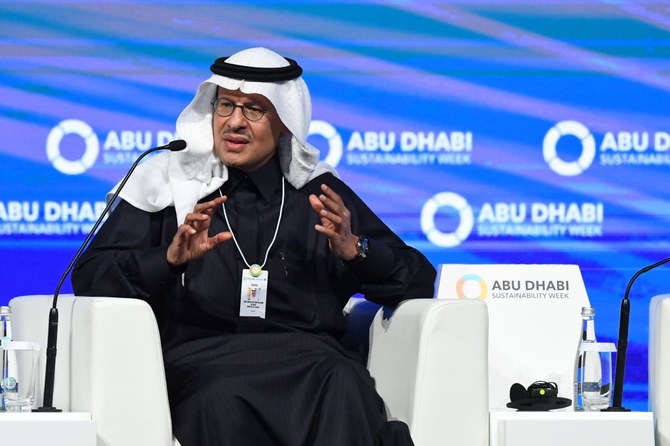
Saudi Energy Minister Prince Abdulaziz bin Salman. (Getty Images)
Short Url
Updated 15 October 2021
Follow

OPEC, OPEC+ market management needs to be copy, pasted by others: Saudi energy minister

  • Wild swings in gas and coal markets could be controlled with more coordination

 The natural gas market is struggling with a lack of stocks, investments and coordination among buyers and sellers and needs to be properly regulated, the Saudi energy minister has said.

Speaking at The Russian Energy Week forum on Thursday, Abdulaziz bin Salman Al Saud also claimed the OPEC+ agreement has started to create a balance and is ensuring energy security when it comes to oil, but it takes a diversity of sources of energy to enable the organization to do that.

He said: “People need to conduct themselves in assuring that world economy is well supplied with the diversity of sources of energy."

“Gas markets, coal markets, and other energy sources need to be regulated, people need to copy and paste what OPEC has done and what OPEC+ has achieved,” the Saudi minister added.

Saudi Arabia has proposed that Russia consider the possibility of cooperating in the natural gas market, Russian Deputy Prime Minister Alexander Novak said on Thursday, according to TASS news agency.

The benefits to energy consumers can be seen in the relatively steady increase in the price of oil this year compared with the wild price swings in other markets, said the Saudi energy minister.

“What we see in the oil market today is an incremental (price) increase of 29 percent, vis-à-vis 500 percent increases in (natural) gas prices, 300 percent increases in coal prices, 200 percent increases in NGLs (natural gas liquids) ...,” he said.

OPEC+ has done a “remarkable” job acting as “so-called regulator of the oil market,” he said, as he dismissed calls for faster output increases.

He said OPEC+ would be adding 400,000 barrels per day (bpd) in November, and then again in the following months.

At its meeting earlier this month, OPEC+ stuck to its agreement of increasing production by 400,000 bpd a month as it unwinds production cuts.

“We want to make sure that we reduce those excess capacities that we have developed as a result of COVID,” he said, adding that OPEC+ wanted to do it “in a gradual, phased-in approach.”

Prince Abdulaziz said that while OECD oil inventories were on track to normalize at the end of this year, 2022 was looking “a bit of a challenging year.”

OPEC+ figures show the oil market is set for a surplus of about 1.4 million bpd next year.


Saudi POS spending jumps 28% in final week of Jan: SAMA

Updated 06 February 2026
Follow

Saudi POS spending jumps 28% in final week of Jan: SAMA

RIYADH: Saudi Arabia’s point-of-sale spending climbed sharply in the final week of January, rising nearly 28 percent from the previous week as consumer outlays increased across almost all sectors. 

POS transactions reached SR16 billion ($4.27 billion) in the week ending Jan. 31, up 27.8 percent week on week, according to the Saudi Central Bank. Transaction volumes rose 16.5 percent to 248.8 million, reflecting stronger retail and service activity. 

Spending on jewelry saw the biggest uptick at 55.5 percent to SR613.69 million, followed by laundry services which saw a 44.4 percent increase to SR62.83 million. 

Expenditure on personal care rose 29.1 percent, while outlays on books and stationery increased 5.1 percent. Hotel spending climbed 7.4 percent to SR377.1 million. 

Further gains were recorded across other categories. Spending in pharmacies and medical supplies rose 33.4 percent to SR259.19 million, while medical services increased 13.7 percent to SR515.44 million. 

Food and beverage spending surged 38.6 percent to SR2.6 billion, accounting for the largest share of total POS value. Restaurants and cafes followed with a 20.4 percent increase to SR1.81 billion. Apparel and clothing spending rose 35.4 percent to SR1.33 billion, representing the third-largest share during the week. 

The Kingdom’s key urban centers mirrored the national surge. Riyadh, which accounted for the largest share of total POS spending, saw a 22 percent rise to SR5.44 billion from SR4.46 billion the previous week. The number of transactions in the capital reached 78.6 million, up 13.8 percent week on week. 

In Jeddah, transaction values increased 23.7 percent to SR2.16 billion, while Dammam reported a 22.2 percent rise to SR783.06 million. 

POS data, tracked weekly by SAMA, provides an indicator of consumer spending trends and the ongoing growth of digital payments in Saudi Arabia.  

The data also highlights the expanding reach of POS infrastructure, extending beyond major retail hubs to smaller cities and service sectors, supporting broader digital inclusion initiatives.  

The growth of digital payment technologies aligns with Saudi Arabia’s Vision 2030 objectives, promoting electronic transactions and contributing to the Kingdom’s broader digital economy.