

Stray lion spotted in the streets of the Saudi city Khobar

1 / 2
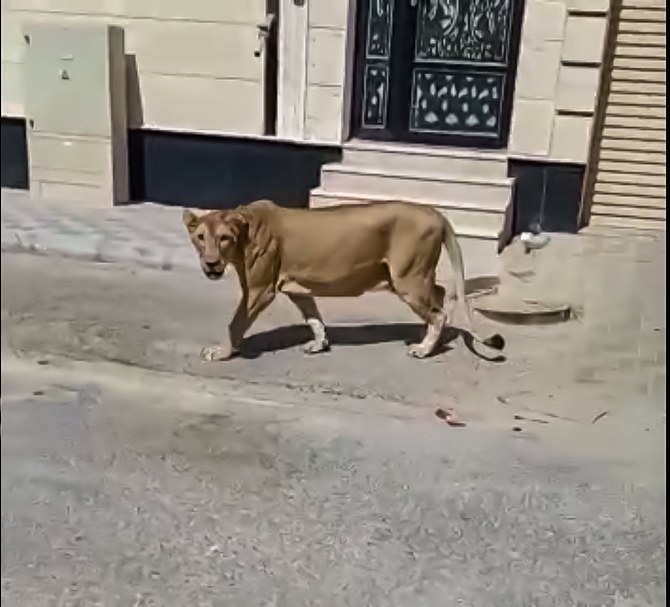
The center was notified of the incident after fearful residents reported internet footage that showed the lion roaming around Khobar. (Social media)
2 / 2
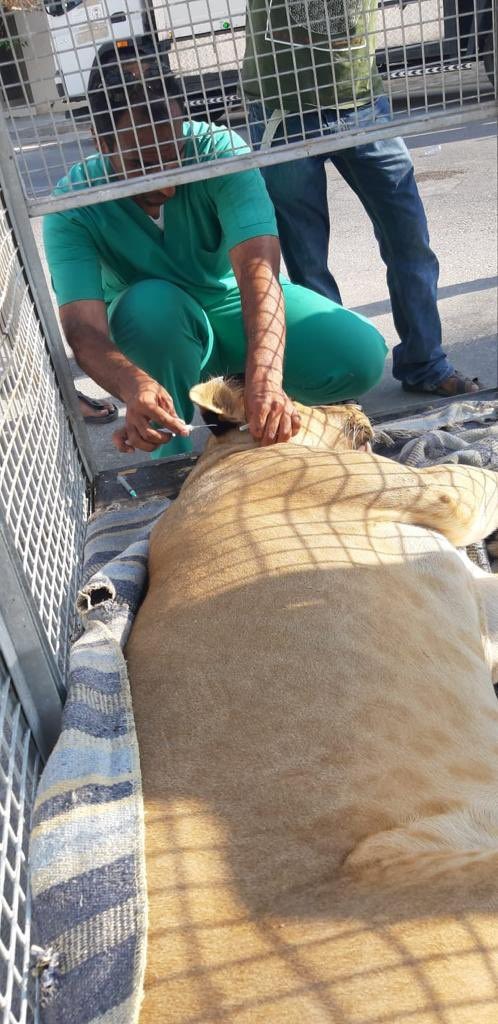
The center said the lion was anesthetized and transferred to a shelter center to be under veterinary supervision. (Social media)
Short Url
Updated 13 October 2021
Follow

Stray lion spotted in the streets of the Saudi city Khobar

RIYADH: Stray animals are not a new phenomenon, you find cats and dogs wandering the streets of most cities in varying numbers all around the world – even in Saudi Arabia.

However, it is rare you find a lion taking a walk past your house – but that is exactly what happened in the eastern city of Khobar.

The Saudi National Center for Wildlife received calls from concerned residents on Tuesday, who spotted the massive moggy in their neighborhood.

Fortunately staff from the center were able to sedate and capture the lion before it developed an appetite for people.

It was taken to the center where it was held under observation by a resident vet – it suffered no harm.


Makkah museum displays world’s largest Qur’an

Updated 04 February 2026
Follow

Makkah museum displays world’s largest Qur’an

MAKKAH: The Holy Qur’an Museum at the Hira Cultural District in Makkah is showcasing a monumental handwritten copy of the Holy Qur’an, recognized as the largest Qur’an of its kind in the world.

The manuscript measures 312 cm by 220 cm and comprises 700 pages, earning the museum recognition from Guinness World Records for displaying the world’s largest Qur’an, the Saudi Press Agency reported.

The manuscript is a magnified reproduction of a historic Qur’an dating back to the 16th century, the SPA stated.

The original copy measures 45 cm by 30 cm, with the chapters written primarily in Thuluth script, while Surah Al-Fatiha was penned in Naskh, reflecting the refined artistic choices and calligraphic diversity of the era.

The Qur’an is a unique example of Arabic calligraphy, gilding and bookbinding, showcasing Islamic art through intricate decorations, sun-shaped motifs on the opening folio, and elaborately designed frontispiece and title pages that reflect a high level of artistic mastery.

The manuscript was endowed as a waqf in 1883. Its original version is currently preserved at the King Abdulaziz Complex for Endowment Libraries, serving as a lasting testament to Muslims’ enduring reverence for the Qur’an and the richness of Islamic arts across the centuries.