

Expo 2020 community art project Hammour House showcases coral reef sculpture

The art project brings together fishermen, scientists, artists and various institutions to champion better care for local marine life. Supplied
Short Url
Updated 13 October 2021
Follow

Expo 2020 community art project Hammour House showcases coral reef sculpture

DUBAI: One of Expo 2020’s many missions is to raise awareness about the beauty of our planet and how human beings can preserve what we have left of our natural environment — before it is too late.

Located in the Opportunity District across from China’s Pavilion and facing Sunrise Plaza, a large artwork titled Hammour House, by Australian artist Sue Ryan, prompts any passerby to stop and marvel at the work’s incorporation of intricately layered fishnets that were previously discarded in the ocean, as well as other debris from the sea.
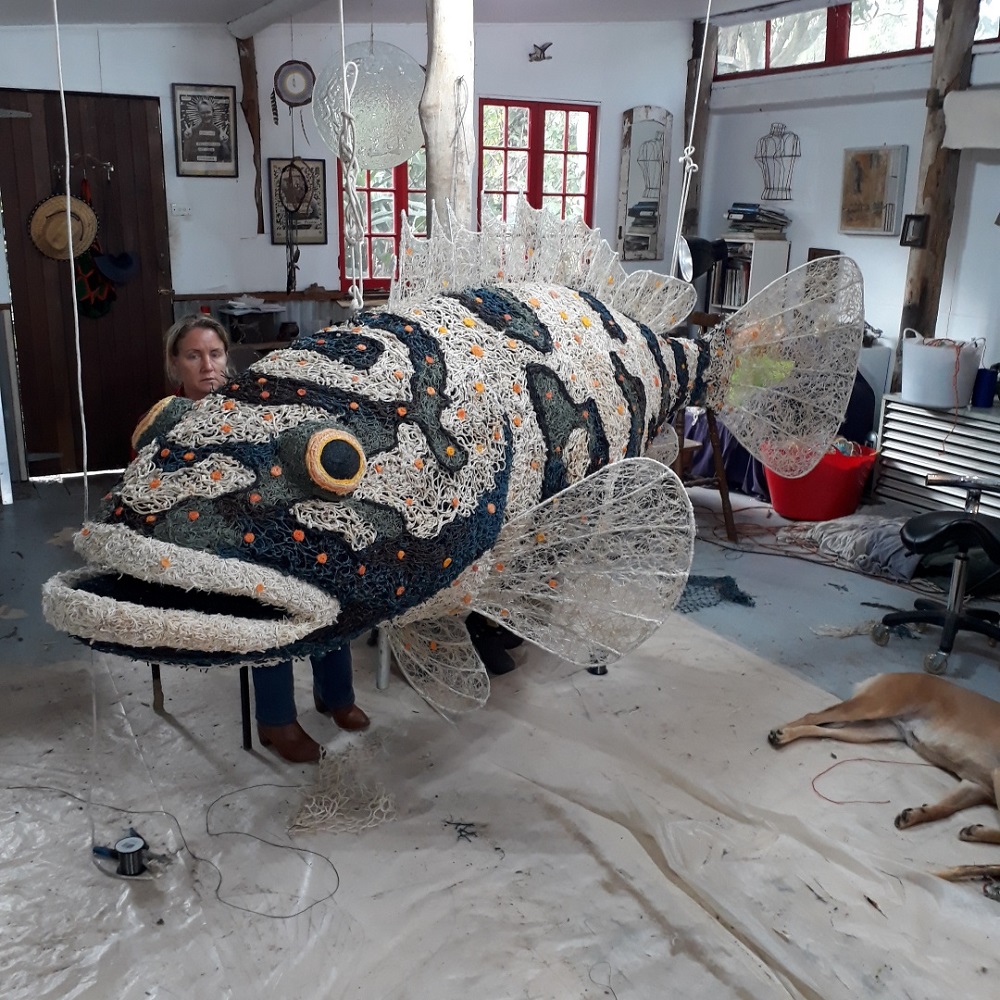


Hammour House, by Australian artist Sue Ryan, incorporates intricately layered fishnets that were previously discarded in the ocean. Supplied

The sculpture is one of three art installations that make up the community art project called Hammour House. The other two works include a vibrant tapestry by UAE-based schoolchildren made using batik technique and sustainable dyes created by Dubai-based muralist Steve Chambers, and an ever-expanding coral reef sculpture that will come into fruition over the course of Expo 2020’s six-month existence through artistic contributions of visitors who attend various art and teacher-led workshops staged by Hammour House.

The curated community art project brings together fishermen, scientists, artists and various institutions to champion better care for local marine life. Its aim is to raise awareness for hammour and grouper fish — among the overfished species in the UAE that are now endangered. Coral reefs are the main habitat for endangered fish indigenous to the UAE and due to the destruction of the marine ecosystem, they too are now under threat of extinction.
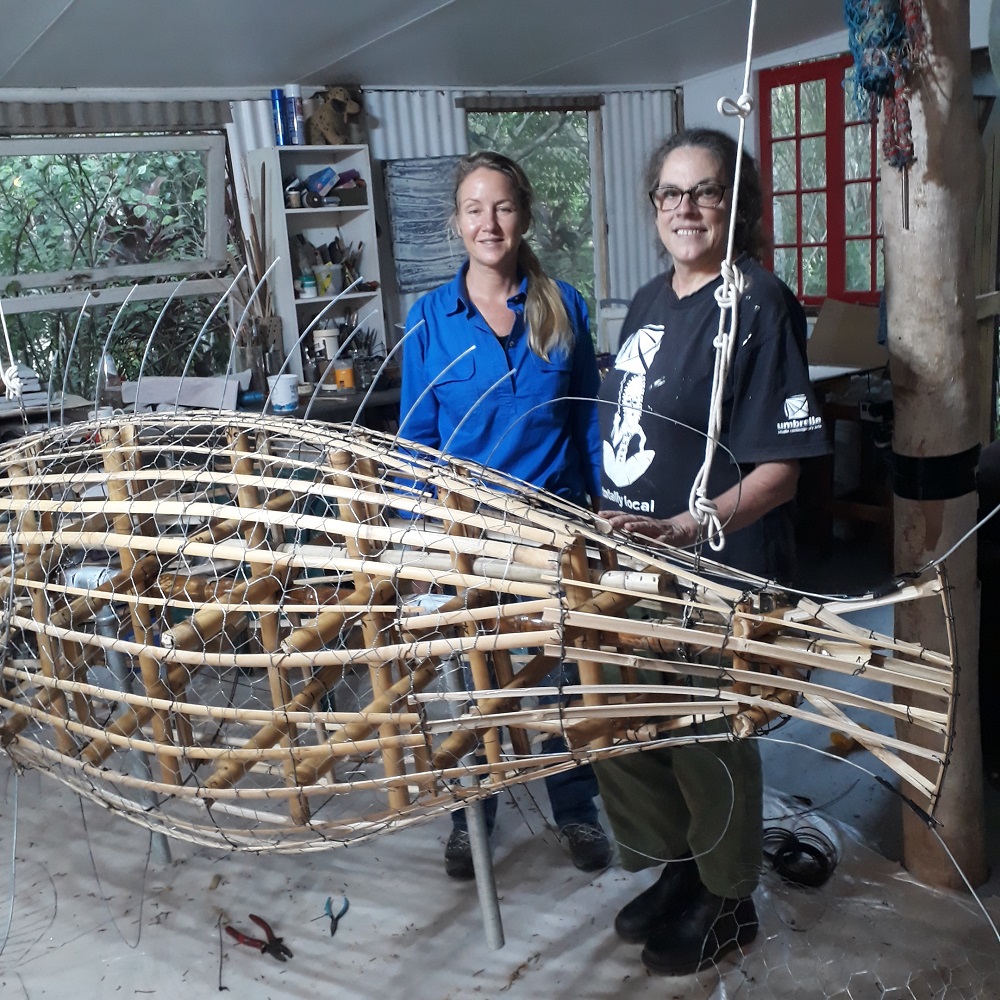


The sculpture is one of three art installations that make up the community art project called Hammour House. Supplied

The project draws its curatorial inspiration from the 1001 Nights story of Abdullah the Fisherman and Abdullah the Merman. As the story goes, a poor fisherman named Abdullah, who had a large family, was suddenly unable to catch any fish. After he was encouraged by his wife, he cast his net again and this time pulled out a merman who was also called Abdullah. The two became partners and suddenly there were abundant fish stocks for the local fishermen. The moral of the story, as the Expo 2020 community art project emphasizes, is that creatures of the land — humans — must work with creatures of the sea, fish and coral reef to ensure a sustainable environment for all.



Hammour House is located in the Opportunity District across from China’s Pavilion and facing Sunrise Plaza. Supplied

“Hammour House examines the historic relationship between Emiratis and the sea in a number of ways,” Ahmed Al-Enezi, senior manager for arts and culture at Expo 2020, told Arab News, recalling one of the first research trips conducted for the project with a visit to Delma Island, an Emirati island in the Arabian Gulf, to meet with local fishermen.

“During this trip we became inspired by the fascinating stories the elders had to tell us,” he said. “There were tales of Goliath-sized hammour fish that once existed in our waters, with some big enough to devour an entire human!”
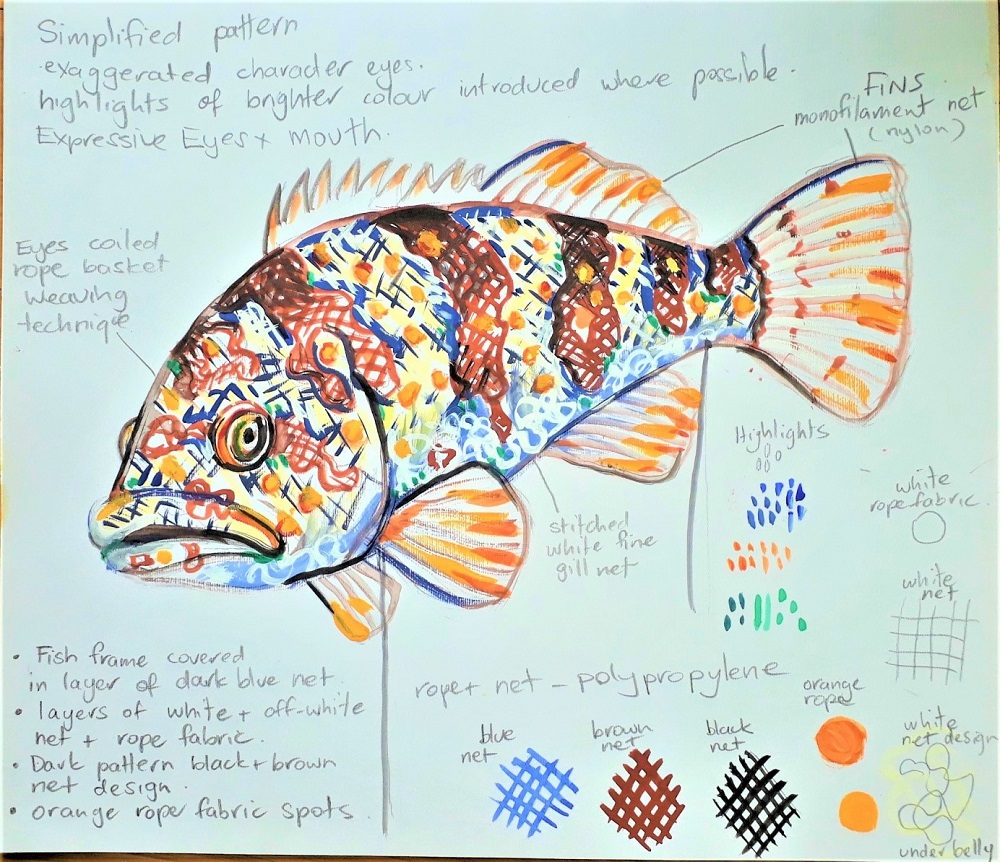


The project draws its curatorial inspiration from the 1001 Nights story of Abdullah the Fisherman and Abdullah the Merman. Supplied

Al-Enezi added that the fishermen spoke of their love of their work and the importance of preserving their practice in the future, even though they do not rely anymore on traditional fishing for sustenance. The UAE is also investing great efforts into protecting the country’s fish stocks by empowering fishermen to become custodians of the environment.

“Our fishermen community is not a relic of the past, and not just a segment of the community to be showcased. We have a lot to learn from their intimate relationship with nature, and their proactive role in protecting both our heritage and our environment,” said Al-Enezi.
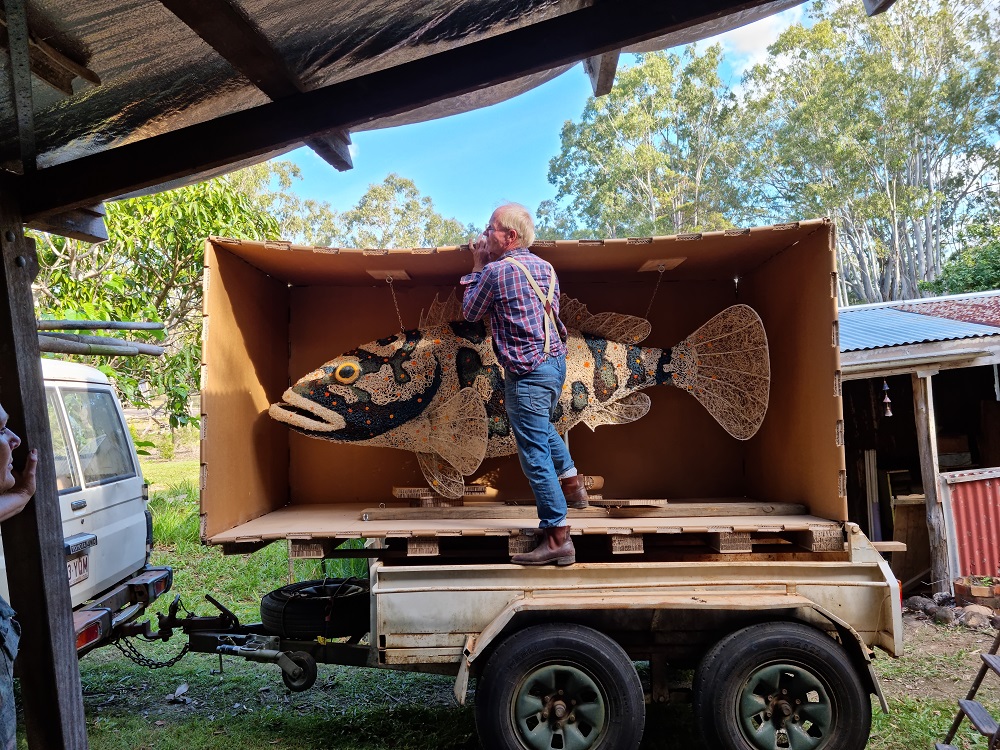


Hammour House emphasizes the importance of collaboration in realizing a sustainable and just environment. Supplied

Hammour House emphasizes the importance of collaboration in realizing a sustainable and just environment. Al-Enzi said: “Communities may seem segmented, and some subgroups seem to have no relationship with others, but art has the power to connect everyone.”


Recipes for Success: Chef Karishma Sakhrani offers advice and a mutton kabab recipe 

Updated 9 sec ago
Follow

Recipes for Success: Chef Karishma Sakhrani offers advice and a mutton kabab recipe 

DUBAI: Karishma Sakhrani’s path into the kitchen was not a straightforward one. Before food became her full focus, she was working in fashion and business, building a career that looked good on paper but felt incomplete.  

It was not until she reached the finals of “MasterChef India” that the disconnect became impossible to ignore and she decided to pursue food seriously, even without formal culinary training. 

Sakhrani built her skills through repetition and risk — hosting pop-ups, cooking private dinners, developing menus, collaborating with restaurants and moving between cities as opportunities came up.  

Now based in Dubai, Sakhrani runs her own dining concept, Viceroy’s Table, while also collaborating with a number of other restaurants.  

When you started out, what was the most common mistake you made? 

I tried to do too much. I was obsessed with complexity — more elements on the plate, more techniques, more garnishes. I believed that effort automatically translated to excellence. Over time, I realized that restraint is actually the hardest skill to master. The most memorable dishes are often the simplest ones, executed with confidence and consistency. Learning when to stop, when not to add another step or ingredient, was a turning point for me. 

What’s your top tip for amateur chefs? 

Recipes are guides, not rulebooks. Go with your instinct and trust your palate. Ingredients vary, stoves behave differently, and your taste matters. If something needs more salt or acidity, adjust it. Also, don’t rush! Cooking is much more enjoyable when you allow yourself to be present rather than stressed about the outcome. For me, cooking is meditative. I just lose myself in a trance when I’m cooking at home.  

What one ingredient can instantly improve any dish?  

Lemon! A squeeze of lemon can completely transform a dish because acidity wakes everything up; it sharpens flavors, balances richness and adds freshness without overpowering what’s already there. Whether it’s a few drops at the end of a curry, a salad dressing, grilled vegetables, or even a dessert, lemon brings brightness and clarity. It’s often the missing element when a dish tastes flat, and a reminder that balance is just as important as seasoning. 

When you go out to eat, do you find yourself critiquing the food?  

I try not to overanalyze when I’m dining out, but it’s instinctive to notice details. 

What’s the most common issue you see in other restaurants? 

Inconsistency — a dish might be great one visit and disappointing the next. Often, this comes down to lack of attention to basics or rushed execution. Consistency is what builds trust with diners. 

What’s your favorite cuisine or dish to order? 

Pizza. The perfect char, crisp crust, and molten cheese of a wood-fired pizza is impossible to achieve in a regular oven. I also love Japanese food. The precision, balance, and respect for ingredients always impress me. From delicate sushi to rich ramen, it’s about technique meeting simplicity; flavors are subtle, textures matter, and everything feels intentional. 

What’s your go-to dish if you have to cook something quickly at home? 

Spaghetti Aglio e Olio. It’s simple, satisfying, and full of flavor. With just garlic, olive oil, chili, parsley, and spaghetti, you can create something comforting yet vibrant. It hits the spot every time, proving that a few good-quality, basic ingredients can make a dish feel elevated without spending hours in the kitchen. 

What customer behavior most annoys you? 

I’m generally very relaxed, so I don’t get annoyed easily. If anything, it’s when guests make changes to a dish, and then aren’t exactly happy at the end of it: the way a dish is designed is very intentional and thoughtful. 

What’s your favorite dish to cook? 

Believe it or not, my favorite dishes are salads. It might sound simple, but salads are where my creativity really shines. My journey with cooking actually started with a focus on healthy eating, and over time I’ve come to love the challenge of turning basic ingredients into something extraordinary. What excites me about salads is the endless opportunity to experiment with flavors, textures, and colors.  

What’s the most difficult dish for you to get right? 

Desserts are by far the most challenging for me. They demand such precision — temperatures, measurements, timing, and technique all have to align perfectly. Even a tiny misstep can change the texture, consistency, or flavor completely. That’s what makes them so intimidating, but also so fascinating. I genuinely wish I had more time to dedicate to learning and experimenting with them.  

As a head chef, what are you like in the kitchen? 

I’m firm but really calm. I believe kitchens run best on clarity, respect, and accountability rather than fear. High standards don’t need aggression. When people feel supported, they perform better, learn faster, and take pride in their work. 

Chef Karishma’s peshawari mutton chapli kabab recipe 

Servings: 6–8 kababs 
Prep time: 20 mins 
Cook time: 15 mins 

 Ingredients: 

Mutton mince (with some fat) – 500g (coarsely ground, not fine) 

Onions – 1 large (finely chopped, water squeezed out) 

Tomato – 1 medium (finely chopped) 

Green chilies – 2–3 (finely chopped) 

Coriander leaves – a handful (chopped) 

Mint leaves – a few (chopped, optional) 

Garlic paste – 1 tsp 

Ginger paste – 1 tsp 

Crushed coriander seeds – 1 tsp 

Pomegranate seeds (anardana) – 1 tsp (crushed) 

Cumin seeds – 1 tsp (roasted & crushed) 

Red chili flakes – 1 tsp (adjust to taste) 

Salt – to taste 

Cornmeal (makai ka atta) – 2–3 tbsp (for binding) 

Egg – 1 (optional, for binding) 

Tomato slices – for topping (optional, very authentic!) 

Oil or ghee – for shallow frying 

Instructions: 

Mix the mince: 

In a large bowl, combine mutton mince with all the chopped veggies, herbs, spices, and cornmeal. 

Mix well using your hand (the warmth helps blend everything). 

Add egg if needed for extra binding. 

Let the mixture rest in the fridge for 30 mins (helps firm it up). 

Shape the kababs: 

Wet your hands and shape large, flat patties (authentic chapli kababs are wide and a bit thin). 

Optional: press a thin tomato slice into the center of each kabab. 

Fry: 

Heat oil or ghee in a shallow frying pan. 

Fry kababs on medium-high heat until golden brown and cooked through, about 4–5 minutes per side. 

Serve hot: 

Enjoy with naan, chutney, and raw onions or salad.