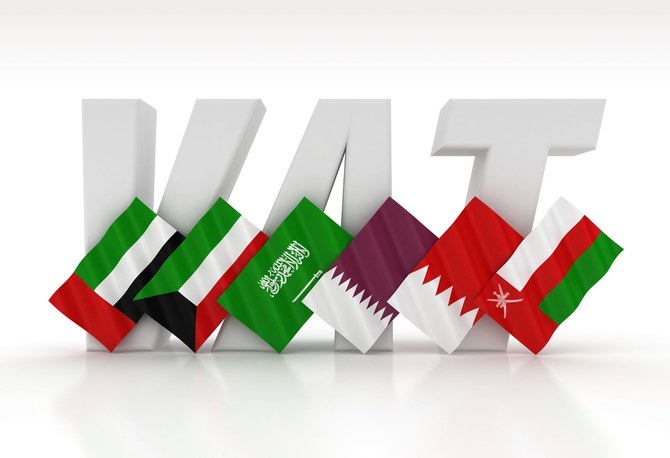
Capital Economics expects Gulf states to reduce VAT on higher oil revenues

Image: (Shutterstock)
Short Url
Updated 08 October 2021
Follow

Capital Economics expects Gulf states to reduce VAT on higher oil revenues

CAIRO: In spite of possible price drops in oil next year, Capital Economics expects that the GCC countries’ revenue from oil exports will intensify in 2022 as oil production is set to increase considerably.

This comes at the backdrop of this month’s OPEC+ meeting which resulted in higher prices of oil on Wednesday. The London-based firm, however, predicts that this trend is not sustainable and states that a fall in oil prices is on the horizon.

While the surge in oil exports will enhance the Gulf countries’ fiscal positions, Capital Economics says that the situation remains diverse for different countries. 

Due to the Saudi Arabia’s tight policy and expected spending cuts, the country is in a favorable position to ease up on VAT rates and the revenue side. The situation is similar in the UAE and Qatar as well, the firm added.

However, a tightening of policy should be a priority for Oman and Bahrain, the economic research company noted, as they need “further fiscal consolidation.”

The firm also laid out its forecasts for the soon-released inflation rates for Saudi Arabia and Egypt. 

A slight increase in annual inflation rate is projected for the Kingdom in September, rising from 0.3 percent in August to 0.4 percent in September. This is mainly the result of price increases in food.

While global supply chain issues are gaining momentum and could have adverse effects on inflation, the company reassured that the Saudi “inflation will remain weak at 1-1.5 percent y/y over the course of 2022-23.”

Concerning Egypt, Capital Economics expects that Egypt’s yearly inflation rate will increase to 6.2 percent in September, up from 5.4 percent in August. As was the case for Saudi Arabia, food inflation is inducing this price hike.

The company added that this will likely prevent the Egyptian Central Bank from cutting rates this month. 


Record $14.4bn rise in Saudi holdings of US Treasuries

Updated 17 sec ago
Follow

Record $14.4bn rise in Saudi holdings of US Treasuries

RIYADH: Saudi Arabia increased its holdings of US Treasuries by 10.71 percent in November in what was the largest increase since data tracking began in 1974, according to the latest official data,

The Kingdom’s US Treasury portfolio stood at $148.8 billion in the month, up $14.4 billion from October.

Following the increase, Saudi Arabia moved up one place to 17th place among the largest foreign holders of US Treasuries.

Countries including Saudi Arabia invest in US Treasuries for their perceived safety, liquidity, diversification benefits, and alignment with economic ties to the US. 

The Kingdom’s holdings were 17.25 percent higher in November compared with January 2025.

The allocation highlights Saudi Arabia’s preference for longer-dated US government debt as part of its foreign reserve strategy, focused on capital preservation, liquidity, and diversification amid global market volatility. 

Saudi Arabia’s holdings included $106.8 billion in long-term securities, accounting for 72 percent of the total, while short-term holdings stood at $42 billion, or 28 percent. 

Globally, Japan remained the largest foreign holder of US Treasury securities at $1.2 trillion, followed by the UK at $888.5 billion, mainland China at $682.6 billion, and Belgium at $481 billion. 

Canada ranked fifth with holdings of $472.2 billion, followed by the Cayman Islands and Luxembourg in sixth and seventh positions, with portfolios valued at $427.4 billion and $425.6 billion, respectively. 

France placed eighth with $376.1 billion, followed by Ireland at $340.3 billion and Taiwan at $312.5 billion. 

Other countries included in the top 20 list include Switzerland, Singapore, Hong Kong, and Norway, as well as India and Brazil. 

The trade relationship between Saudi Arabia and the US remains strong, with the Kingdom exporting SR5.20 billion ($1.39 billion) worth of non-oil goods in October, data from the General Authority of Statistics showed.

Speaking to Arab News in October, Nasser Saidi, founder and president of economic and financial advisory services firm Nasser Saidi & Associates and a former minister of economy and trade in Lebanon, said US Treasuries are a critical pillar of stability.

“Holding treasuries allows Saudi Arabia to meet its international payment obligations — finance imports, service external debt, portfolio, and capital flows — provide a buffer against oil revenue shocks, while also generating a steady, low-risk stream of income,” he said.