

How cricketing rivalry and love led to the creation of the Ashes

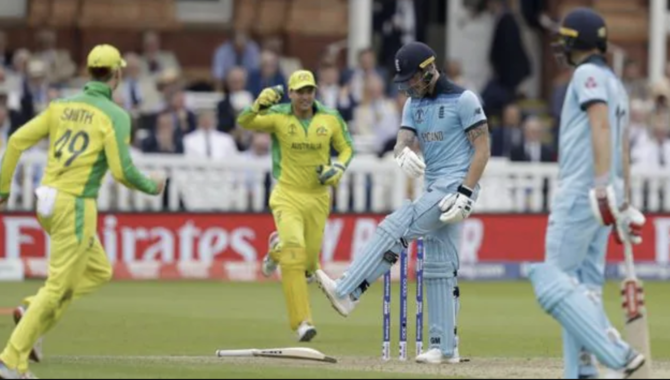
England vs Australia, semi-finals, ICC World Cup 2019. (AP)
Short Url
Updated 07 October 2021
Follow

How cricketing rivalry and love led to the creation of the Ashes

  • Arguably the game’s most famous series has several story origins which have only added to its legend

Cricketing rivalry between England and Australia is legendary. Spice was added to this when Australia defeated England for the first time in England on Aug. 29, 1882. Shock and disaster were the feelings amongst the English. The Sporting Life newspaper famously published a satirical death notice of English cricket that carried a postscript of “N.B. The body will be cremated and the ashes taken to Australia.”

At first sight, it seems curious that English cricket should be defined as a body. The obituary was written by Reginald Shirley Brooks, whose father was a campaigner for the right to human cremation, legalization of which was being resisted by the government of the time. Brooks seized upon an opportunity to subtly promote the campaign. Little did he know the extent to which his subtlety would come to permeate cricket between the two countries.

A further feature of the match was that it was the only one between an England team and the visiting Australians, who played 38 matches mainly against county teams on their four-month long tour of England and Scotland. If the match had not taken place or had England won, the Ashes would not have become part of cricket folklore.

By this time, touring by teams between the two countries had become established practice and, before the 1882 match, an England party had already been primed to travel to Australia in 1882-83 to play three Test matches. Its captain was Ivo Bligh and he promised to “recover those Ashes,” something that was picked up by the Australian press.

It was also picked up by a group of ladies in Melbourne, who, at some point during the tour, presented Bligh with a small, 10.5 centimeter, terracotta urn containing ashes. There is myth and uncertainty surrounding not only the timing of the presentation but also the exact material that was used to create those ashes.

On the long and accident-prone boat journey to Australia undertaken by the English party and 900 other passengers, Bligh had met William Clarke, a preeminent figure in Victoria and president of the Melbourne Cricket Club.

Shortly after arriving in Melbourne, Bligh visited the Clarke mansion for the first and certainly not the last time, since he became attracted to a lady, Florence Morphy, governess and piano tutor to Clarke’s daughters. Two test matches were played at Melbourne in early and mid-January, billed as the Honourable Ivo Bligh’s team vs Mr. Murdoch’s XI, each side winning once.

The third and deciding match ending on Jan. 30, 1883, was won by England and the recovery of the Ashes was claimed. The following day, the Melbourne Punch published a six-verse song lyric in which the fourth verse refers to an urn and Ivo returning with it.

One version of the myth of the urn, according to Bligh’s wife, has it that Lady Clarke found an urn, possibly a perfume bottle, burnt an ash wood cricket bail, put its ashes into the urn, wrapped it into a red velvet bag and presented it to Bligh. Some say that the presentation occurred after the third Test match, but more recent research suggests that the presentation of an urn took place at the Clarke mansion after a private cricket match played over Christmas 1882, when some of the English team were guests.

Another version clouds the issue further. In the middle of February 1883, an additional fourth Test match took place. It was won by Australia but was not classed to be part of the Ashes series of 1882-83. In an interview in 1921, Bligh, by then Lord Darnley, said that the urn was presented to him by some ladies of Melbourne after the final defeat of his team. It is quite possible that the urn was presented twice but in different formats.

What did happen is that Bligh set sail for England only on May 5. In the intervening weeks, it is rumored that he became engaged to Florence, having proposed to her on New Year’s Eve during the first Test match. Ultimately, after gaining permission from his father, they married on Feb. 9, 1884, in Melbourne. A combination of this and ill-health ended his first-class cricket career.

Despite the use of the term Ashes in 1882 and 1883, its adoption for subsequent series was sporadic. This may be partly explained by the lack of a tangible trophy. In 1926, the year before he died, Bligh displayed the urn, as presented to him by the ladies of Melbourne, at an exhibition in London. Upon his death, Florence presented the urn to the Marylebone Cricket Club in London, where it has rested ever since, apart from three exhibition forays to Australia.

It is remarkable that this small, fragile urn, bearing the fourth verse of the Melbourne Punch’s song lyric, became the physical embodiment of match-series between England and Australia, giving rise to an evocative and lasting name. Yet, mystery still shrouds the urn — not only the question of when it was presented to Bligh, but also as to its original contents.

Skeptics ask how could Lady Clarke have had access to match bails after the third Test in Sydney and had time to burn them, even if that was when the urn was presented? A face veil would have been to hand and easier to burn quickly. Romantics prefer to believe that the veil belonged to Florence and that the ashes within the urn were a symbol of Bligh’s successful ventures in both love and cricket, a private token that only became public after his death.

Since that time, there have been many occasions when no love has been lost between England and Australia on or off the pitch. A decision on the upcoming series is expected any day now, once the two sides conclude negotiations over COVID-19-related touring conditions for the English party.

England’s tougher stance is designed to ensure that its leading players can take part, thus “befitting a series of this significance.” A small urn and a love affair continue to cast their spell.


Last-minute VAR review saves Al-Ahli as they go top of SPL with victory over Damac

Updated 24 February 2026
Follow

Last-minute VAR review saves Al-Ahli as they go top of SPL with victory over Damac

  • Al-Ahli’s 1-0 victory against Damac lifts them to first place on 56 points, with Al-Nassr (55) and Al-Hilal (54) yet to play this week
  • Al-Qadsiah keep the pressure on, moving to 53 points after 4-0 victory in Eastern Province Derby against Al-Ettifaq

DAMMAM: If anything has taken over the Saudi Pro League’s fan sentiment this season, it’s one line: “the league is being lined up for [insert title challenger here]”. Under every post by broadcaster Thmanyah on X showing a VAR review in favour of one of the title challengers, the sentiment remains the same.

It is why Al-Ahli’s 1-0 victory over Damac in the delayed Matchday 10 opener was quite controversial. The match, highlighted by three goals that had to be checked by VAR in the first half and a last-minute equaliser revoked due to VAR, was no easy task for the Greens.

After all, it isn’t like Damac are easy opposition. Mired in the relegation battle this season with only two wins in 23 games, any casual viewer would think this is an easy three points for the big clubs. 

While Al-Nassr, Al-Ahli and Al-Hilal have all beaten Damac this season, the reality remains that the Knights of the South have only lost seven games out of 27 when facing the Big Four at home since their promotion to the SPL.

Al-Ahli in particular have struggled against Damac. It wasn’t until last season that they secured their first victory in Khamis Mushait. Their previous outings ended with little to celebrate, with late equalisers and winners proving a nightmare for Al-Ahli’s large fanbase in the south.

Despite the victory, Al-Ahli’s struggles against Damac continued. They were lucky not to trail early when the hosts’ first-minute goal was rescinded for offside, and Damac did their best to ensure Matthias Jaissle’s side did not get comfortable.

Whether it was through overloading the space behind Rayan Hamed through Yakou Méïté and Dhari Al-Anezi, or the marauding runs of Morlaye Sylla to pull Zakaria Hawsawi out of position, Damac did their best to ensure Al-Ahli were as uncomfortable as they could possibly be.

On the defensive end, their 5-4-1 box shape prevented Al-Ahli from launching the long balls they’ve been particularly successful with in behind the defence. On one occasion it succeeded, although Ivan Toney was caught offside as he chipped the ball past Kewin.

Al-Ahli would get their goal in the 37th minute. A scramble in the box after a free-kick was delivered by Wenderson Galeno saw Franck Kessié capitalise on a loose ball to open the scoring.

While half-time analysts predicted Damac would continue in a deep block and refrain from taking risks, the reality was starkly different on the pitch. Damac took full control of proceedings after the interval. After all, a result was a must if they intended to escape the relegation zone, however temporary that may be.

The 71st minute saw them give Al-Ahli their biggest scare of the night. After a corner was cleared away from the Al-Ahli defence, Damac’s Abdulrahman Al-Obaid struck a volley from range only for Mendy to produce an acrobatic save to maintain the lead.

Despite holding a valuable lead at a tough stadium, Jaissle’s only substitution until the 88th minute was the inclusion of Feras Al-Brikan in place of Enzo Millot. Al-Ahli’s goal difference remains some way behind Al-Nassr (+39) and Al-Hilal (+37), with Jaissle’s side sitting at +30.

Mendy was ultimately the star of the night for Al-Ahli. An 89th-minute save after Syrian youngster Mohammed Al-Salkhadi wriggled his way to a clear shooting position sent Al-Ahli fans into celebration.

Or so everyone thought. A free-kick deep into stoppage time saw Méïté sneak past the Al-Ahli defence to head in what looked like an equaliser. Al-Ahli’s players immediately pushed for a VAR review, with the referee ultimately ruling out the goal for offside.

Méïté, angered by the decision, approached the referee seconds before full-time in protest. Tensions spilled over on the pitch, with Toney and Jamal Harkass clashing after the disallowed goal.

Tensions continued to flare as the final whistle blew, but Al-Ahli got what they needed: three points and a temporary spot at the top at one of the toughest grounds in the Saudi Pro League.

In Dammam, the Eastern Province’s flagship derby between Al-Qadsiah and Al-Ettifaq took place at the Prince Mohammed bin Fahad Stadium, with the home side looking to keep pressure on the title challengers.

The visitors have enjoyed a period of subtle, gradual improvement since Saudi manager Saad Al-Shehri replaced Steven Gerrard last year. Finding themselves in seventh place before the game with a chance to leapfrog Al-Ittihad and Al-Taawoun, those chances were quickly extinguished within the first 10 minutes.

Al-Qadsiah, already establishing themselves as this season’s dark horses in search of their maiden Saudi Pro League title, continued the high-quality football they’ve enjoyed since the arrival of Brendan Rodgers.

Yet to be defeated under the former Liverpool manager, the Knights of the Eastern Province blitzed to a 2-0 lead before Al-Ettifaq could settle into the game.

Nahitan Nández was the star behind this dominance. In the third minute, he slipped in behind João Costa to receive one of Musab Al-Juwayr’s trademark line-breaking passes and score the opener. Four minutes later, he exploited that space again to create Christopher Bonsu Baah’s goal, once more getting behind Costa thanks to a threaded pass from Mohammed Abu Al-Shamat.

This was Al-Qadsiah at their best, but the reality is, it could have been more. Eight big chances, 20 shots and an xG of 2.83 meant a 2-0 scoreline until stoppage time felt relatively underwhelming given their attacking dominance.

For Al-Ettifaq, it didn’t help that they were missing the services of Mousa Dembélé and Álvaro Medrán through injury and starboy Khalid Al-Ghannam through suspension, limiting their attacking threat. 

Matija Gluščević and Koka — deputising for the absent Dembélé and Al-Ghannam — had made only six starts between them this season, with no goal contributions.

It is why Al-Ettifaq looked a shadow of the side that held Al-Nassr to a draw and defeated Al-Ittihad earlier this season. If anything, it resembled how the side looked under Gerrard: unorganised and uninspired.

The fact remains, Al-Qadsiah are a star-studded team with a manager who — until now — has managed them exceptionally well. Their rivals, meanwhile, have yet to return to former glories, and currently resemble more of an upper mid-table side in the landscape of Saudi football today.

A red card was shown to Abdullah Al-Khateeb late on, further compounding Al-Ettifaq’s misery. The hosts added a third in stoppage time, with Julian Quiñones capitalising on a weak save from Marek Rodák to tap in his 22nd goal of the season.

A first goal in an Al-Qadsiah shirt for Julian Weigl followed, as he unleashed a long-range strike past Rodák to seal a dominant victory. If there’s anything this match proved, it’s that — in spite of former glories — Al-Qadsiah are the Eastern Province’s current standard-bearers.

Elsewhere, Al-Shabab continue to enjoy life under new manager Nourredine Ben Zekri with an emphatic 3-1 win against Al-Riyadh. Yannick Carrasco, continuing his stellar run of form since the turn of the year, scored a hat-trick to increase his goal contributions to 15 in 11 games in 2026. Meanwhile, Al-Fateh finally ended their streak of eight games without a win after edging past Al-Okhdood 2-1.

Saudi Pro League action resumes on Tuesday, with Al-Ittihad and Al-Hilal travelling to Qassim to face Al-Hazem and Al-Taawoun respectively, as Al-Khaleej welcome Al-Kholood in Dammam. All games kick off at 10:00pm in the league’s unified Ramadan schedule.