Sudanese-British broadcaster Zeinab Badawi appointed president of top UK university

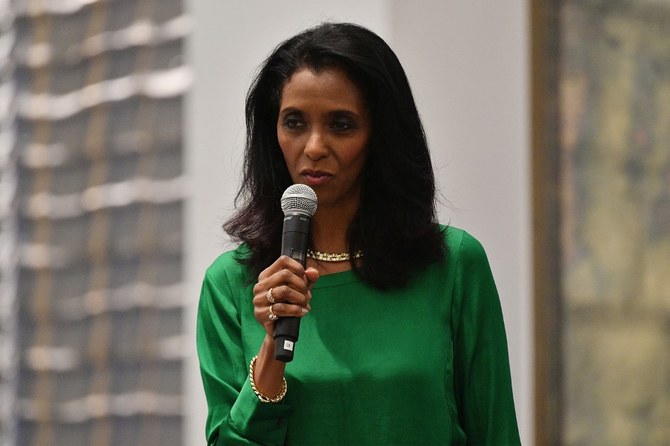
Sudanese-British broadcaster and journalist Zeinab Badawi has been appointed as the new president of SOAS, University of London. (File/AFP)
Short Url
Updated 06 October 2021
Follow

Sudanese-British broadcaster Zeinab Badawi appointed president of top UK university

  • Born in Sudan but raised in London, Badawi comes from a family of dedicated newscasters
  • Before receiving her master’s degree from SOAS, Badawi studied philosophy, politics and economics at Oxford

LONDON: Award-winning Sudanese-British broadcaster and journalist Zeinab Badawi has been appointed as the new president of SOAS, University of London on Tuesday.

Born in Sudan but raised in London, Badawi comes from a family of dedicated newscasters, with her father Mohammed-Khair El-Badawi having worked for the BBC’s Arabic Service.

Badawi, a SOAS alumni herself, had become a mainstay on screens across the UK and the world for her interviews with some of the world’s most influential and powerful personalities on BBC Hardtalk. 

Apart from Hardtalk, Badawi hosted Global Questions on BBC World TV and the BBC News Channel where she took questions from the audience and posed them directly to world leaders. 

“This is a really significant time to be starting this journey as the new president of SOAS. It comes at a time when SOAS is increasingly asserting itself with great confidence on the UK and global stage. I look forward tremendously to working with the academic community, staff, the student body, alumni, the supporters, partners and friends of SOAS,” Badawi said.

Before receiving her master’s degree in Middle East history and anthropology at SOAS, Badawi studied philosophy, politics and economics at Oxford University. Later on, she was awarded an honorary doctorate by SOAS.


Israeli court overturns conviction of officer who assaulted Palestinian journalist, citing ‘Oct. 7 PTSD’

Updated 25 February 2026
Follow

Israeli court overturns conviction of officer who assaulted Palestinian journalist, citing ‘Oct. 7 PTSD’

  • Judge sentenced Yitzhak Sofer to 300 hours of community service, saying officer “devoted his life to Israel’s security” and conviction was “disproportionate to severity of his actions”
  • Footage shows Sofer throwing photojournalist Mustafa Alkharouf to the ground, and repeatedly beating and kicking him while he covered Palestinian gatherings near Al-Aqsa Mosque

LONDON: An Israeli court overturned the conviction of a border police officer who assaulted a Palestinian journalist, ruling his actions were influenced by post-traumatic stress disorder from serving during the Oct. 7 2023 attacks.

On Tuesday, the Jerusalem Magistrate’s Court sentenced officer Yitzhak Sofer to 300 hours of community service for assaulting Anadolu Agency photojournalist Mustafa Alkharouf in occupied East Jerusalem in December 2023.

Footage shows Sofer and other officers drawing weapons, throwing Alkharouf to the ground, and repeatedly beating and kicking him while he covered Palestinian gatherings near Al-Aqsa Mosque amid heavy restrictions.

Alkharouf was hospitalized with facial and body injuries. His cameraman, Faiz Abu Ramila, was also attacked.

Sofer had been convicted in September 2024 of assault causing bodily harm (acquitted of threats) and initially faced six months’ community service, as recommended by Mahash, the Justice Ministry’s police misconduct unit.

Judge Amir Shaked accepted the defense request to cancel the conviction, replacing it with community service.

He cited Sofer’s PTSD from responding to the Oct. 7 Hamas-led attack, noting the officer had “no prior criminal record” and had “devoted his life to Israel’s security.”

“The court cannot ignore this when considering whether the defendant’s conviction should stand,” he said, adding that while the incident is “serious and does cross the criminal threshold,” the conviction in place could cause Sofer harm “disproportionate to the severity of his actions.”

The ruling comes amid surging attacks on journalists in the West Bank, East Jerusalem and Gaza since Israel’s war on Gaza began.

The Committee to Protect Journalists reported Israel responsible for two-thirds of the 129 media workers killed worldwide in 2025, the deadliest year on record, citing a “persistent culture of impunity” and lack of transparent probes.

Reporters Without Borders called the Israeli army the “worst enemy of journalists” in its 2025 report, with nearly half of global reporter deaths in Gaza.

Foreign journalists face raids, arrests and intimidation. In late January 2026, Israel’s Supreme Court granted a delay on ruling a ban on foreign media access to Gaza.