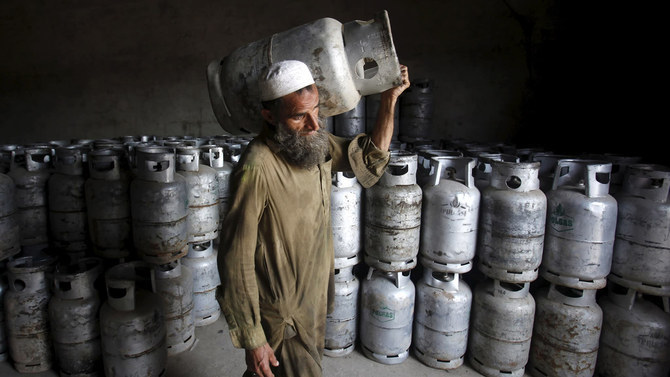
KARACHI: Pakistan has increased the price of liquefied petroleum gas (LPG) for domestic consumers by Rs29 per kilogram or Rs344 per cylinder, according to a notification issued by the Oil and Gas Regulatory Authority, making the dealers complain the LPG rate had hit a historic high.
The government also raised petroleum prices during its last fortnightly review, though the country’s finance minister Shaukat Tareen defended the decision on Friday by saying that Pakistan was still offering the cheapest rates in the region.
According to local dealers, the government has increased the LPG price by 127 percent since April 2020 when it was only Rs90 per kilogram.
“With the current about 17 percent price hike, LPG rates are at a historically high level,” Irfan Khokhar, founding chairman of the LPG Industry Association of Pakistan, told Arab News on Saturday.
The cost of LPG for commercial use has also been increased by Rs1,322 per 45.4 kilogram cylinder, taking its cost to Rs9,248.
Local dealers said residents of remote districts of Gilgit Baltistan and Azad Kashmir would have to pay an additional amount of Rs250 per cylinder due to the recent price hike.
LPG plays an important role in Pakistan’s energy mix since it provides clean fuel to the residents the country’s remote areas who traditionally relied on wood during winter.
“LPG is used by the poor population of the country,” Khokhar said. “The recent price hike may not be beneficial for the government’s environmental initiatives since many people will once again start burning wood to keep themselves warm in the coming days.”
Environment analysts also maintained the recent increase in LPG price could reverse the trend of forestation in the country.
“LPG has been available since the mid-1990s at affordable rates,” Shahzad Anwar, an environmental analyst based in Rawalakot, told Arab News. “Many people started using it for the same reason, though they are likely to return to more traditional forms of fuel now.”
Khokhar, meanwhile, called for better management of the country’s energy resources, saying Pakistan was likely to face some problems during the next winter season.
“The government must take necessary measures on a fasttrack basis to control the rising LPG prices by reducing taxes,” he said.
He also called for the resumption of gas supply from Jamshoro Joint Venture Limited (JJVL) which has been offline for over a year.
The plant had a production capacity of about 400 tons of LPG.
The total supply of LPG in Pakistan is about one million metric tons, according to the latest Pakistan Economic Survey.
The document maintains there are about 11 LPG producers and 216 LPG marketing companies operating in the country.


![]()

LPG prices in Pakistan hit historic high after 17 percent increase — dealers
Short Url
https://arab.news/vw8nq
LPG prices in Pakistan hit historic high after 17 percent increase — dealers
- Local business community says the government has increased LPG rate by 127 percent since April 2020 when it stood at Rs90 per kilogram
- The recent hike in LPG price can detrimental to Pakistan’s environmental initiatives since people in remote area may revert to traditional fuel sources
Latest updates


© 2026 SAUDI RESEARCH & PUBLISHING COMPANY, All Rights Reserved And subject to Terms of Use Agreement.