



QUETTA: Two remote districts in southwestern Pakistan have become the country’s top producers of sweet raisins in recent years, according to officials and farmers who hope government support for the industry in the future could turn it into a major player in the region.
Pishin and Killa Abdullah are located in Balochistan province, which — though Pakistan’s poorest and least developed area — is known as the country’s fruit basket, contributing 90 percent to total grape production, according to planning ministry data.
Dry weather in the two districts and increasing demand for raisins have turned grapes into the principal crop in the area.
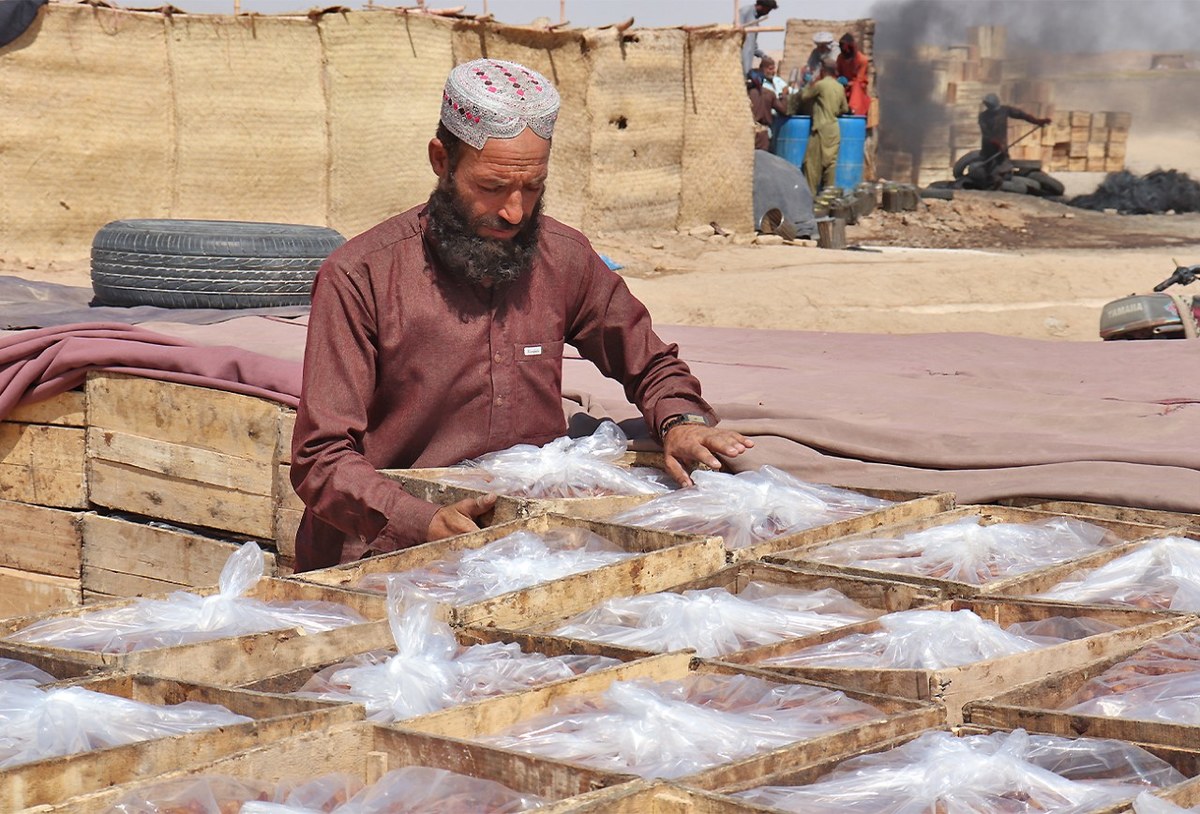
A laborer packs raisins in wooden crates at a field in Saranan, Pishin district of Balochistan province, Pakistan, on September 26, 2021. (AN photo)
The United States, Turkey and South Africa are the largest raisin producers globally, followed by Greece, Australia, Iran, Afghanistan, China and Russia.
“Every season we produce more than 4,000 tons of raisins in both districts and generate millions of rupees i revenue for the province and the country,” Syed Qahar Agha, president of the Farmers Action Committee in Pishin, told Arab News.
At the dry fruit market in Quetta, the capital of Balochistan, a kilogram of raisins sells for Rs1,000 ($6).
“In recent years the price of raisins has increased up to 20 percent, hence farmers in districts Pishin and Killa Abdullah opted to cultivate more Haita grapes to meet growing demand,” said Kazim Khan, president of the Farmers Association of Killa Abdullah, referring to an oval, seedless grape variety from which the world’s most popular sultana raisins are produced.
The rising demand is also reflected in the emergence of new vineyards.

Grapes are spread out on the ground to dry in the sun at a vineyard in Saranan, Pishin district of Balochistan province, Pakistan, on September 26, 2021. (AN photo)
In Saranan, a town located between the two districts, the number of grape fields has more than doubled, from 15 to 34, in the past five years.
Faza Ahmed, whose family runs a raisin business in Saranan, said the industry did not even exist in the region three decades ago.
“My uncle, Hajji Abdul Rafeeq, is one of the pioneers who started producing dried grape raisins in Pakistan 30 years ago,” he told Arab News, “There are more than 34 grape raisin grounds producing tons of grape raisins in every season.”
The industry is also a major employer. During the harvest season from September through mid-November, laborers from across the country arrive in the area to find temporary employment.
Ahmed’s vineyard employs 150 laborers during the season, who spend 12 hours a day segregating berries and drying them in the sun.
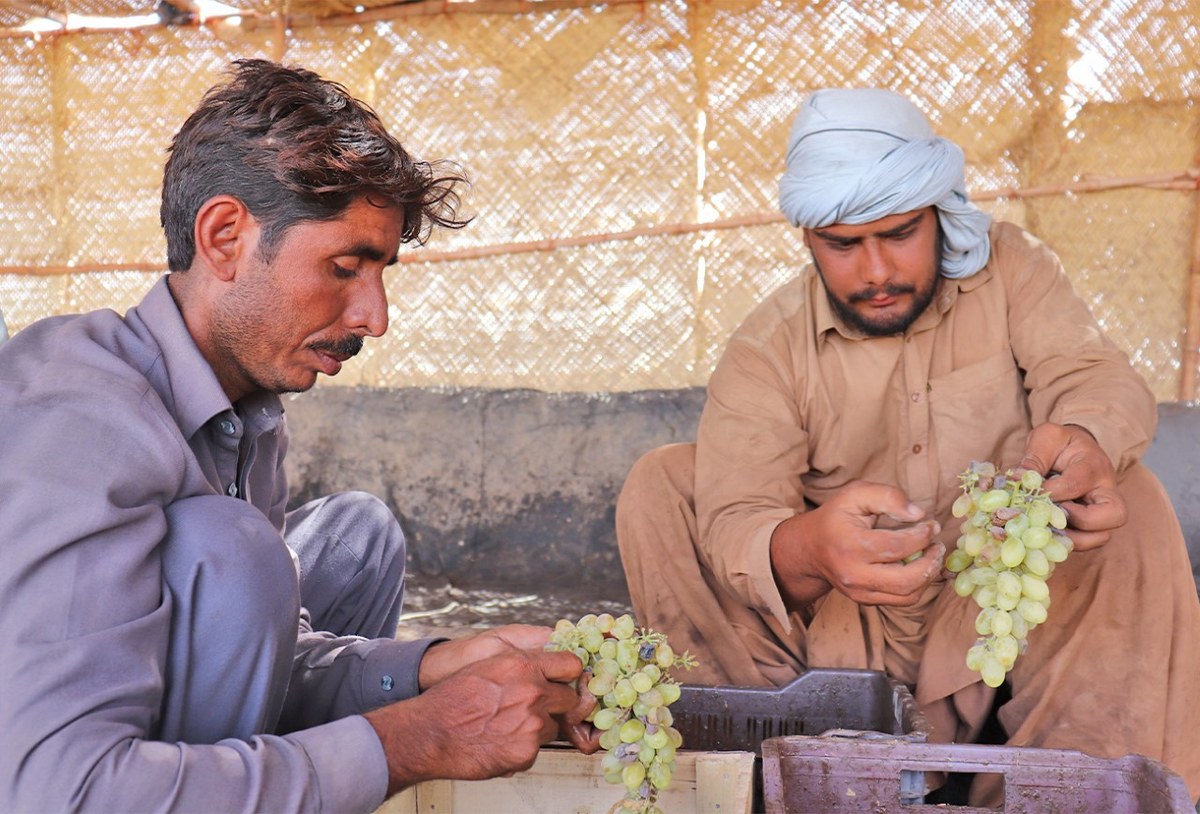
Workers segregate berries before drying the grapes in the sun in Saranan, Pishin district of Balochistan province, Pakistan, on September 26, 2021. (AN photo)
Riaz Ahmed, who has been coming to Saranan from Sindh province for the past ten years to work there during the grape harvest, said more and more people were attracted to the area for seasonal employment as the demand for raisins increased.
“From the last three years, the demand has risen up to 75 percent, that is why local contractors have been hiring more laborers,” he said. “This year I have brought 15 more people from my city Shikarpur.”
Veterans of the business feel the lucrative industry could bring even more revenue if farmers in the region received government support in introducing new packaging and processing techniques.
“The farmers started getting extra value from grape raisins, hence they have been paying more attention toward this business and are investing money in this dry fruit,” Badar Ud Din Kakar, a former vice president of the Quetta Chamber of Commerce and Industries (QCCI), said. “But yet they have been using local techniques to produce raisins.”
Introducing value-added agricultural practices would lift the sector and increase its worth, Kakar said.
While the Balochistan agricultural department did not provide official figures for raisin production and revenue, authorities said they had plans to boost and modernize the industry.
“Laborers have been working with old techniques,” Agriculture Balochistan director Jumma Khan Tareen told Arab News. “The agriculture department has been planning to launch programs for grape raisin laborers in order to modernize the processing and packing of this specific dry fruit.”


