KHARTOUM: Oil exports from South Sudan can resume unimpeded through a Sudanese port, Khartoum’s ruling council said late Sunday after it reached an agreement with protest leaders in the country’s east.
Khartoum earns revenue for its impoverished economy from the South’s oil exports, and the deal came hours after senior government officials flew to Port Sudan, the Red Sea trade hub.
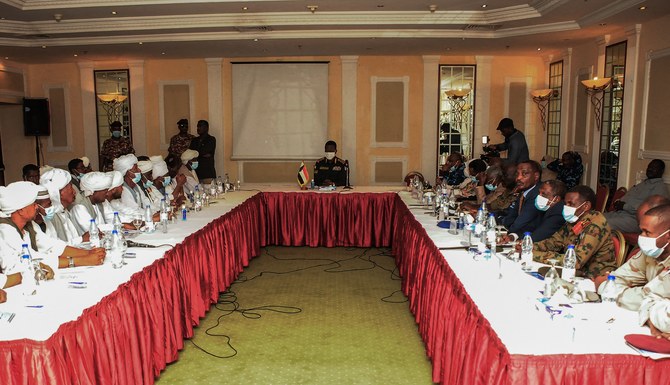
“The joint meeting between the government delegation headed by General Kabashi, a member of the Sovereign Council, and a delegation from the Beja council reached an agreement on allowing the passage of South Sudanese oil exports through the Bashayer port,” Khartoum’s ruling sovereign council said in a statement late Sunday.
Bashayer is the main terminal, close to Port Sudan, from which landlocked South Sudan’s oil supplies are shipped to global markets.
Oil Minister Gadein Ali Obeid had warned Saturday of “an extremely grave situation” with two pipelines blocked by the protesters.
One transports oil exports from South Sudan while the other handles Sudanese crude imports.
The governmental delegation led by Sovereign Council member Shams Al-Din Kabashi included Obeid, Foreign Minister Mariam Al-Mahdi and others.
They put forward proposals to eventually open all ports and roads leading to the city which protesters began blocking early last week.
The Beja tribe elders tentatively agreed and said they would need a week to further discuss the initiatives, the statement added.
The breakthrough came after Information Minister Hamza Baloul confirmed to AFP earlier on Sunday the delegation’s arrival while another senior official, who preferred to remain anonymous, said “the delegation won’t come back (to the capital Khartoum) before solving the crisis.”
A protest leader announced on September 20 that dozens of demonstrators, objecting to parts of a peace deal with rebel groups, had blocked the main container and oil export terminals in Port Sudan.
Neighbouring South Sudan produces around 162,000 barrels of oil per day, which are transported by pipeline to Port Sudan and then exported.
The Khartoum government receives around $25 for every barrel of oil sold from the South, according to official figures.
Sudan formed the joint civilian-military sovereign ruling council months after the ouster of long-time autocrat Omar Al-Bashir in April 2019.
It serves alongside a transitional government, headed by civilian Prime Minister Abdalla Hamdok, which last October signed a peace agreement with several rebel groups.
But the eastern protesters, from Sudan’s Beja minority, say that the deal with rebels from the Darfur region, Blue Nile and South Kordofan states ignored their interests.
Speaking in Khartoum on Sunday, Sovereign Council chief Abdel Fattah Al-Burhan described the protesters’ demands as “a political matter that must be dealt with politically.”
While impeding access to Port Sudan, the protesters late last week also blocked the entrance to the city’s airport and a bridge linking Kassala with the rest of the country.


![]()
![]()

Khartoum says agrees with protesters on resumption of South Sudan oil exports

Short Url
https://arab.news/peagj
Khartoum says agrees with protesters on resumption of South Sudan oil exports
- The transitional government sent a delegation to Port Sudan to negotiate with demonstrators objecting to parts of a peace deal with rebel groups
- Rebels have blocked the main container and oil export terminals in Port Sudan, threatening fuel supplies and revenue


Latest updates





© 2026 SAUDI RESEARCH & PUBLISHING COMPANY, All Rights Reserved And subject to Terms of Use Agreement.