

Apicorp launches first green bond framework

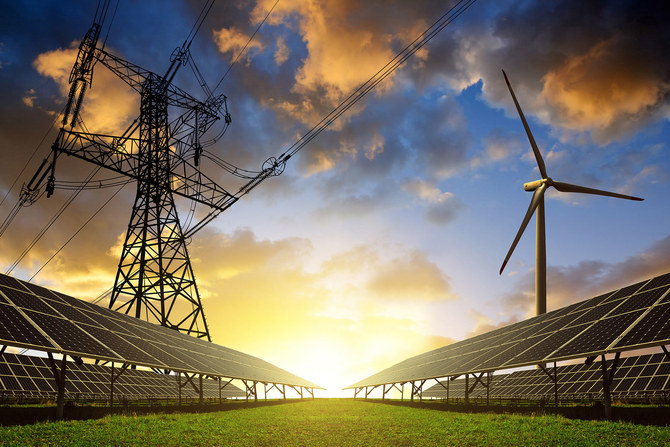
Apircorp earlier said it will allocate $1 billion towards green energy projects and sustainable energy companies over the next two years. (Supplied)
Short Url
Updated 23 September 2021
Follow

Apicorp launches first green bond framework

  • The framework will be used to raise green bonds/sukuk for projects aligned with the UN Sustainable Development Goals

DUBAI: The Arab Petroleum Investments Corporation (Apicorp) has launched its first green bond framework.

It follows the recent approval of the OPEC-created financial institution’s environmental, social, and governance (ESG) policy framework, as it aims to develop the sustainable financial market. 

The framework will be used to raise green bonds/sukuk for projects aligned with the UN Sustainable Development Goals - addressing issues in climate mitigation, circular economy, and biodiversity preservation among others. 

It was created in line with the International Capital Market Association’s Green Bond Principles 2021.

“By launching the Green Bond Framework, Apicorp is providing new avenues for investment in projects and ventures that further the development of safe, affordable, and renewable energy sources,” Ahmed Ali Attiga, chief executive officer of Apicorp. 

He said the framework “reflects our deep understanding of the ESG impact of our investments across the energy spectrum and our commitment to setting out new engagement strategies with our stakeholders to spread awareness of their ESG exposure.”

Apircorp earlier said it will allocate $1 billion towards green energy projects and sustainable energy companies over the next two years. 


Saudi Arabia announces mining surprises beyond traditional belts, adding to estimated $2.4tn in mineral wealth

Updated 06 January 2026
Follow

Saudi Arabia announces mining surprises beyond traditional belts, adding to estimated $2.4tn in mineral wealth

RIYADH: Leading mining companies have announced that Saudi Arabia’s mining wealth has exceeded previous estimates of SR9 trillion ($2.4 trillion), following the results of geological and geophysical surveys of the Arabian Shield, Khalid Al-Mudaifer, vice minister of industry and mineral resources for mining affairs, told Al Eqtisadiah.

Al-Mudaifer said companies revealed significant surprises, including the discovery of mineral sites in areas not previously expected, outside the scope of the traditional mineralized belts.

He added: “Current estimates of the Kingdom’s mineral wealth point to SR9 trillion, with actual figures potentially higher, in light of the results of the Arabian Shield survey, which was completed in full for the first time at what are considered among the most precise levels globally, with investments of SR1 billion and integrated databases made available to investors.”

The estimated value of Saudi Arabia’s mineral wealth has risen by 90 percent to around SR9.375 trillion, compared with estimates announced in 2016 of SR5 trillion.

This increase reflects additional quantities from discoveries of rare earth elements and transition metals, as well as significant gains in phosphate ore and other minerals, including copper, zinc, and gold. It also includes a reassessment of fair market values.

Surprises beyond traditional belts

Al-Mudaifer said the survey results revealed important surprises, notably the discovery of mineral sites in areas not previously anticipated, outside the traditional mineralized belts of the Arabian Shield, which covers around 600,000 sq. km, as well as surrounding areas spanning about 700,000 sq. km.

New finds in the sedimentary cover

He noted that the Kingdom’s sedimentary strata contain important minerals such as phosphate and bauxite, in addition to discoveries currently under development.

He confirmed that survey work will continue periodically every three to five years, given the significant advances in data and information.

He noted that the International Mining and Resources Conference achieved significant and unprecedented global success, noting that one of its key pillars was the ministerial meeting attended by 100 countries, 70 percent of which were represented by ministers or deputy ministers — a level of representation unmatched globally, except for the previous edition, which saw participation from 89 countries.

He explained that the conference is not limited to governments, but also brings together leading global businesspeople, international trade organizations, and global institutions such as the World Bank, the UN, and UNIDO, alongside organizations concerned with the environment and the protection of local communities, to shape the future of minerals and draw up sector policies.

Mineral-consuming companies at the heart of supply chains

Al-Mudaifer revealed that the fifth edition of the International Mining Conference has expanded its platform to include mineral-consuming companies, technology firms, the automotive sector, and finance — core elements of the event.

This is particularly relevant for companies with clear demand visibility and technical specifications amid growing challenges in global supply chains.

He pointed out that direct meetings between producers, manufacturers, and consumers open the door to strategic deals in industries such as electric vehicles, batteries, aircraft, and advanced technologies.

Financing remains a global mining challenge

On the global mining strategy developed in partnership with the World Bank, Al-Mudaifer said the biggest challenge facing the sector since its inception is financing, as global mining investments require more than $4 trillion, while the combined market value of the world’s top 20 mining firms does not exceed $1 trillion.

He added that mining-related infrastructure requires financing of more than $1 trillion to $2 trillion in many countries, stressing that the World Bank, alongside institutions such as the International Finance Corp. and investment funds, represents a key tool to address this challenge, particularly for cross-border infrastructure projects.

Global competition for critical minerals

Al-Mudaifer said the world is witnessing growing competition over critical and strategic minerals such as copper, lithium, cobalt, and rare earth elements, noting that naming the conference “Future Minerals” reflects this global shift.

He added that Saudi Arabia has begun strategic investments in this area, supported by international agreements and partnerships with global companies, including MP Materials, to build a Saudi supply chain based on local resources.

He said the Jabal Sayid site ranks among the world’s top four resources for rare earth elements, noting that the project will form a cornerstone in meeting Saudi Arabia’s needs for these minerals in magnet manufacturing, EVs, and wind energy, while also supporting global supplies, including the US market.