



AL-MUKALLA: The Iran-backed Houthi militia on Saturday publicly executed nine people charged with involvement in the killing of the militia’s leader Saleh Al-Samad in 2018.
The Houthi-controlled SABA news agency said on Saturday that “the Public Prosecution implemented the legal retribution verdict against nine people” who allegedly guided the Arab coalition warplanes that killed Al-Samad in the western province of Hodeidah.
The group, including a 17 year old, were accused of putting SIM cards in the pockets of Al-Samad’s guards, helping the coalition to locate the Houthi leader.
Al-Samad, then president of the Houthi Supreme Political Council, was visiting the western province of Hodeidah in April 2018 to incite residents to join the war when the coalition hit his convoy, killing him along with six other people, and inflicting a heavy blow to the Houthi movement.
New images published by Houthi officials show the nine civilians in blue clothes standing before a large gathering of people and soldiers before being shot in the back by machine guns, one by one. Each prisoner collapses on the ground with their hands tied behind their backs.
Among those executed was 17-year-old Abdulaziz Al-Aswad, who was arrested in Hodeidah in 2018 when he was 15.
The Houthis also executed Ali bin Ali Al-Qawzi, a tribal leader and local government official in Hodeidah. He was also abducted in 2018 and later transferred to Sanaa ,where he faced charges of sharing information with the Arab coalition that led to the killing of Al-Samad.
Yemeni lawyers told Arab News that the 10th alleged member of the abducted group, Ali Kazaba, died inside Houthi-controlled prisons as a result of brutal physical torture and medical negligence.
Before the execution, family members of the group sent urgent appeals to the Houthi leader to pardon them. Local and international activists also arranged online campaigns to pressure the rebels into canceling the execution.
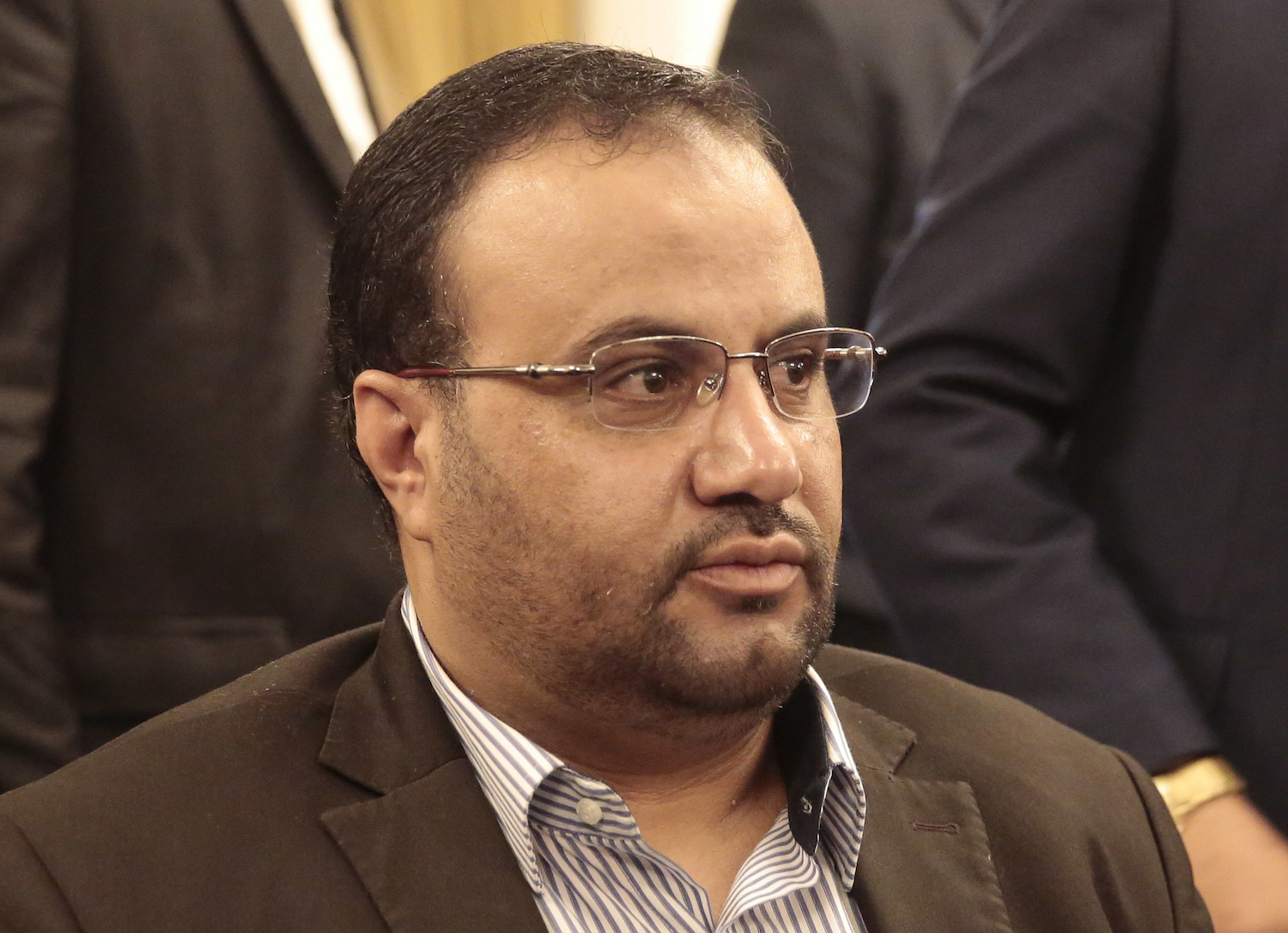
Saleh Al-Samad .(File/AP)
“They do not have strong evidence that he is guilty. He is innocent,” one family member said of their relative in an appeal recorded beside the grave of Al-Samad in Sanaa.
Outraged Yemeni lawyers and human rights activists said that the executions were “based on unfounded charges and forced confessions” and that the nine were not granted a fair trial.
Abdel Majeed Sabra, a lawyer who defended three of the executed men, described the execution as “a massacre.”
He said that the relatives demanded the Houthis hand over the bodies for burials in Hodeidah.
“This is premeditated murder that has been legitimized by invalid rulings,” Sabra told Arab News.
Yemenis of different political affiliations have turned to social media to vent their anger over the executions.
Moammar Al-Eryani, Yemen’s minister of information, said that the nine men were subjected to “mock trials” and that “the Houthis were behaving like a terrorist organization.”
He said on Twitter: “Killing orders by Houthi militia against nine civilians are premeditated murders and a replication of the Iran regime’s model of liquidating political opponents. The event is also similar to executions by terrorist organizations Al-Qaeda and Daesh.”
The Geneva-based SAM Organization for Rights and Liberties said that the Houthis had carried out “extrajudicial executions against innocent Yemeni civilians.”
It accused the rebel group of seeking to “exterminate their political opponents.
“SAM affirms its opposition to the political death sentences and its condemnation of the brutal behavior of the Houthi group in killing innocent people in front of camera lenses and a large crowd of the public, and the publication of the execution video in the media.”
The human rights organization Rights Radar for Human Rights said that the executions amounted to war crimes: “We strongly condemn the Houthi rebels in Yemen who executed nine civilians based on false charges and unfair trials. It is considered a war crime.”


