

Lebanon’s soaring inflation led by 250 percent jump in fuel costs amid currency slump

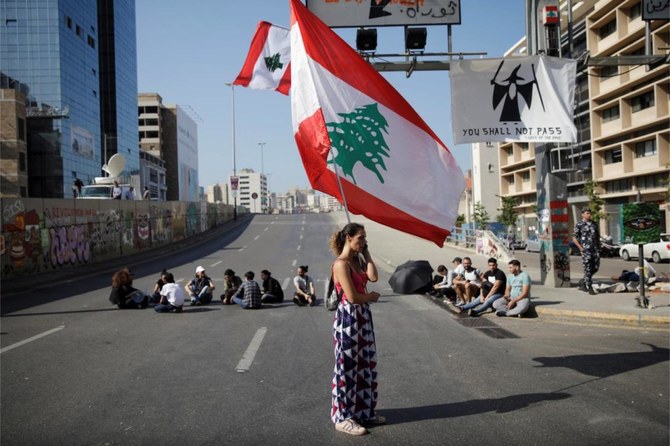
Lebanon's economy was in crisis even before COVID-19 hit in 2020. (Reuters)
Short Url
Updated 18 September 2021
Follow

Lebanon’s soaring inflation led by 250 percent jump in fuel costs amid currency slump

  • Lebanese CPI jumped 123 percent in the year to July 2021
  • Food and non-alcoholic beverages prices rose 248 percent

DUBAI: Lebanese residents were forced to pay more than double for consumer goods in July compared with a year earlier as prices soared amid a partial lifting of fuel subsidies and a record plunge in the local currency.

The latest data from Lebanon’s Central Administration of Statistics shows the consumer price index leaped 123 percent year-on-year last month as officials struggled to contain an economic meltdown the likes of which have not been seen since the end of the country’s 1975-1990 civil war.

The biggest contributor to surging prices has been the cost of transportation, which soared by 253 percent from July 2020, reflecting the rise in fuel costs after the previous government priced gasoline at the exchange rate of 3,900 pounds to the dollar in June. Two months later, the central bank began providing fuel importers with dollars at an exchange rate of 8,000 pounds to the dollar.

The Lebanese pound has been officially pegged at 1,507.5 pounds to the dollar since 1997, but is worth a lot less on the black market. Following the resignation of former Prime Minister-Designate Saad Hariri in July, it plummeted to a record 24,000 per dollar.

This pushed prices of food and non-alcoholic beverages up by 248 percent in the year to July 2021, while health care services rose by 178 percent. Prices at restaurants and hotels grew 246 percent and clothing and footwear prices almost doubled.

The formation of Najib Mikati’s government last week, following a 13-month political vacuum, provided Lebanese with slight reprieve.

The pound stabilized at around 14,000 to the dollar on Thursday amid the new government’s pledges for reforms and a resumption of talks with the International Monetary Fund (IMF) which had hit a dead-end following bickering over the size of the banking sector’s losses.

Reforms demanded by the international community include a forensic audit of the central bank’s accounts and a restructuring of the banking sector.

On Thursday, a meeting took place at the Economy Ministry with the president of the syndicate of supermarket owners and the president of the syndicate of food importers to discuss lowering the prices of goods.

The meeting touched on a new pricing mechanism for goods in the wake of the Lebanese pound’s surge, with new economy minister Amine Salam saying that ” both unions have committed to start reducing the prices of commodities.”

“The ministry will not tolerate this issue and will be strict in monitoring price,” he said.


Saudi POS spending jumps 28% in final week of Jan: SAMA

Updated 06 February 2026
Follow

Saudi POS spending jumps 28% in final week of Jan: SAMA

RIYADH: Saudi Arabia’s point-of-sale spending climbed sharply in the final week of January, rising nearly 28 percent from the previous week as consumer outlays increased across almost all sectors. 

POS transactions reached SR16 billion ($4.27 billion) in the week ending Jan. 31, up 27.8 percent week on week, according to the Saudi Central Bank. Transaction volumes rose 16.5 percent to 248.8 million, reflecting stronger retail and service activity. 

Spending on jewelry saw the biggest uptick at 55.5 percent to SR613.69 million, followed by laundry services which saw a 44.4 percent increase to SR62.83 million. 

Expenditure on personal care rose 29.1 percent, while outlays on books and stationery increased 5.1 percent. Hotel spending climbed 7.4 percent to SR377.1 million. 

Further gains were recorded across other categories. Spending in pharmacies and medical supplies rose 33.4 percent to SR259.19 million, while medical services increased 13.7 percent to SR515.44 million. 

Food and beverage spending surged 38.6 percent to SR2.6 billion, accounting for the largest share of total POS value. Restaurants and cafes followed with a 20.4 percent increase to SR1.81 billion. Apparel and clothing spending rose 35.4 percent to SR1.33 billion, representing the third-largest share during the week. 

The Kingdom’s key urban centers mirrored the national surge. Riyadh, which accounted for the largest share of total POS spending, saw a 22 percent rise to SR5.44 billion from SR4.46 billion the previous week. The number of transactions in the capital reached 78.6 million, up 13.8 percent week on week. 

In Jeddah, transaction values increased 23.7 percent to SR2.16 billion, while Dammam reported a 22.2 percent rise to SR783.06 million. 

POS data, tracked weekly by SAMA, provides an indicator of consumer spending trends and the ongoing growth of digital payments in Saudi Arabia.  

The data also highlights the expanding reach of POS infrastructure, extending beyond major retail hubs to smaller cities and service sectors, supporting broader digital inclusion initiatives.  

The growth of digital payment technologies aligns with Saudi Arabia’s Vision 2030 objectives, promoting electronic transactions and contributing to the Kingdom’s broader digital economy.