

Saudi mining law will attract ‘incredible’ private investment to $1.3 trillion sector: Golden Compass CEO

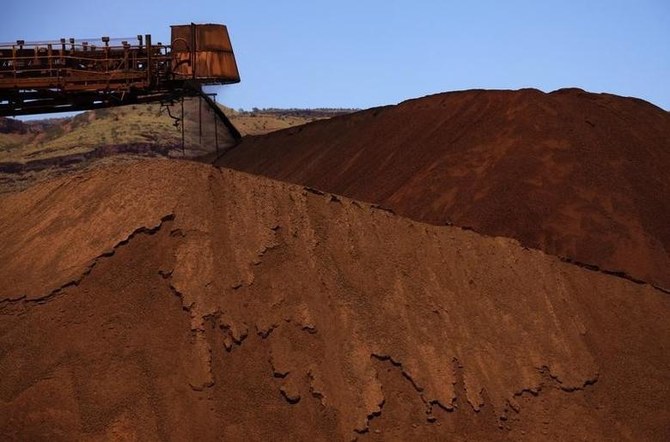
Studies have estimated $1.3 trillion in reserves of phosphates, gold, copper, zinc, nickel, rare earth metals and other minerals in the Kingdom. (Reuters)
Short Url
Updated 05 January 2022
Follow

Saudi mining law will attract ‘incredible’ private investment to $1.3 trillion sector: Golden Compass CEO

  • The Saudi Industrial Development Fund is also offering 60 percent loans to investors in a bid to attract global players into the Kingdom
  • Alcoa Group, The Mosaic Co. and Barrick Gold have invested in the Kingdom's mining sector

RIYADH: Saudi Arabia’s new mining law will attract private investment from home and abroad as the Kingdom looks to exploit an estimated $1.3 trillion of potential value in the sector, according to Meshary Al-Ali, founder and CEO of mining consultancy Golden Compass.

In January, the Kingdom moved to capitalize on the vast wealth hidden below ground in Saudi Arabia with the establishment of a mining fund and support for geological surveys and exploration program activities.

The Saudi Industrial Development Fund is also offering 60 percent loans to investors in a bid to attract global players into the Kingdom, while the Ministry of Industry and Mineral Resources is investing $3.7 billion in the sector.

The deputy minister of Industry and Mineral Resources Khaled Al-Mudaifer talked up the potential riches beneath the Kingdom’s soil last month, telling CNBC that studies have estimated $1.3 trillion in reserves of phosphates, gold, copper, zinc, nickel, rare earth metals and other minerals.

Speaking to Arab News, Al-Ali was confident the Kingdom’s enthusiasm for the sector would attract worldwide attention.

FASTFACTS

Studies have estimated $1.3 trillion in reserves of phosphates, gold, copper, zinc, nickel, rare earth metals and other minerals in Saudi Arabia.

The Saudi Geological Survey has announced 54 locations for exploration, with more to be revealed soon.

The Kingdom has already attracted major international investors.

“It’s a very flexible and very transparent system, and it’s one of the most powerful in mining around the world,” Al-Ali said. “The system is new and it can encourage investors to come to Saudi Arabia.”

Under Vision 2030, mining is the third pillar of Saudi Arabia’s economic development, after energy and petrochemicals, as it aims to diversify the country’s economy away from dependency on oil.

The Saudi Geological Survey has announced 54 locations for exploration, with more to be revealed in the coming months that will be auctioned to investors.

The National Geological Database is being created to allow investors to find the locations of mineral deposits in a bid to increase the transparency and competitiveness of the sector in Saudi Arabia.

The Kingdom has already attracted major international investors, including US firm Alcoa Corp., which has a 25.1 percent stake in Ma’aden Bauxite and Alumina Co., and Ma’aden Aluminium Co., as part of $10.8 billion joint venture with Saudi miner Ma’aden, located in Ras Al-Khair Industrial City in the eastern province.

Fertilizer producer The Mosaic Co., another US company, has a 25 percent stake in the $8 billion Ma’aden Wa’ad Al-Shamal Fertilizer Production Complex located in Wa’ad Al-Shamal Minerals Industrial City in the northern province of Saud Arabia.

Canada’s Barrick Gold Corp. has a 50 percent stake with Ma’aden in the Jabal Sayid underground copper mine and plant.

“The private sector contribution will be incredible within the next couple of years,” said Al-Ali.

The mining sector is expected to create thousands of jobs in the Kingdom in the coming years with the goal of 256,000 geologists, engineers and others by 2030, he said.

“The ambitions will be reflected in a doubling of the sector’s contribution to GDP,” said Al-Ali.

“The income for the mining sector was above SR96 billion ($26 billion) in 2020 and we are targeting SR176 billion by 2030.”


Egypt’s annual inflation falls to 10.3% in December: CAMPAS  

Updated 15 sec ago
Follow

Egypt’s annual inflation falls to 10.3% in December: CAMPAS  

RIYADH: Egypt’s annual headline inflation rate slowed sharply to 10.3 percent in December, down from 23.4 percent in the same month a year earlier, official data showed. 

According to the Central Agency for Public Mobilization and Statistics, the overall consumer price index reached 264.2 points in December. On a monthly basis, inflation rose marginally by 0.1 percent. 

CAPMAS attributed the annual deceleration primarily to a decline in food prices, including a 1.1 percent drop in meat and poultry, 1.2 percent in dairy, cheese and eggs, 1 percent in fruits, 2 percent in vegetables, and 0.1 percent in sugar and sugary products. 

Prices of household appliances, audio-visual equipment and information technology devices also declined by 0.5 percent and 0.4 percent, respectively. 

However, other categories recorded increases, including grains and bread by 0.1 percent, oils and fats by 0.3 percent, and beverages such as coffee, tea and cocoa by 0.1 percent. 

Month-on-month inflation showed limited movement, with food and beverage prices falling by 0.8 percent due to similar declines in meat, dairy, fruit and vegetable prices. In contrast, modest cost increases were recorded in grains, oils and beverages. 

Alcohol and tobacco prices rose by 0.2 percent, while clothing and footwear increased by 0.7 percent, driven by higher prices for fabrics, up 1.6 percent, ready-made garments, up 0.4 percent, and footwear, up 1.6 percent. 

Housing and utilities recorded an increase of 1.5 percent, reflecting a 1.9 percent rise in actual rents, a 1.6 percent increase in electricity, gas and other fuels, and a 0.5 percent rise in maintenance costs. 

Furniture and household equipment prices climbed 0.9 percent, while healthcare rose by 0.5 percent, led by outpatient services, up 1 percent, and hospital services, up 1.8 percent. Transport costs increased by 0.2 percent, and recreational and cultural services rose by 0.6 percent, including a 1.5 percent increase in organized travel. 

Annual inflation data showed a broad-based increase across most sectors. Food and beverages rose by 0.9 percent year on year, with fruits up 22.6 percent, despite a 4.1 percent decline in meat and poultry and a 4.8 percent drop in vegetables. 

Alcohol and tobacco prices jumped 18.2 percent, while clothing and footwear climbed 14 percent. Housing and utilities surged 22.5 percent, largely due to higher rents and energy prices. 

Healthcare recorded one of the highest annual increases at 23.9 percent, driven by a 28.9 percent rise in medical equipment prices and a 21 percent increase in hospital services. Transport costs rose by 21.1 percent, education by 10 percent, and restaurants and hotels by 13 percent. 

The category of miscellaneous goods and services registered a 12.2 percent annual increase, with personal care products rising 13 percent and personal belongings up 27.2 percent.