ISLAMABAD: The United States is “in regular touch” with Pakistan over the situation in Afghanistan and there was “consensus” between the two nations that gains made in the landlocked country over the past 20 years, particularly on women and civil rights, needed to be preserved, State Department spokesperson Ned Price said on Wednesday.
The statement comes a day after Secretary of State Antony Blinken said the US would reassess ties with Pakistan in the coming weeks to formulate what role Washington would want it to play in the future of Afghanistan.
In the first public hearing in Congress about Afghanistan since last month’s collapse of the US-backed Afghan government, Blinken told the House of Representatives Foreign Affairs Committee that Pakistan had a “multiplicity of interests some that are in conflict with ours.”
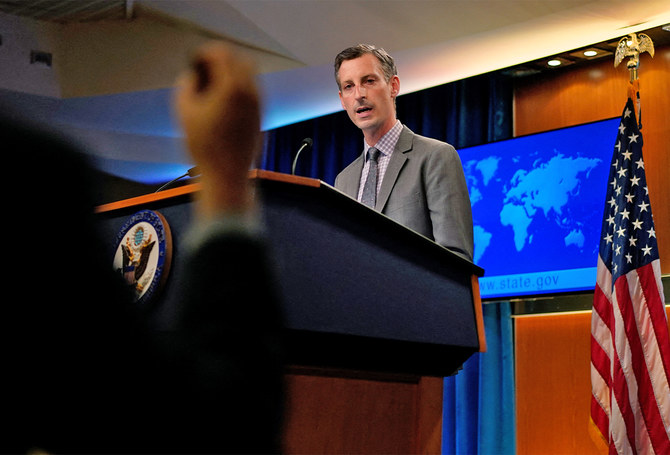
“So, when it comes to Pakistan, we have been in regular touch with Pakistani counterparts as well as Pakistani leadership,” Price said at a press briefing. “We’ve discussed Afghanistan in some detail.”
The spokesperson said Pakistan was represented at a recent meeting convened by Secretary Blinken and German Foreign Minister Heiko Maas at the Ramstein Airbase in Germany.
“Pakistan contributed to that forum, echoed much of what we heard from other participants. And as I said before, there was a good deal of consensus that the gains of the past 20 years, especially on the part of Afghanistan’s women and girls and minorities, is – preserving those is in everyone’s interests,” Price said.
“Easing the humanitarian plight of the people of Afghanistan is in everyone’s interest. That includes Pakistan as well as countries that may be farther afield.”
Pakistan had frequently advocated for an inclusive government with broad support in Afghanistan and what Secretary Blinken referred to was that the US would continue to look to Pakistan and other countries in the region to make good on “commitments they have made, to in different ways step up to support the people of Afghanistan and to work constructively not only with us but the international community to see to it that the priorities that we share – and that includes the humanitarian concerns, it concerns the rights and the gains of the Afghan people over the past 20 years, as well as the counterterrorism concerns that we all have – to ensure that we are all walking in the same direction,” Price said.
The US and Western countries have been in a difficult balancing act in the aftermath of the Taliban’s victory in Afghanistan — reluctant to recognize the group while accepting the reality that they will have to engage with it to prevent a looming humanitarian crisis.
Pakistan has had deep ties with the Taliban and has been accused of supporting the group as it battled the US-backed government in Kabul for 20 years — charges denied by Islamabad.
It is also considered as one of the two countries, along with Qatar, with the most influence over the Taliban, and a place where many senior Taliban leaders were thought to have escaped to after the US-led invasion of Afghanistan in 2001.


![]()

US ‘in regular touch’ with Pakistan over Afghanistan situation — State Department spokesman
Short Url
https://arab.news/nvk3v
US ‘in regular touch’ with Pakistan over Afghanistan situation — State Department spokesman
- Says Pakistan and US agree gains of last 20 years, particularly on women and civil rights, need to be preserved
- Easing the humanitarian plight of people of Afghanistan is in everyone’s interest including Pakistan, Price says
Latest updates


© 2026 SAUDI RESEARCH & PUBLISHING COMPANY, All Rights Reserved And subject to Terms of Use Agreement.