MANILA: The government of Philippine President Rodrigo Duterte on Thursday said it will not cooperate with an International Criminal Court (ICC) probe into his notorious war on drugs, or allow any investigators into the country.
Judges at the ICC on Wednesday approved a formal probe into Duterte’s bloody campaign, in which thousands of suspected drug peddlers have died, many executed by police, according to activists, who say law enforcement agencies have killed with tacit backing of the president.
Duterte and his police chiefs say killings were in self-defense, while his government insists the ICC has no right to meddle in the country’s affairs.
“If there are complaints, it should be filed in the Philippines because our courts are working. The ICC has no jurisdiction,” presidential spokesperson Harry Roque told a news briefing.
“When we became a party in the (ICC’s) Rome statute, we did not surrender our sovereignty and jurisdiction.”
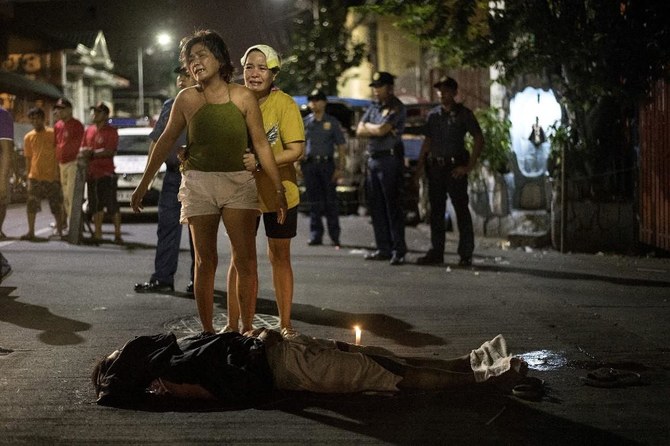
Government data shows 6,100 suspected drug dealers have been killed by security forces in anti-drug operations since Duterte took office in mid-2016.
Rights groups say many thousands more were assassinated in slum communities, mostly users killed by mystery gunmen who were never caught, and accuse police of involvement.
Police reject that.
The judges in The Hague on Wednesday said prosecutors’ materials showed the anti-drug campaign “cannot be seen as a legitimate law enforcement operation,” but rather a systematic attack on civilians.
Presidential legal counsel Salvador Panelo on Thursday said ICC investigators would not be permitted to enter the country. Victims’ lawyers, however, say interviews can be conducted virtually.
The ICC was set up to prosecute war crimes, genocide and crimes against humanity and has jurisdiction if a member state is unable or unwilling to do so itself.
The popular Duterte, 76, has dared the ICC to put him on trial and publicly said he would happily “rot in jail” for killing people intent on destroying his country.
But in March 2018 he unilaterally canceled the Philippines’ ICC membership, a month after its prosecutor said a preliminary examination over the drugs war was underway. The ICC says it can investigate crimes committed while the Philippines was a member, up until 2019.
The investigation comes at a critical time for Duterte, who leaves office next year and cannot run for a second term.
He has confirmed he will seek the vice presidency while his daughter, Sara Duterte-Carpio, a mayor, has this year been widely touted as a potential successor, moves critics believe are designed to insulate him from an indictment, at home or abroad.
“His best option is to support the candidacy of Mayor Sara,” said political analyst Temario Rivera.


![]()

Philippine government will not work with ICC ‘war on drugs’ probe
Short Url
https://arab.news/6gjn8
Philippine government will not work with ICC ‘war on drugs’ probe
- Government data shows 6,100 suspected drug dealers have been killed by security forces in anti-drug operations since Rodrigo Duterte took office in mid-2016


Latest updates


© 2026 SAUDI RESEARCH & PUBLISHING COMPANY, All Rights Reserved And subject to Terms of Use Agreement.